Continuing on this post about my neglected garden bed we prepped with our rotary tiller.
I was so happy with the nice black soil, thinking black soil means good soil with much organic matter. I have no clue from what this soil originally was made from (we bought it as compost soil), but it definitely is no useful soil. This black soil is very fine and so very dry. It does not really take on water. The top 5 to 10 cm are always dry, so there is no wonder no carrots and onions sprouted. In the fall we harvested one handful of carrots and no onions at all. From the flowers only the sunflowers sprouted, since I had sown these deep enough. Same with the peas, although not all came up.

I had raised some corn seedlings in the greenhouse, which I planted as a block in one corner and mulched with chicken manure from the coop.
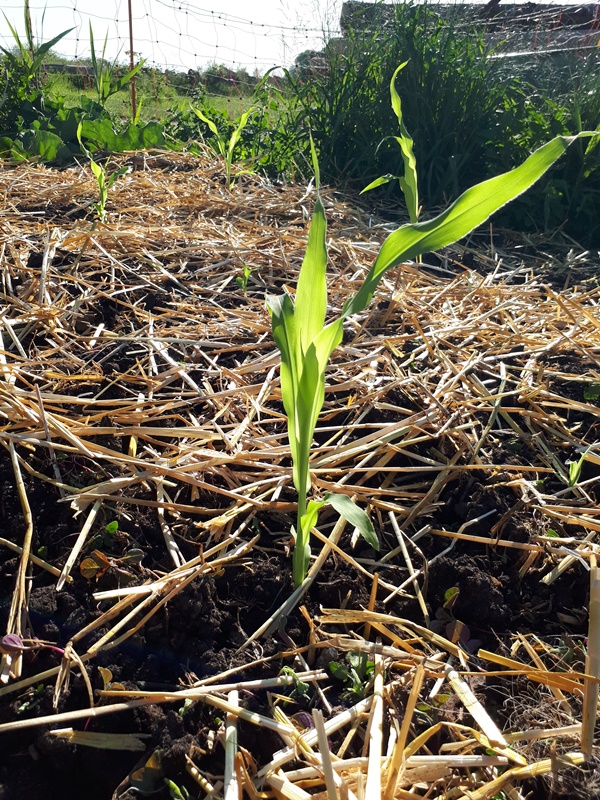
This corn grew big and did very well, but somehow the pollination wasn’t very good. The corn on the cobs is beautiful and colourful though and tasted amazing. The partly empty ones I am saving for seed to re-sow next year.

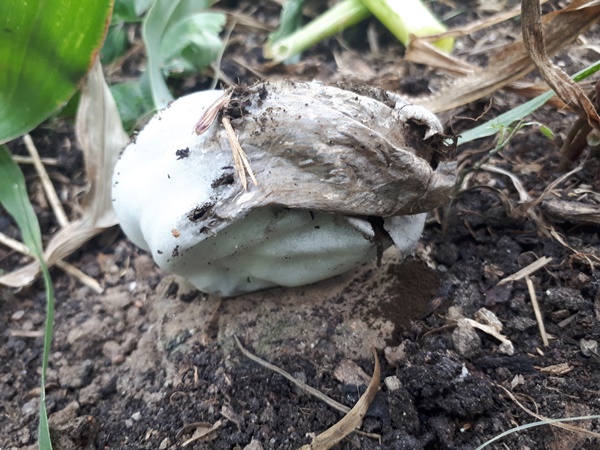
At the foot of the corn plants we found this fungus. I have no clue what it is. It is as big as a fist with a thin white skin and filled with a black powder.
Now back to the sprouting theme. What were sprouting plenty are the weeds. After a few weeks the garden bed looked like this.

We had to look very carefully to find some carrots.
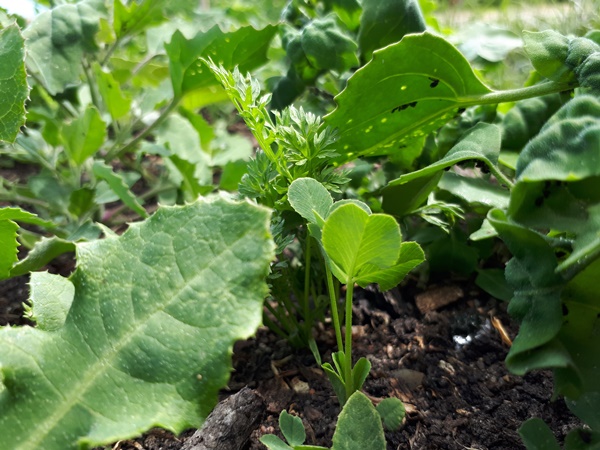
The sunflowers are looking good.

Same with the volunteer potatoes. These are looking splendid.

In other garden beds I had been pulling out the volunteer potatoes, since I had read this would be better because of disease and pest. Well, since I was not able to plant enough potatoes I left every volunteer potato that pops up its head and hope for the best. I must say that I am glad I did. We were able to harvest a lot of potatoes from the volunteer plants and I did not notice more problems with disease and pest than I had with the freshly planted potatoes.
Because of the drought and heat, we suffered from in the spring and early summer, the weeds where suffering very much, on the other hand the crops we actually wanted there did not really suffer, so that is good.

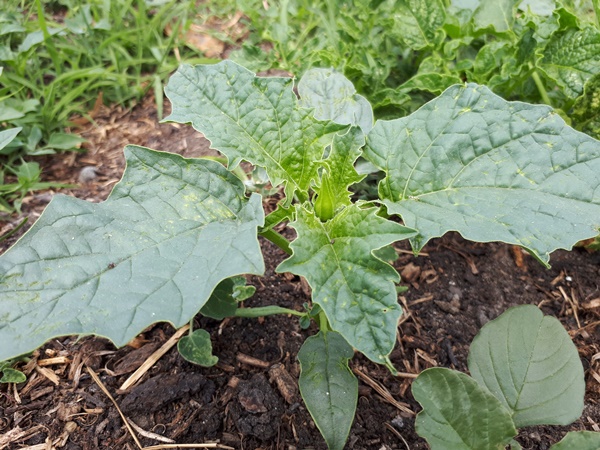
Since I had forgotten to reserve some space for beans and I had too much tomato plants, we started to clear this garden bed from all of the weeds. We found the highly toxic Datura and of course removed these.
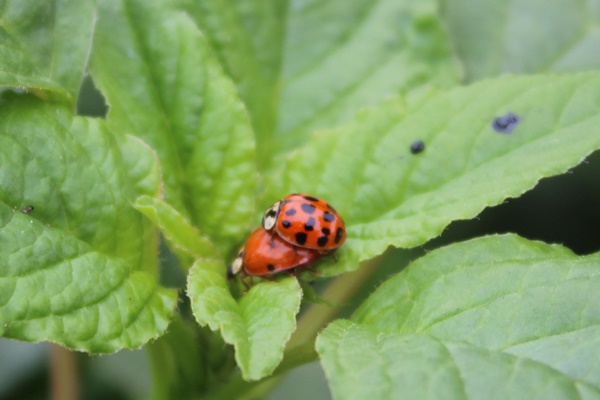
We also found a lot of ladybugs, even some working on the future generation.
And we also found some of the future generation
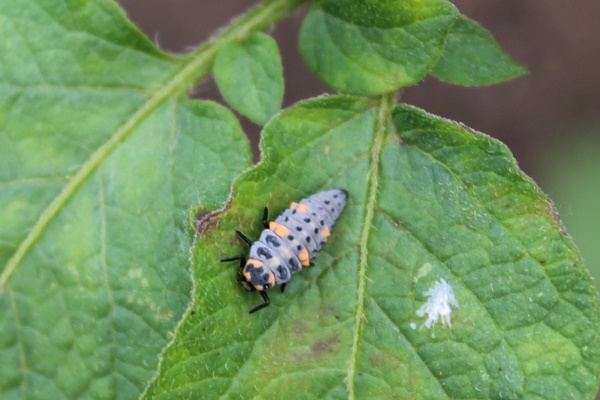
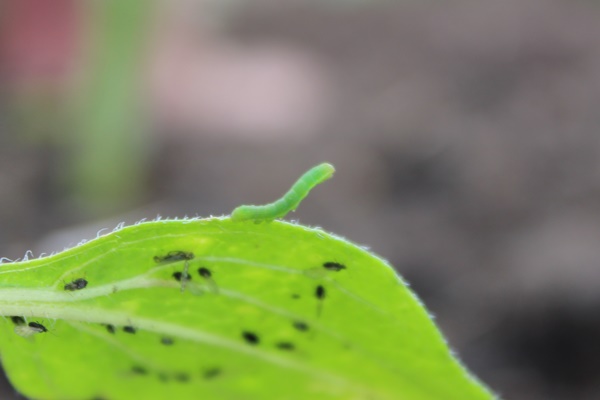
And this cute little bright green caterpillar.
This is what was left after all of the weeding. There is not much left.
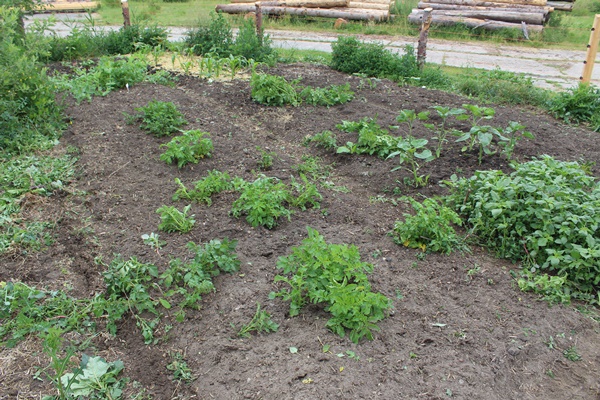
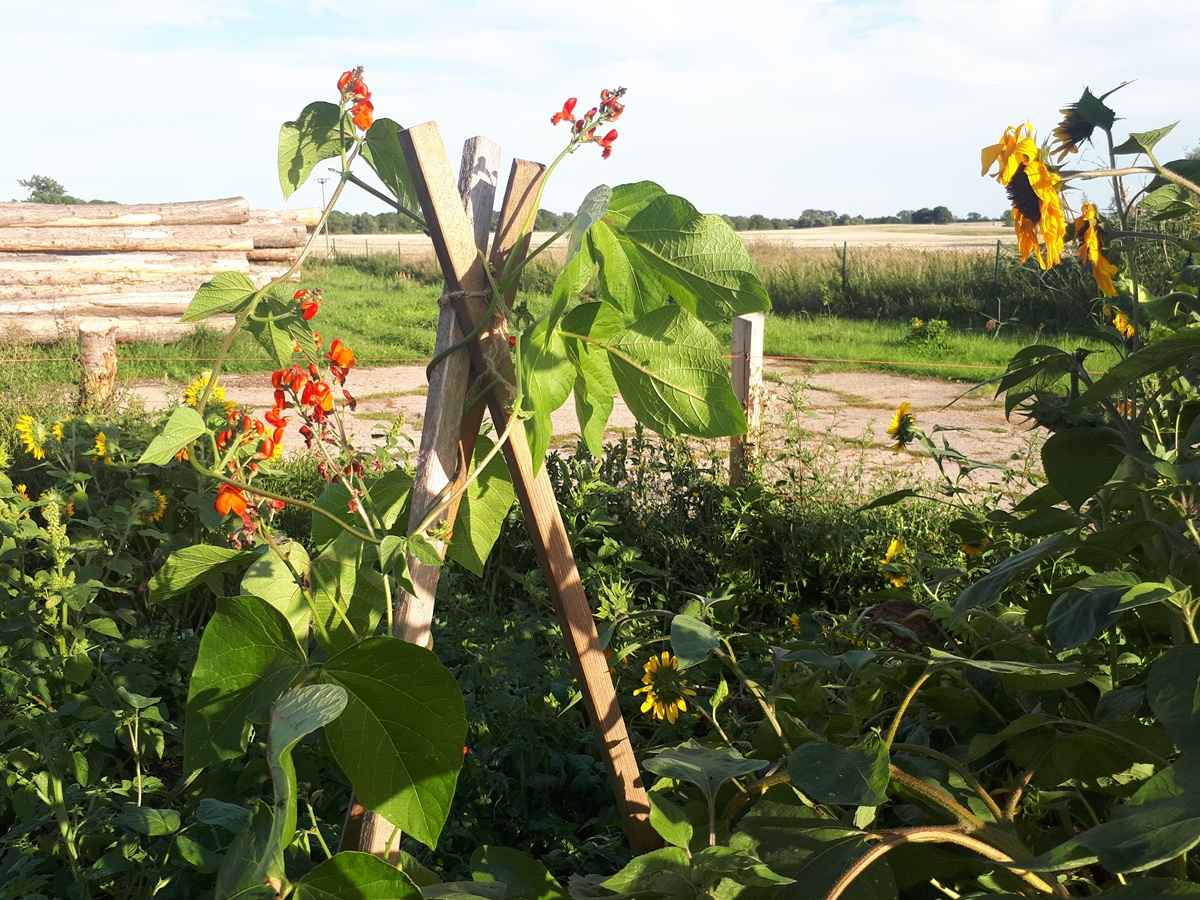
Then we planted runner beans, green beans, different varieties of tomatoes, cucumbers and basil.

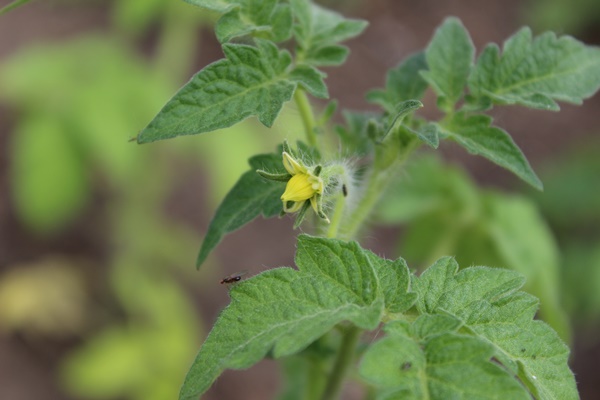
As you can see in the back, the corn has already grown well by this time. The tomato plants where already so big some of them where already flowering.
Beginning of June came the time to start harvesting the red beets. They where the best and we enjoyed them very much.

Beginning of August the garden bed was a beautiful mess and the kids where always crawling through looking for something eatable.
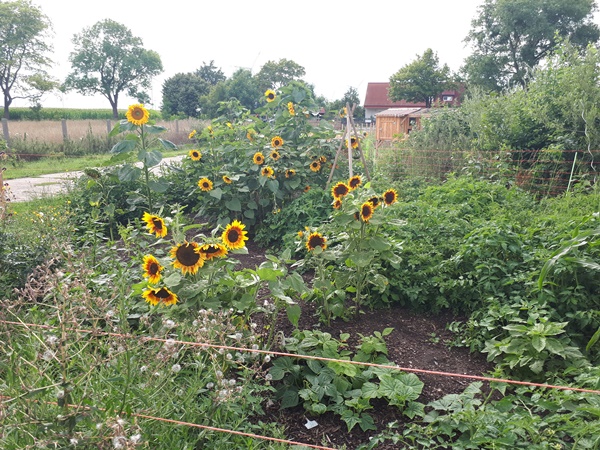
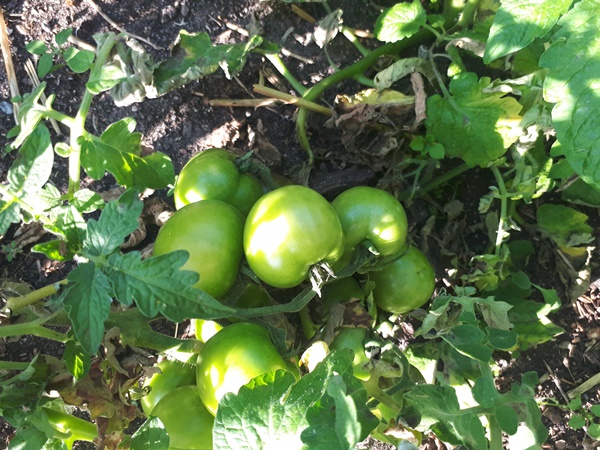
The tomatoes did surprisingly well without being cared for, unfortunately before we could really harvest any ripe tomatoes the blight struck here.
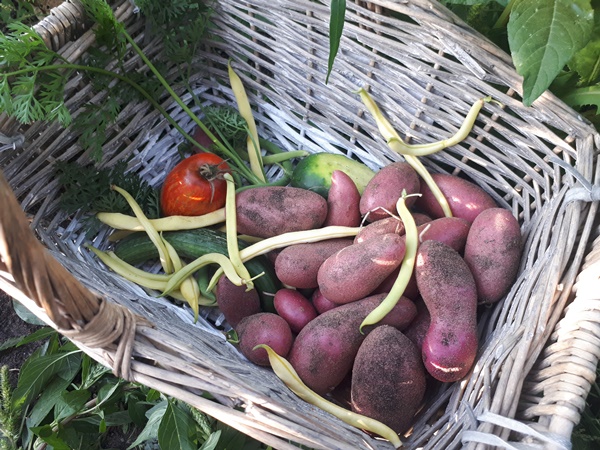
A small harvest from this garden bed with one of the few ripe tomatoes we got here, a few beans, some volunteer potatoes a few cucumbers and a rare carrot.
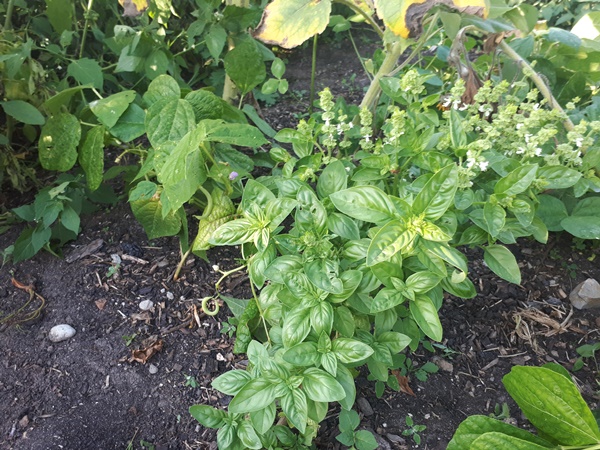
The basil did well here, nicely protected between all of the bigger plants. Unfortunately somehow I find the taste of the basil grown outside not very pleasant, but the bees and all of the other insects loved them.
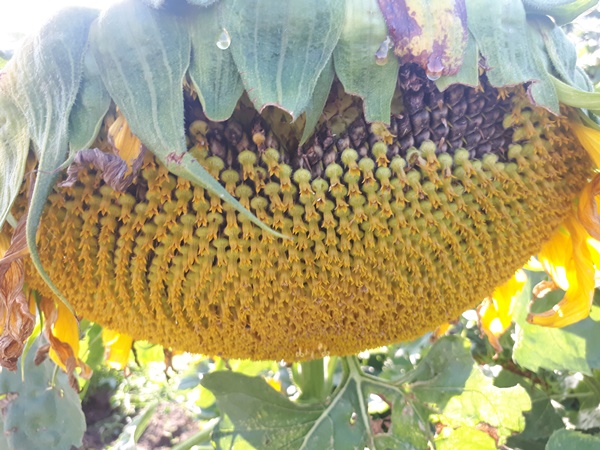
The birds love the sunflowers. They are eating away the sunflower seeds as they ripen.
Resuming about this garden bed for this season, I must say that we did not tent much to this garden bed. We watered a few times, but not enough. It was a beautiful mess of green with some colour and we where able to harvest a few things as well.
We got a nice amount of potatoes from the volunteer plants and we had some beans and cucumbers. The red beets where amazing and the few corn cobs we ate where very good and gave the urge to grow more corn next year. We missed out on the time to harvest the peas, but we did harvest the seed for next year.
We need to do something to improve the soil, so it will not be so dry and dusty anymore, but I am not sure what we can do. We will tent to this problem in the spring. For now the chickens, geese and runner dugs are allowed in over winter to eat all of the bugs and slugs they can find and pick at the amaranth and sunflower seeds.

Share this Post with your friends


 Beautiful Chaos
2 thoughts on “How did that beautiful rotary-tilled black soil garden bed do?”