
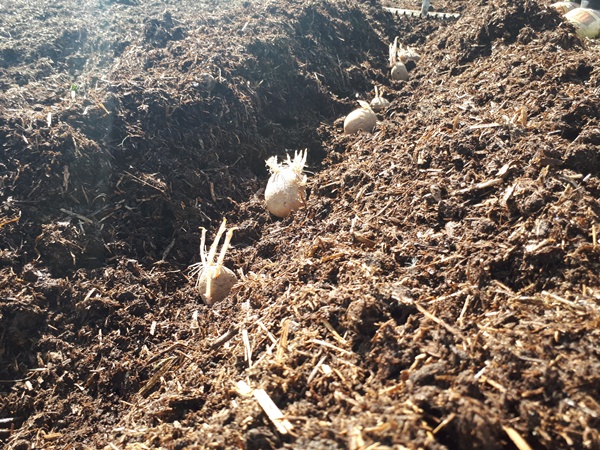
In preparation of the garden season we divided a few loads of cow manure over the compost beds in the winter and worked that in with the rotary tiller. In 2024 the wetter was “against” us and we planted potatoes no sooner then early Mai. We planted a few rows of potatoes on one side of the larger growing area and they where already sprouting.
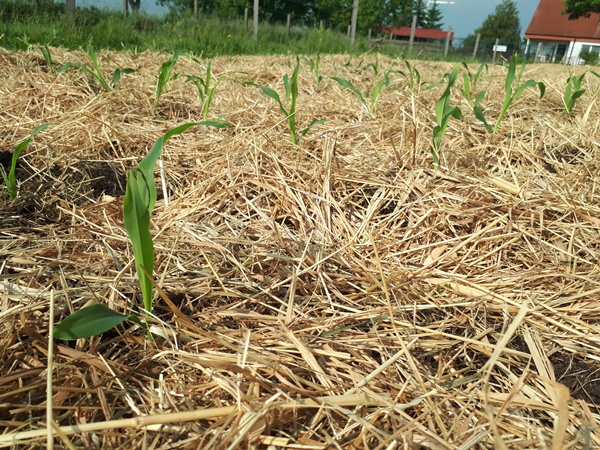
After a proper watering we covered the growing area with a good layer of hay to keep the moisture in.

End of May we planted a bunch of corn seedlings we grew our selves.
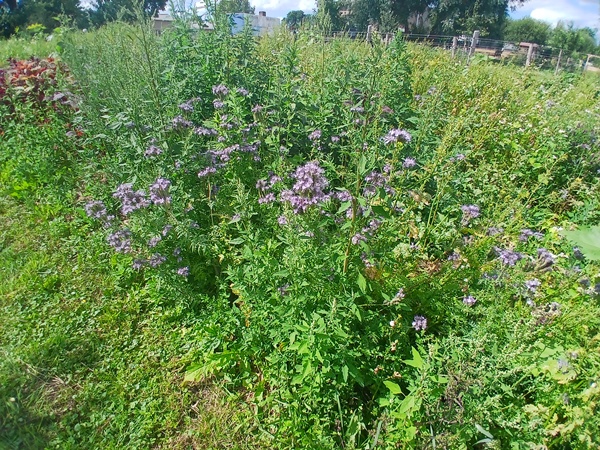
We also sowed a lot of green manure over the entire patch. The idea was that the green manure would suppress the “weeds”, improve the soil and prevent the soil from drying out in the summer heat.
Beginning of July the garden patch looked like this.
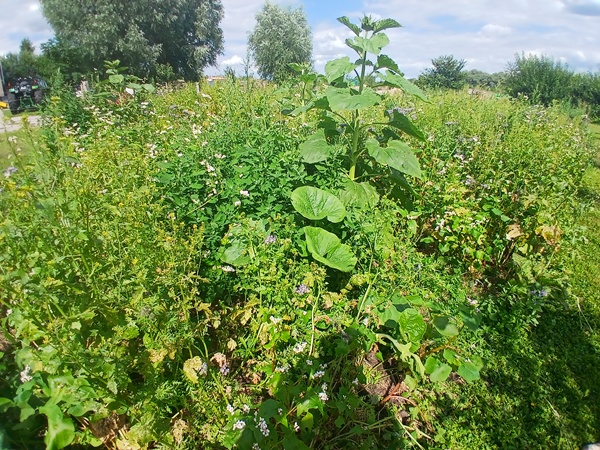
Pretty chaotic, but the potatoes where growing good and even a pumpkin grew well. We also had planted some zucchini somewhere in this chaos. It took them a while to take of, but once they settled they produced nicely. After the green manure plants where done blooming and fell over, we where even able to find the plants and harvest the zucchini’s.

Underneath all of that chaos the potatoes did surprisingly well. We did have a ratter big Colorado beetle pressure, but where we could reach we collected all of the larvae and beetles off. The plants where not completely eaten and I think the damage wasn’t too bad.

At least we where able to dig up a nice potato harvest with a lot of small to medium sized potatoes and also some bigger potatoes. I think the problem with the smaller potatoes is that we planted them a little to close together. That is something we will have to pay attention to this year.

Beside the Colorado beetle, the garden patches where filled with life which gives hope that nature will provide a healthy balance between pests and predators.
And then there was the corn. We planted the corn in a big block and sowed some runner beans on a few spots between the corn.

The corn did well and we harvested a lot of corn cobs, let them dry and took the cornels off. I ground them to flower and backed an American cornbread. Unfortunately we did not like the taste of it, so next year I will grow sweet corn instead of a flower corn (I just liked the colour so much).
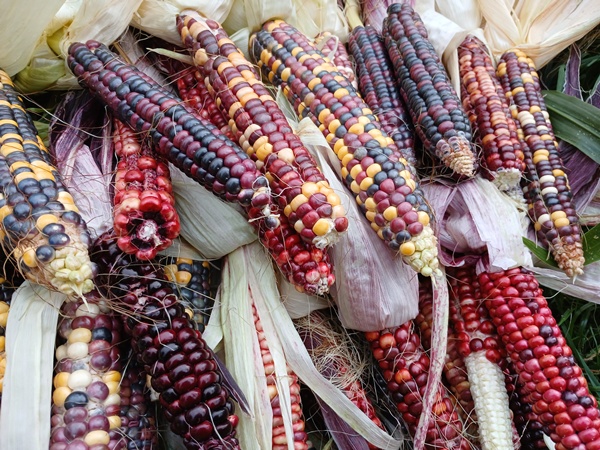
I found that the runner beans influenced the growth of the corn stalks it was climbing in negatively, but with planting enough corn that is no big deal. What we will have to do differently this year is leaving more space in between the rows of the corn, to make it more easily to harvest the runner beans, since we could not really reach them without damaging the corn. Also we will sow the runner beans along the outside of the corn patch instead of one or two rows inwards. This will also make it more easily to reach for the beans while harvesting.
To close the season, my husband flail mowed both patches end of September. After that he spread a good load of sand over the soil, since we felt that the soil was way to heavy, and he rotary tilled it in. After sowing both patches with green manure, so the soil would not be bare over winter, we planted a block with Jerusalem artichoke that came free from a raised bed we removed in our garden 2.

The green manure came up, but did not grow much anymore, since it already was to cold, but that is no problem. The main thing is that the soil is somewhat protected over winter.
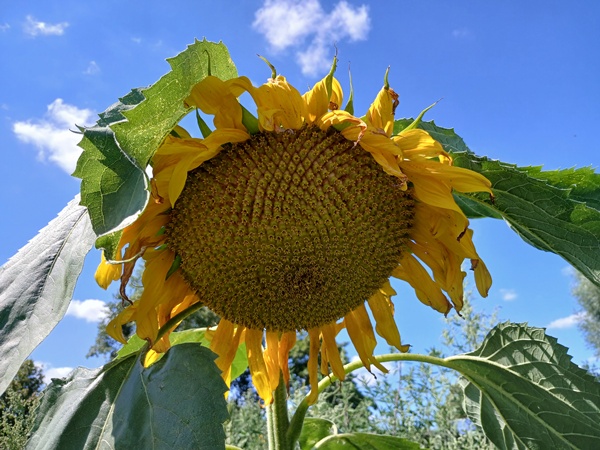
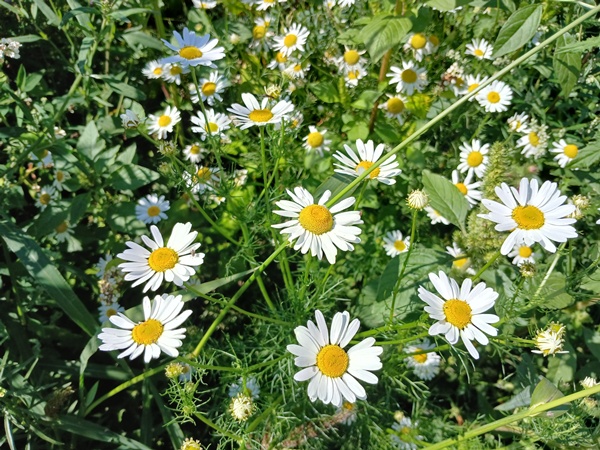
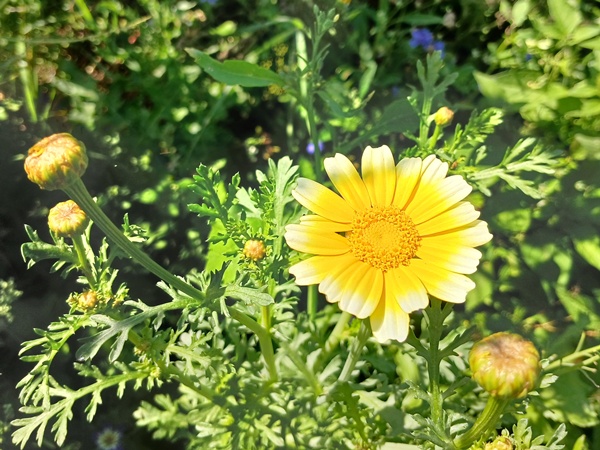
Finishing this post with some flower pictures from these patches
Share this Post with your friends


 Beautiful Chaos