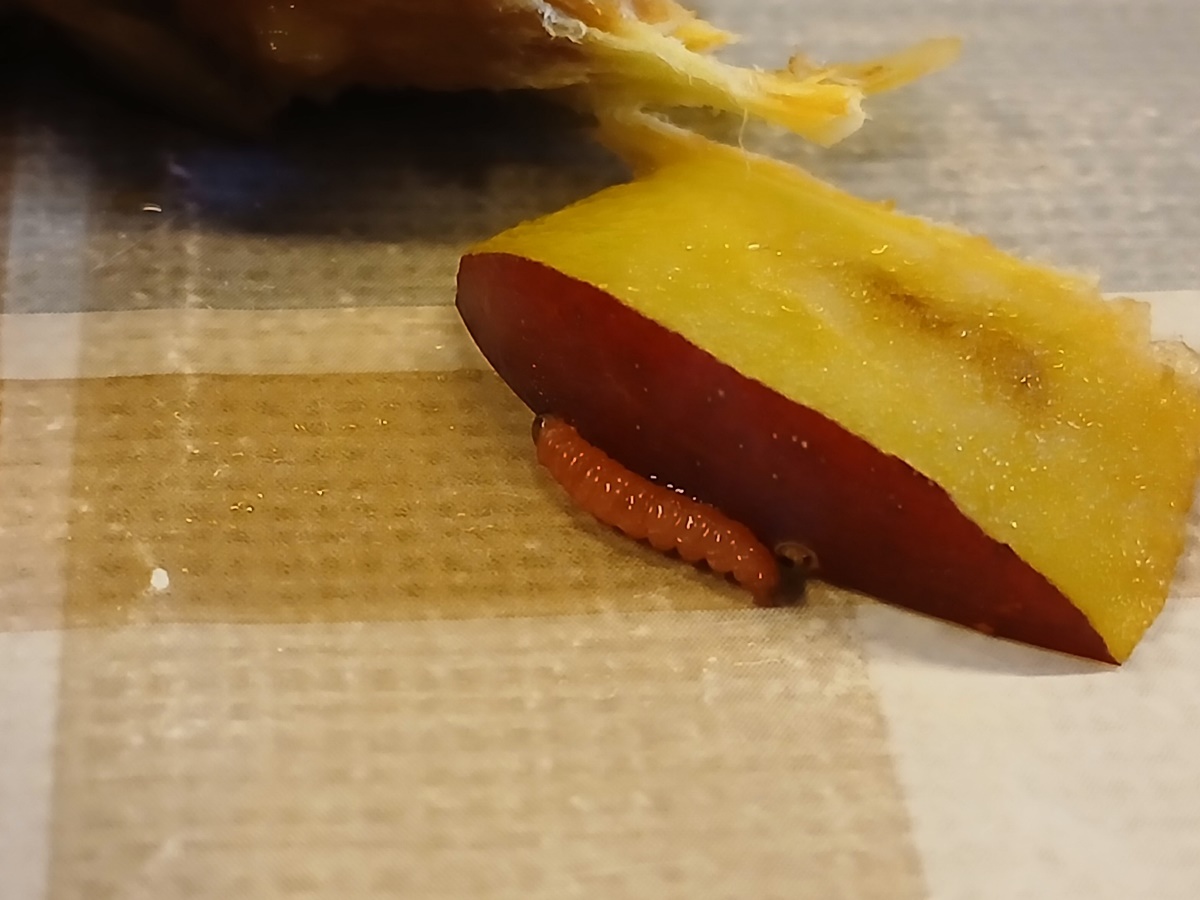
Plum moth maggots (Grapholita funebrana) in almost all of our plum fruit

2 years after planting our plum trees, they are carrying fruit nicely, but they are full with maggots of the plum moth

2 years ago we planted a lot of fruit trees (different varieties of apple, pear and plum). Some of them already carried some fruit last year, but a lot more trees where carrying fruit this year. Most trees actually blossomed this spring, but due to the wetter conditions not all where pollinated. This spring was cold, wet and windy, which is not ideal for bees to fly around, collect nectar and pollinate along the way. That’s why we where so happy to see different trees building fruit, the greater the disappointment seeing fruit starting to fall.
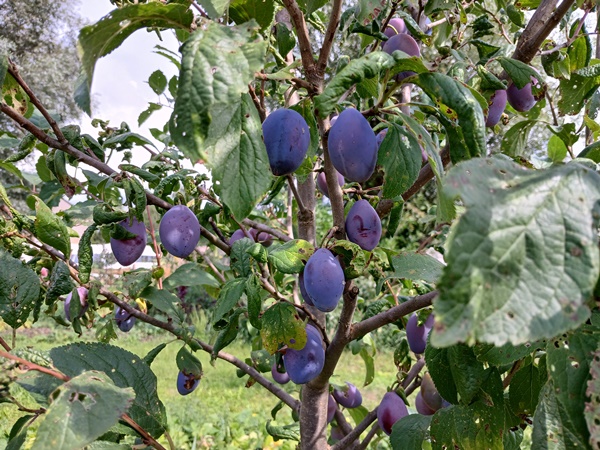
A plum tree packed with plums

When the fruit was still small I know fruit trees tent to drop some of there fruit, so I did not think much about that. By the time August came more and more fruit started to fall and we found all of the fruit having a maggot inside. Especially striking where all of the plum variety trees. Some of the trees where packed with fruit, but a lot of fruit started falling to the ground.

From the early varieties we where able to eat some of the fruit directly from the tree, but I checked all for maggots before eating. More and more fruit started to fall and at one point we just harvested all of the fruit of the trees, even if it was not ripe yet.

A bowl and a bucket filled with plums

While cleaning them I found a few that where kind off ripe enough for fresh eating, about half of the plums I trough away because they had maggots in them. With the other half I made plum sauce, where I did at a little sugar, since most of the fruit was still a bit sour.

2 Weck-jars with plum sauce on a table

Because of the maggot problem I had actually purchased plums to can for winter. If we did not had this much maggots, we would have had enough fruit from our own trees.

After researching in the internet I learned that the fruit falling in the spring is already due to maggots and we need to collect all of the fruit that falls to the ground to lower the maggot pressure. The plum moth produces at least 2 generations in our region, so if we can reduce the maggots by removing the first fruit that is dropped, we should clearly have fewer maggots by the time the fruit ripens.

Another help against the maggots in our fruit are bats, since they eat the moth’s. In the past years we had seen only 2, but recently we have noticed 6 bats flying around. Hopefully they will help reducing the general moth pressure around our trees. I do not mind losing some of the fruit, to keep the predators’ around, but almost all is a bit hard.

Our task for winter and next season to reduce the maggot problem is checking if we can find any cocoons underneath the plum trees (winter job) and picking up and removing any fruit that falls to the ground in the new season. Hopefully next year we can actually use the fruit from our trees instead of purchasing fruit.

Where are the blueberries?

Was it a bad idea to clear the patch from all the weeds?

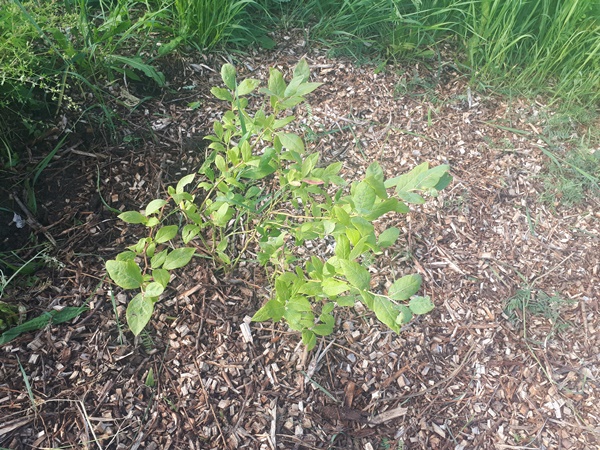
After planting the blueberry bushes we covered the surrounding soil with woodchips. What we had forgotten was to put cardboard down first, so after a few months the blueberry patch looked like in the picture above.

We made it a family affair and started weeding. We even needed to dig up some of the bigger weeds, but freeing the first blueberry bush and seeing how well it looked was very nice.

A small blueberry bush with woodchips at its feed against a background of weeds

The only down side is that we only found a handful of (obvious still unripe) blueberries on the bushes.

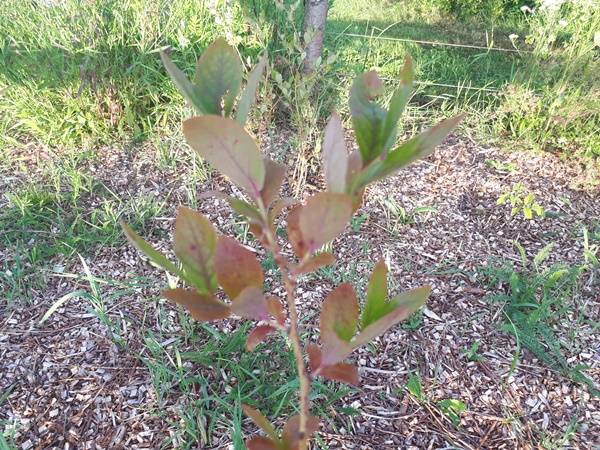
After a few days I noticed that the blueberries did not look so good anymore. The leafs are not really green anymore. Was it sunburn?

Blueberry bush with sunburn

We left some of the flowering “weeds” for the bees.

A few daisies against a background of woodchips and weeds
Daisies
A big malve bush with pink flowers against a background of woodchips and weeds
Malve

Making a blueberry patch

Taking another step in building our food forest

For my last birthday I wished for some blueberry bushes to plant in our garden. We love the taste of blueberries and what we love so much we need to grow our selves. There is nothing compared to the taste of berries which are self grown and freshly picked and eaten right there in the garden.

So we went and purchased 10 blueberry bushes last fall. It took a little while before we actually planted them, but finally we did. Blueberries need acetic soil and we have this corner in our garden 3 where we filled up a big hole with sawdust, bark and smaller pieces of wood from our sawmill a few years ago. We finished this of with a layer of normal soil. The organic matter has been decomposing and we thought the time was right for planting by now.

The blueberry bushes should be planted 2 meters apart, but we just divided the 10 bushes on the designated patch. I always find it difficult to respect the recommended plant spacing. The blueberry patch still looks so empty with only the 10 blueberry bushes and a panicle hydrangea. After planting we divided a thick layer of woodchips over the entire blueberry patch. At first it looked really tidy and ratter empty. The naked blueberry bushes where hard to see against the background of the woodchips. Obviously the woodchips did not really hold down the weeds, but at least the blueberries have gotten there leaves now and the blueberry patch does not look so empty any more.

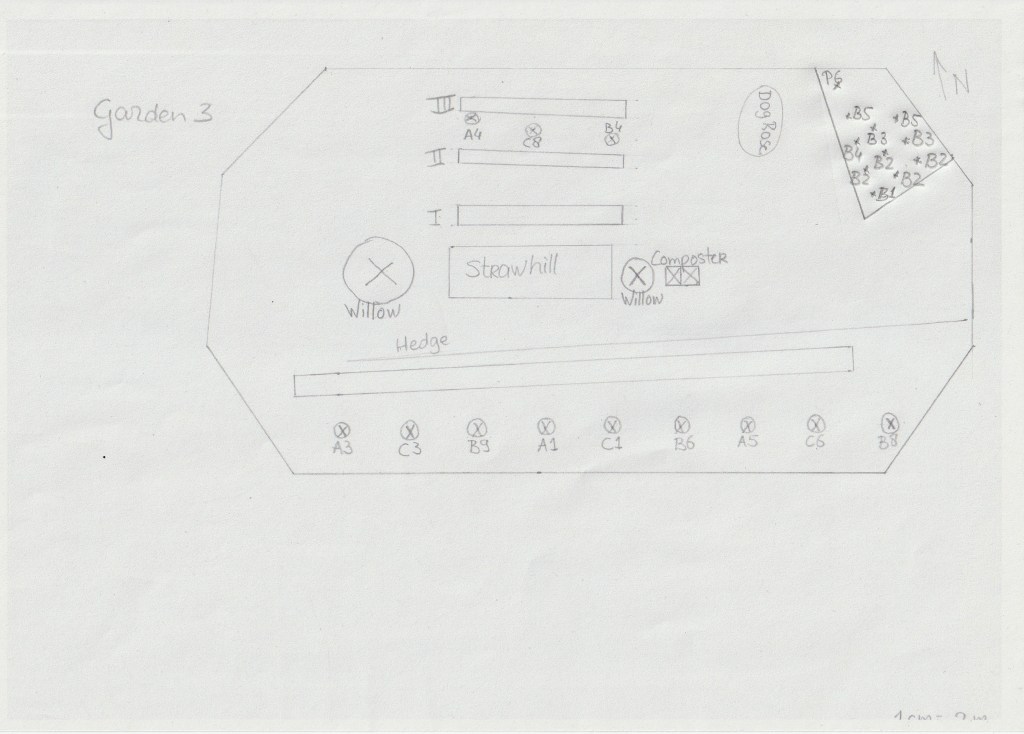
We got 5 different kinds of blueberries with different ripening times and so I updated my garden layout of our garden 3.

Garden 3

Blueberries (Vaccinium corymbosum)

  • B1: Berkley
  • B2: Herbert Frühreifend
  • B3: Ama
  • B4: Goldtraube 71
  • B5: Patriot
  • P6: panicle hydrangea, Rispen Hortensie

Here you can find the overview of our gardens.