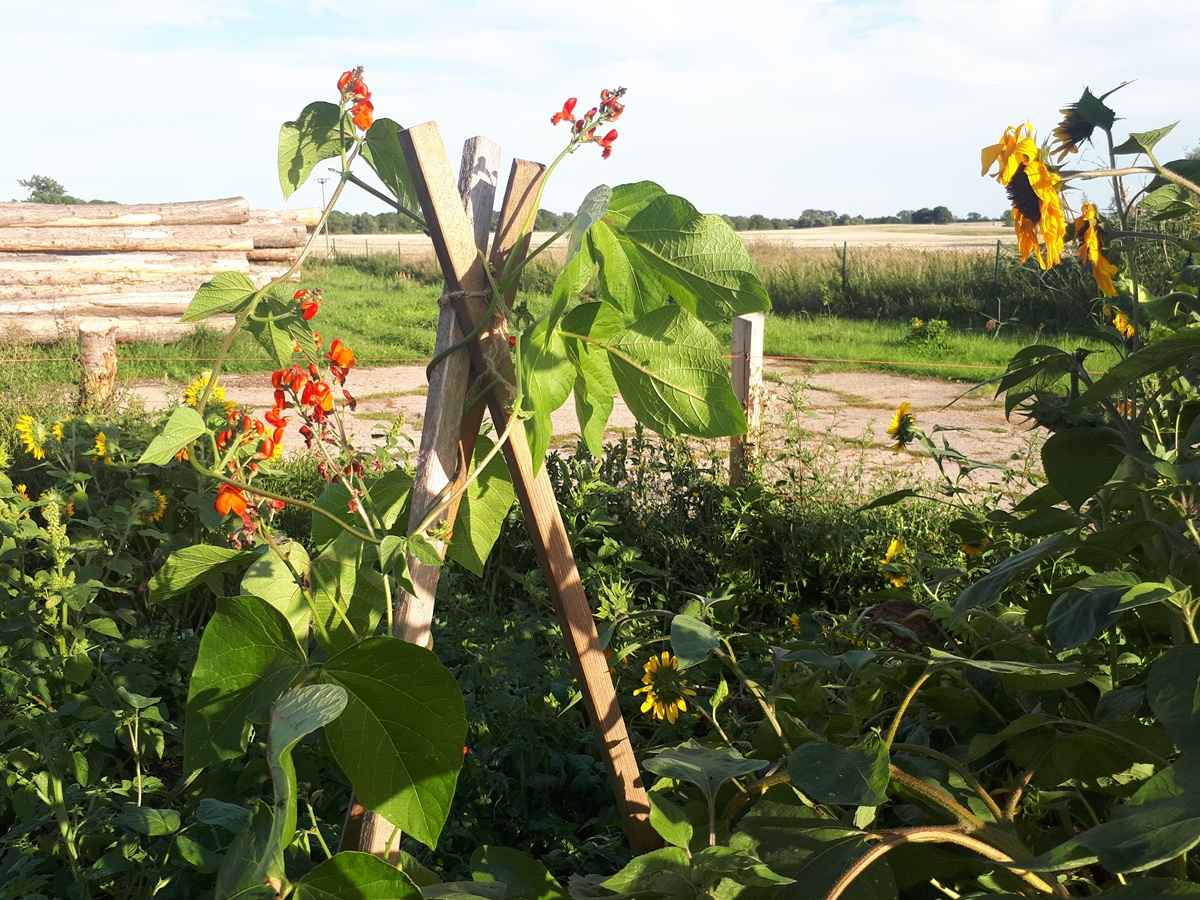
How did that beautiful rotary-tilled black soil garden bed do?

Did we have any carrots and onions? Planting corn and other crops.

Continuing on this post about my neglected garden bed we prepped with our rotary tiller.

I was so happy with the nice black soil, thinking black soil means good soil with much organic matter. I have no clue from what this soil originally was made from (we bought it as compost soil), but it definitely is no useful soil. This black soil is very fine and so very dry. It does not really take on water. The top 5 to 10 cm are always dry, so there is no wonder no carrots and onions sprouted. In the fall we harvested one handful of carrots and no onions at all. From the flowers only the sunflowers sprouted, since I had sown these deep enough. Same with the peas, although not all came up.

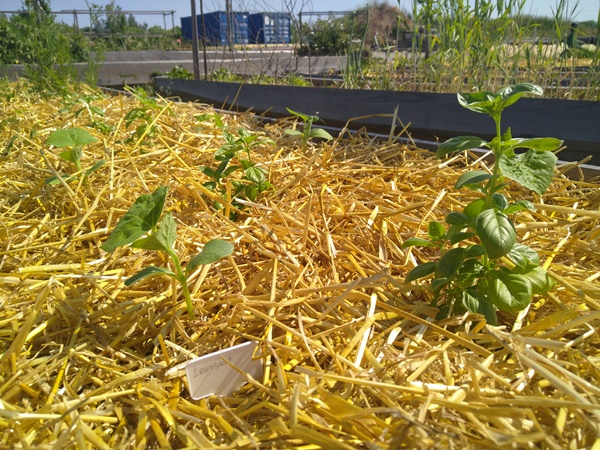
Black soil garden bed with some young pea plants
Young pea plants

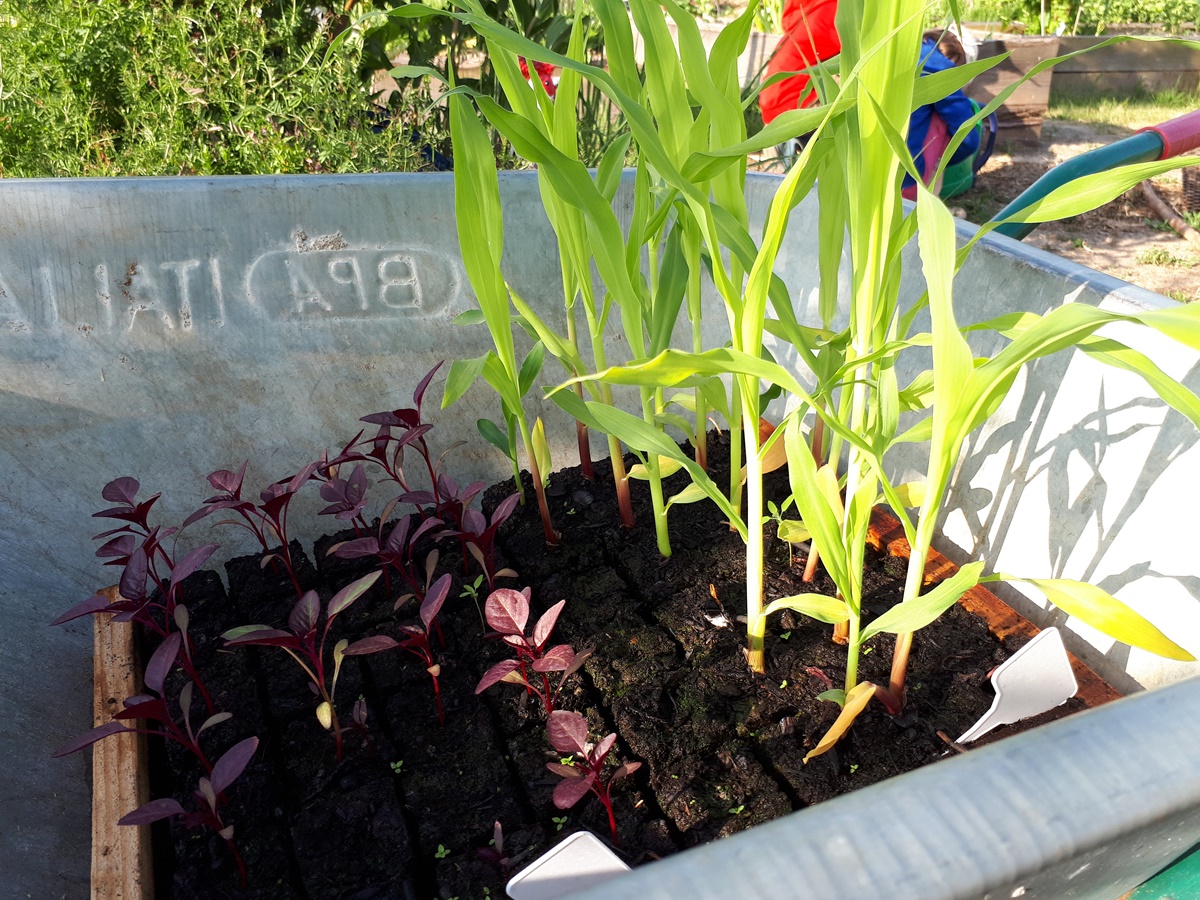
I had raised some corn seedlings in the greenhouse, which I planted as a block in one corner and mulched with chicken manure from the coop.
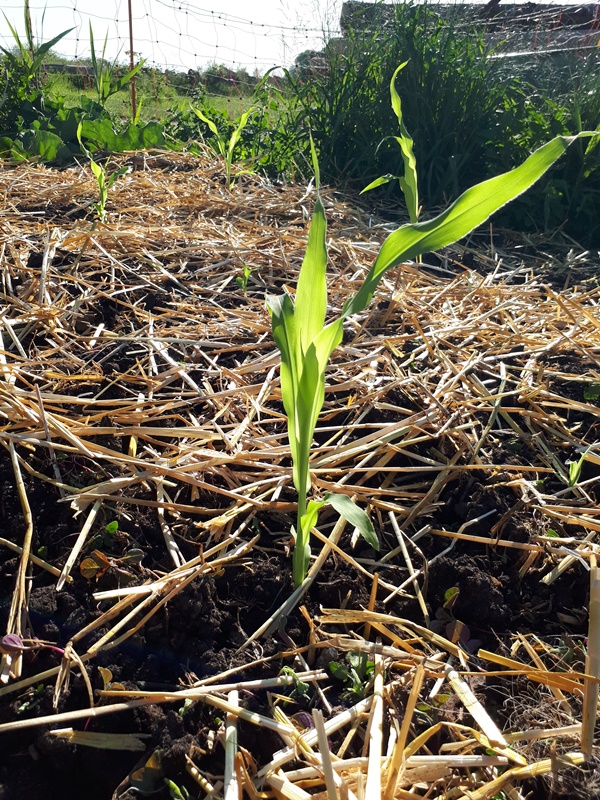
Corner of a garden bed with freshly planted corn seedlings, mulched with straw and chicken manure
Corn seedlings

This corn grew big and did very well, but somehow the pollination wasn’t very good. The corn on the cobs is beautiful and colourful though and tasted amazing. The partly empty ones I am saving for seed to re-sow next year.

Fresh colourful corn cobs in a basket
Colourful corn cobs

At the foot of the corn plants we found this fungus. I have no clue what it is. It is as big as a fist with a thin white skin and filled with a black powder.
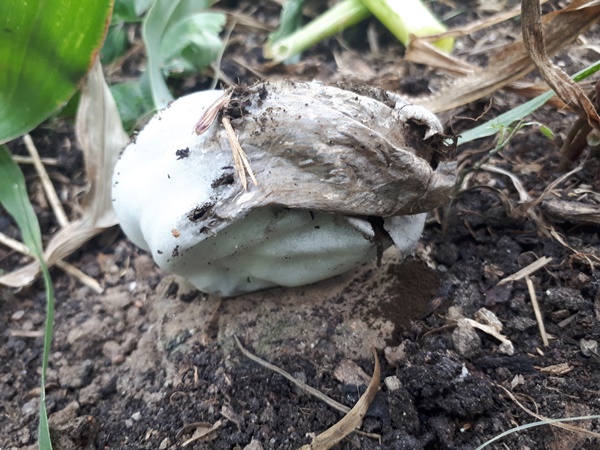
Big white fungus ball at the foot of a corn plant, with black powdery spores coming out
Fungus in corn field

Now back to the sprouting theme. What were sprouting plenty are the weeds. After a few weeks the garden bed looked like this.

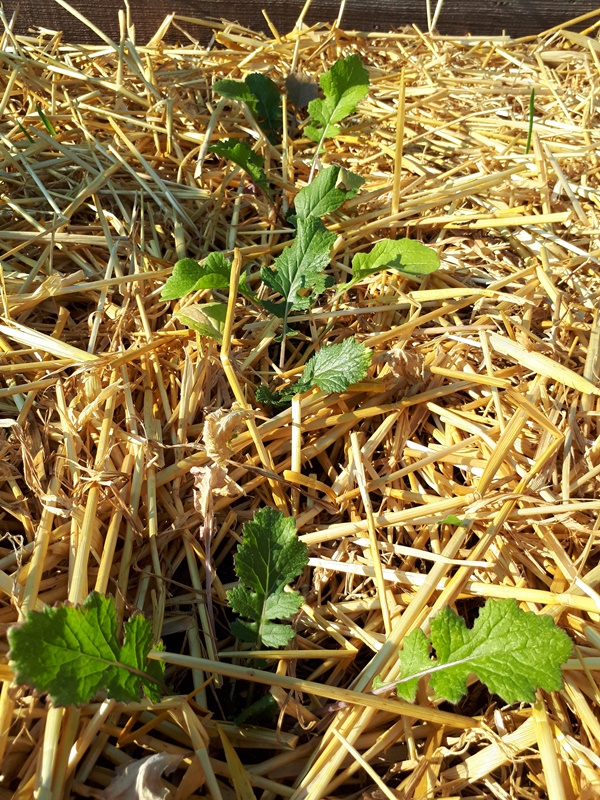
A weedy garden bed
A weedy garden bed

We had to look very carefully to find some carrots.
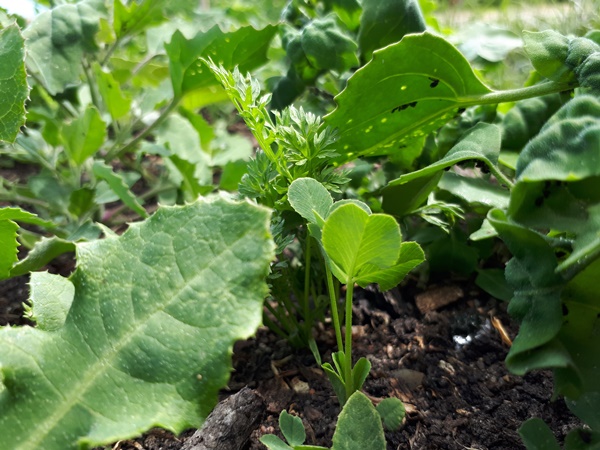
A carrot seedling hiding among the weeds
A hidden carrot

The sunflowers are looking good.

A small sunflower towering over weeds
A small sunflower

Same with the volunteer potatoes. These are looking splendid.

Big potato plant in the middle of a weedy garden bed
Big healthy looking volunteer potato

In other garden beds I had been pulling out the volunteer potatoes, since I had read this would be better because of disease and pest. Well, since I was not able to plant enough potatoes I left every volunteer potato that pops up its head and hope for the best. I must say that I am glad I did. We were able to harvest a lot of potatoes from the volunteer plants and I did not notice more problems with disease and pest than I had with the freshly planted potatoes.

Because of the drought and heat, we suffered from in the spring and early summer, the weeds where suffering very much, on the other hand the crops we actually wanted there did not really suffer, so that is good.

A weed suffering from pests

Since I had forgotten to reserve some space for beans and I had too much tomato plants, we started to clear this garden bed from all of the weeds. We found the highly toxic Datura and of course removed these.
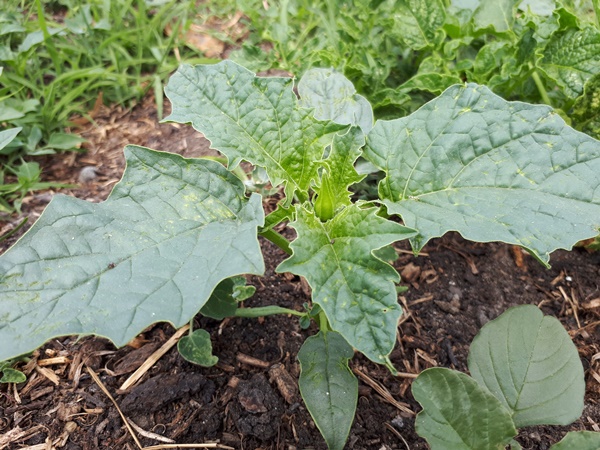
A Datura with a flower bud
A Datura

We also found a lot of ladybugs, even some working on the future generation.
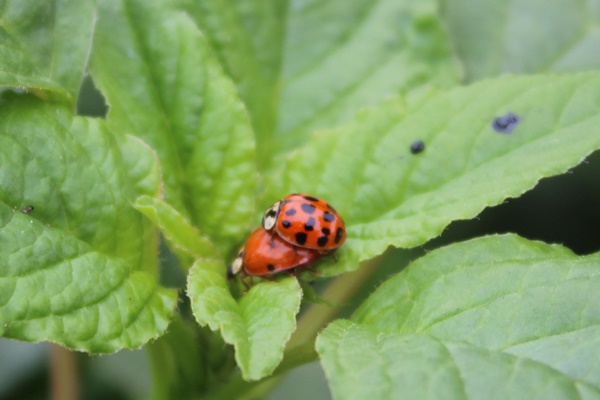
Ladybugs working on the future generation

And we also found some of the future generation
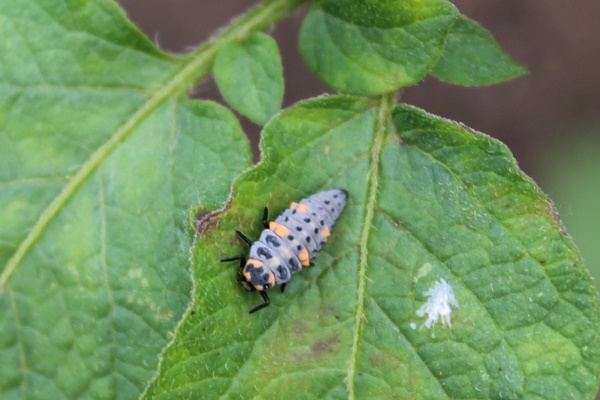
A Ladybug larva on a green leaf
Ladybug larva

And this cute little bright green caterpillar.
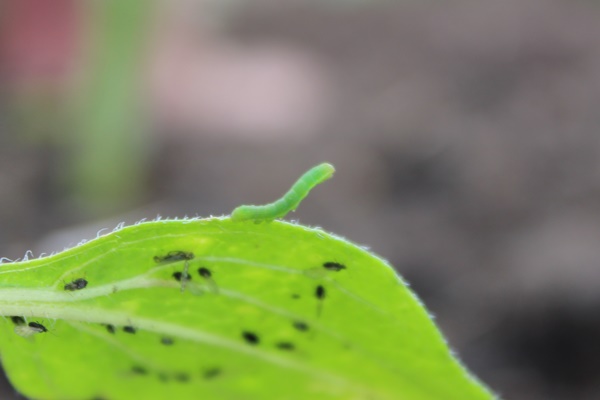
A little green caterpillar checking its surroundings from a green leaf
A little green caterpillar

This is what was left after all of the weeding. There is not much left.
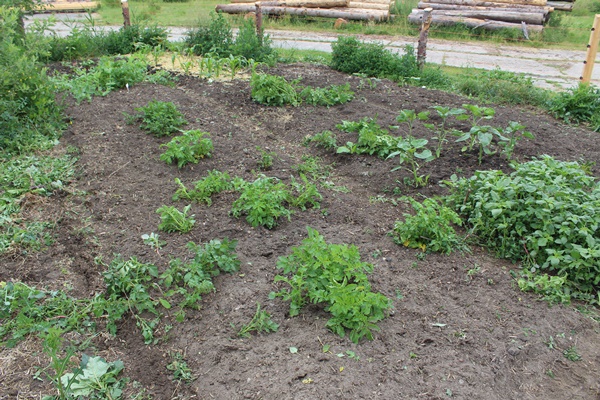
Almost empty garden bed with corn in the back and some small sunflowers in the front
Garden bed after weeding

Then we planted runner beans, green beans, different varieties of tomatoes, cucumbers and basil.

Garden bed freshly planted with runner beans, green beans, tomatoes, basil and cucumbers
Freshly planted garden bed

As you can see in the back, the corn has already grown well by this time. The tomato plants where already so big some of them where already flowering.
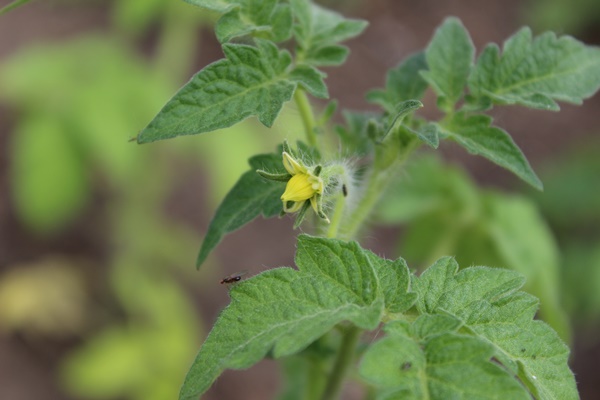
Tomato plant right about to fully flower
Tomato flower

Beginning of June came the time to start harvesting the red beets. They where the best and we enjoyed them very much.

Red beet ready to be harvested
Red beet

Beginning of August the garden bed was a beautiful mess and the kids where always crawling through looking for something eatable.
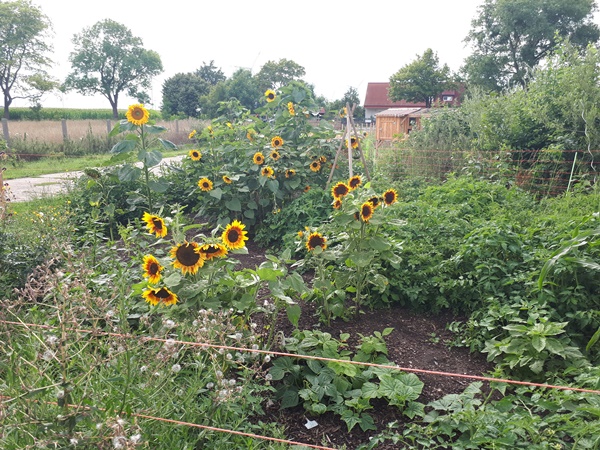
A messy garden bed with beautiful flowering sunflowers
Messy garden bed

The tomatoes did surprisingly well without being cared for, unfortunately before we could really harvest any ripe tomatoes the blight struck here.
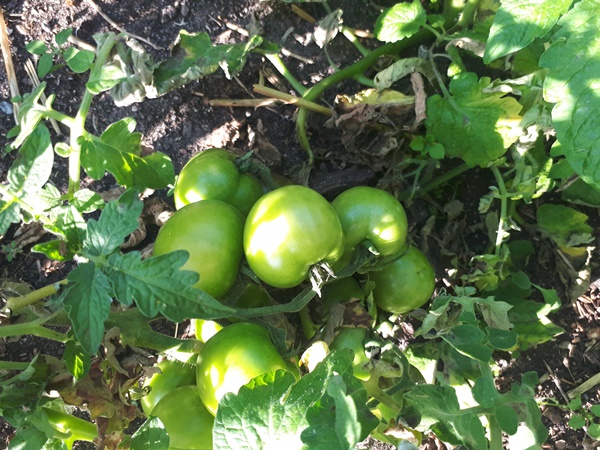
A bunch of beautiful green tomatoes on a tomato plant
Beautiful green tomatoes

A small harvest from this garden bed with one of the few ripe tomatoes we got here, a few beans, some volunteer potatoes a few cucumbers and a rare carrot.
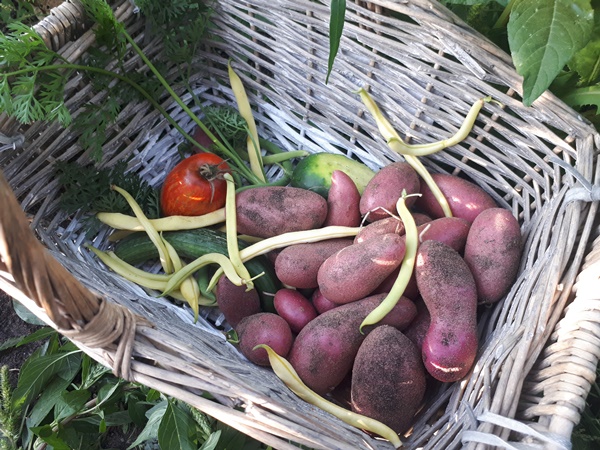
A small harvest basket with potatoes, green beans, a red tomato, a carrot and some cucumbers
Harvest basket

The basil did well here, nicely protected between all of the bigger plants. Unfortunately somehow I find the taste of the basil grown outside not very pleasant, but the bees and all of the other insects loved them.
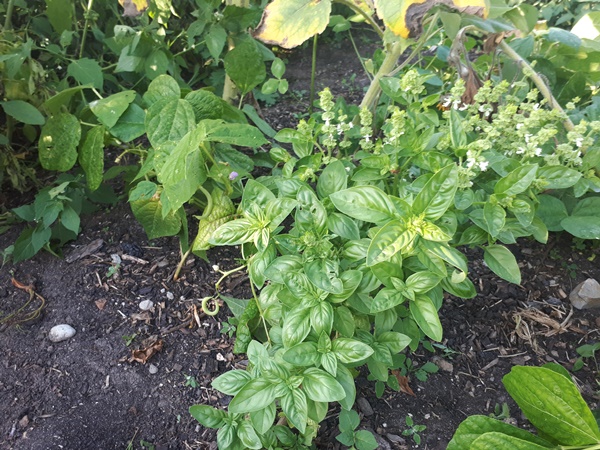
A beautiful basil plant growing beside green beans
Basil

The birds love the sunflowers. They are eating away the sunflower seeds as they ripen.
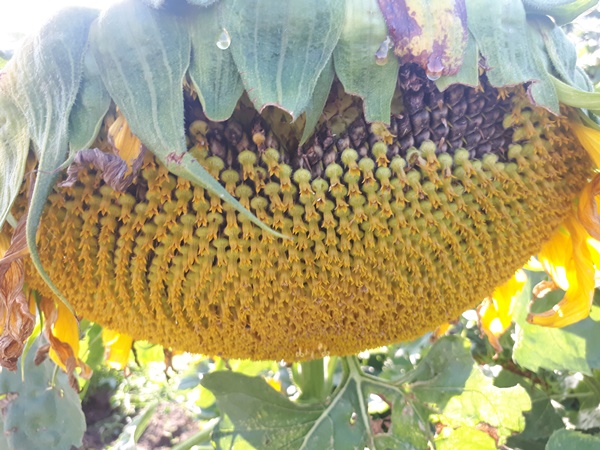
A big sunflower head forming seed which already get eaten away by birds as they ripen
Big sunflower head forming seed

Resuming about this garden bed for this season, I must say that we did not tent much to this garden bed. We watered a few times, but not enough. It was a beautiful mess of green with some colour and we where able to harvest a few things as well.

We got a nice amount of potatoes from the volunteer plants and we had some beans and cucumbers. The red beets where amazing and the few corn cobs we ate where very good and gave the urge to grow more corn next year. We missed out on the time to harvest the peas, but we did harvest the seed for next year.

We need to do something to improve the soil, so it will not be so dry and dusty anymore, but I am not sure what we can do. We will tent to this problem in the spring. For now the chickens, geese and runner dugs are allowed in over winter to eat all of the bugs and slugs they can find and pick at the amaranth and sunflower seeds.

4 Geese in a garden bed after the harvesting was done
Geese in the garden bed

What happened with my green beans experiment?

I sowed green beans in weeds. Did I have anything to harvest?

Well yes, I was able to pick a few green beans here and there, but the green beans generally weren’t much of a success this year. Here is the link to my first post.

I can not really draw any conclusions out of my experiment, since the weeds did not do well either. The green beans I had sown in the greenhouse and later planted in the garden did a little better, but we did not harvest many green beans at all this year, which is a shame, since the kids love them.

Very late to sow, but in August I had sown some more green beans in another weedy bed and these did very well. I have to say, that the wetter worked in my advantage here, since we had plenty of rain and warmth. Of course I sowed them much too late in the season, but these green beans thrived and we actually where able to harvest a meal of these before the first night frost came.

Green bean plants in a weedy garden bed with a basket with harvested green beans

Well, I guess I have learned not to start in the season to early and I should dedicate enough garden space for the green beans. I tent to start in the spring as soon as the soil starts to warm up a little and I just pack every garden space I have not thinking about the crops that come at a later point. Green beans will definitely be one of my main crops for next year, since green beans coming out of our own garden do taste much better then the ones store bought and we miss them very much as a vegetable for over winter.

Planting a lot of my seedlings

It took a while, but we’ve got most seedlings planted

Somehow I am always behind on the season, but this year that was not so very bad. We have had some nice weather early in the year, but May stayed cold for a long time. Normally the middle of May is the time to start planting everything (even tomatoes etc.) outside. This year the second half of May was still very windy and chilly. The temperature at night still dropped to just above freezing, which is not very favorable for small seedlings raised in a greenhouse. What went completely past me (due to the low temperatures and the harsh winds) is that it did not rain since middle of April, but more to that later.

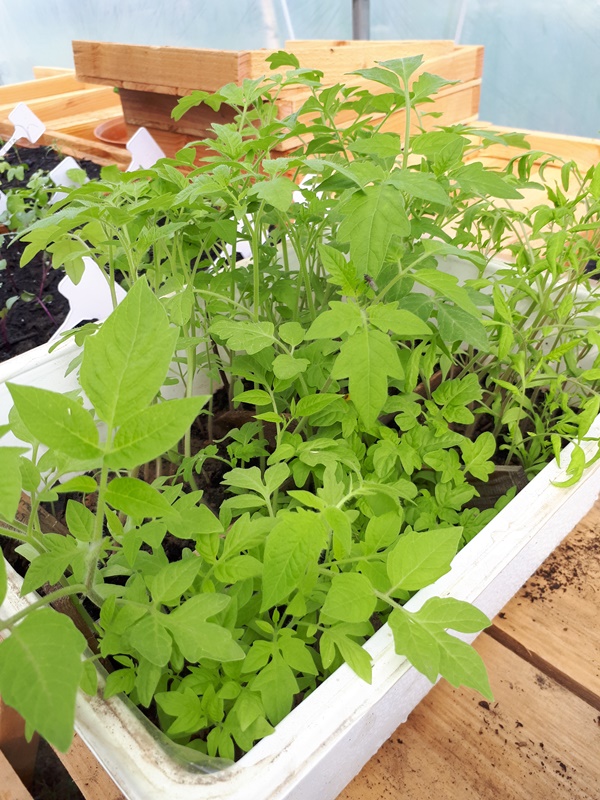
Around middle of May I transferred my Tomato and pepper seedlings to the greenhouse. I did not trust to do so sooner, because the greenhouse is not completely closed and it also cools down at night. The tomato seedlings where becoming so big that thy really needed to be potted and so I did, with the help of my children, who prepared the little planting pots with soil for me, this went quickly.

Tomato seedlings outgrowing there seeding tray

With all of the tomatoes and peppers in there own pots the greenhouse was very full and I was anxious to start planting my so many seedlings outdoors.

The second half of May we noticed our fruit trees, we planted last year, are suffering and I realized that the soil was so very dry. We started watering our gardens, which takes us a lot of time, so planting seedlings has been postponed.

By the time the end of May came it was not warm, but hot and the sun was burning terribly. I started planting my seedlings. I did not really have a plan as to where to plant which crops, but I did pay attention to curtain things as I went along with planting (for instant, need of nutrients, best neighbors, etc.). I had the feeling I was much too late with planting, so I planted as I had time. I did not properly prepare and did not harden the plants on forehand.

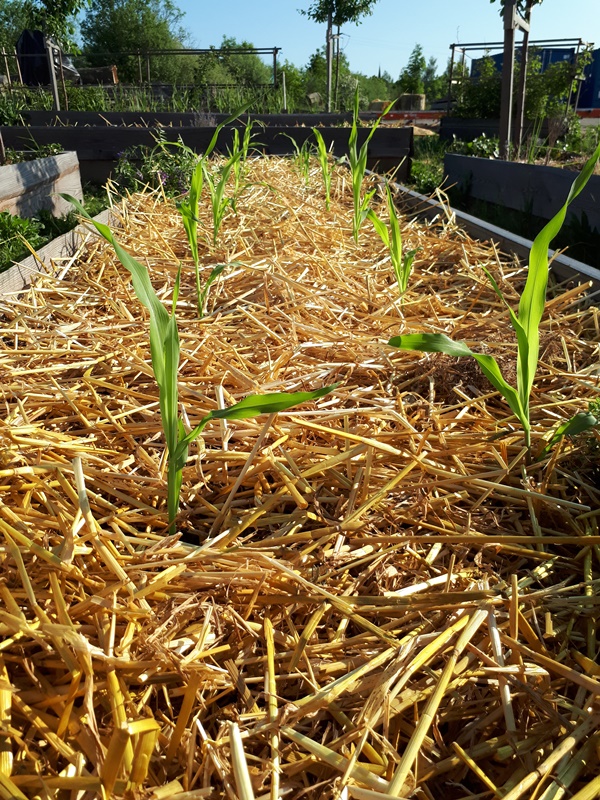
I started in our garden 2, the one with the raised beds, with some corn. I have some different types of corn, the normal sweet corn, one for flower, one for popcorn and one for polenta. I divided the different types apart from each other over the different gardens we have. My husband had dig in the straw mulch in one raised bed last fall and we hat green manure growing there over winter. Corn needs a lot of nutrients, so I decided to plant the corn in this bed. We mulched with a thick layer of straw.

Corn freshly planted in a raised bed with a thick layer of straw as mulch

Next thing up for planting where different kind of turnips. My husband even made a short video about this. There is not much to planting actually. Loosening the soil, making a hole, putting water in the hole, putting the seedling in, pushing back the soil and tuck in the mulch around the plants.

The important thing with planting is to pay attention to the planting dept. Some plants must not be planted to deep others win by being planted deeper. Like cabbage should not be planted to deep, so they can form a nice head without trapping soil inside. Tomatoes on the other hand benefit from being planted as deep as they have there seed leaves. They make extra roots on the piece of stem that will be covered with soil this way. They stand more stable and take in more nutrients.

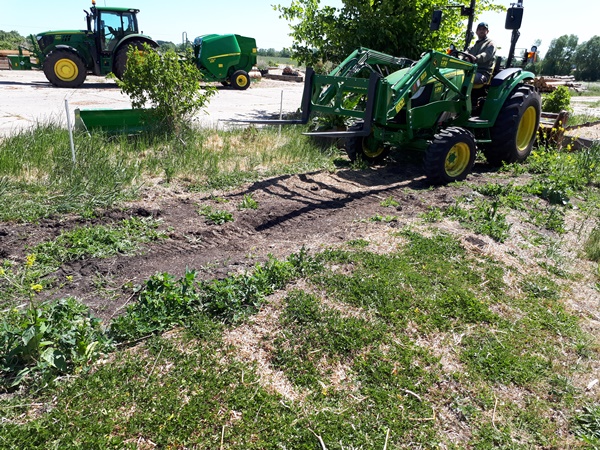
Next thing up where the cabbages I have red and white once and they where outgrowing there seedling stage. I had bad experience with the cabbages last year, since the soil in the raised beds is lacking nutrients and cabbages need a lot. With the tomatoes growing under the greenhouse roof we had last year, I noticed a curling of there leafs. This can mean that there are too many nutrients in the soil. So that should be an ideal spot for planting cabbages, if it was not so very weedy and the soil so extremely compacted. So first things first. My husband came with the tractor and the rotary tiller and made this unusable growing area to a splendid growing area.

Tractor with a rotary tiller on a compacted and weedy garden bed

The rotary tiller divided the area into two beds and after a thorough watering we spread a thick layer of straw mulch over the beds, just like we did with the last bed in the article about the couch grass.

2 garden beds, thoroughly watered with a pile of straw waiting to be divided as mulch

I was experiencing some tiredness, but happily started planting the first bed with the cabbages. After that was done I was not feeling very well and had to get my husband to help with the further planting. He finished planting the cabbages in the second bed.

Red cabbage seedling planted and surrounded by straw mulch

There are a few left which will get a home some where else in the garden. After doing some research I decided the root celery is going in between the cabbages.

Healthy looking root celery seedlings in a soil block on a seedlings tray

They should profit from one another. So far for keeping planting distances, since I did not encounter planting something else in between the cabbages, but will see what happens.

By this time it completely hit me. A terrible “morning” sickness that lasted from the moment I opened my eyes until I fell a sleep again at night coming along with this extreme exhaustment that prohibit me from doing hardly anything. Well if you haven’t guessed jet, we are expecting our 4th child and pregnancy is coming hard on at that moment. I have handed the gardening to my husband and children completely, which is hard on me since I love it so much. All I did was telling what I wanted planted where and did some documenting.

Coming back to not noticing the lack of rain since April, I was noticing that from the over 50 meters of carrots I had sown (we love carrots) there where only about 15 cm where carrots had sprouted. This was very disappointing, but made place for all of the way to many tomato and pepper plants I had started indoors. Tomatoes and peppers like to stand along with garlic and onions, so everywhere where the carrots did not sprout there are tomatoes and peppers now. Since the soil in the raised beds is so very poor my husband worked in some manure and, partly composted, wood chips everywhere he was going to plant, even in between the onions and the garlic.

Tomatoes planted in between rows of onions in a raised bed

A thick layer of straw as mulch and we slowly started to progress with all of the planting we had to do. In the mean time we are half way trough the first half of June and where able to harvest our first strawberries. We even had a big one. Most of the strawberries we harvest are small, but that is because they also lack nutrients in the soil. That is something we will fix in the fall.

Large strawberry on a child’s hand

Middle of June we also planted a raised bed with cucumbers and basil, since nothing I sowed sprouted in this bed either.

Cucumber and basil in a raised bed mulched with straw

Beside all of the watering we had to do, which takes so much time, we made a nice progress with the planting.

What we have noticed while planting in the different raised beds is that the beds where we grew potatoes in last year the soil was noticeably better than in the other beds. The soil had a much darker color and there where more earthworms in the soil. Potatoes are a good first crop to work the soil on hand.

As I mentioned I did not harden the plants before planting and they where planted while the sun was burning from the sky. The result where sunburn and partly dying off of the existing leafs, but most of the plants recovered very nicely and are growing strong now.

A turnip with yellowing leaves from a sunburn
A row of turnips growing back strong after losing its leaves due to sunburn

We where very happy with some cloudy days, but we had to wait until the 16th of June to receive a good amount of rain. Since then we are very happy to have cloudy days, some rain and sunny warm days in change.

I almost forgot. We also did some weeding in between, but not too much. Is that a bad thing when getting such nice flowers?

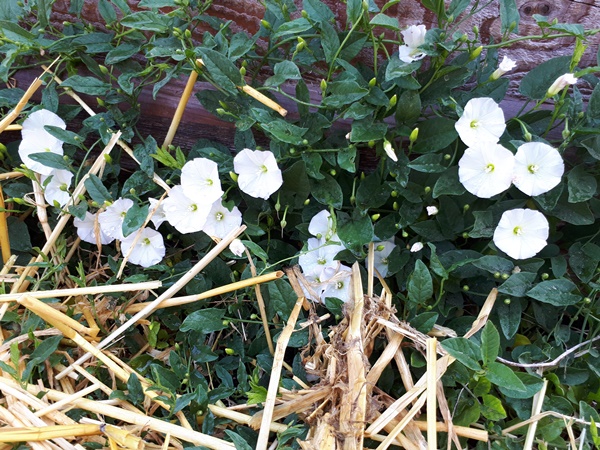
Bindweed growing down a raised bed full of beautiful white flowers
Bindweed
A flowering meadow sage right beside a raised bed
meadow sage

The planting in the other gardens will become there own article, so stay tuned for that.