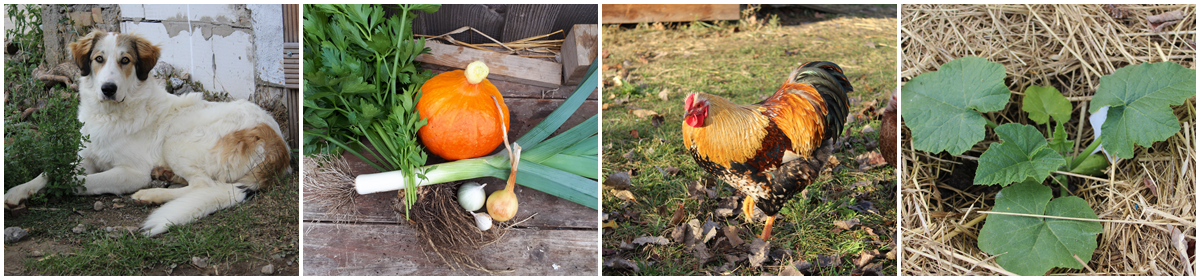
The side protection of my garden beds rained away

Exposing the edges of the garden beds to the wetter.
Have you noticed the garlic?

I was not very pleased to see the edges of these garden beds exposed. These are the old hill beds, I flattened out and gave enclosures out of straw. The rain and wind took this straw down and away. The other thing I noticed is the grass that is coming trough everywhere. I am not very happy about that either.

So my son helped me and we cleared the edges, put some cardboard down and divided a thick layer of straw over the cardboard to support the edges.

We took the additional straw from the straw bales that stood at the side as a windbreaker. We took these a little apart last fall, but these did not do much of a breakdown, so enough of the straw is still good to use around these beds.

The first bed is done, 2 more to go, but we will do that on another day.
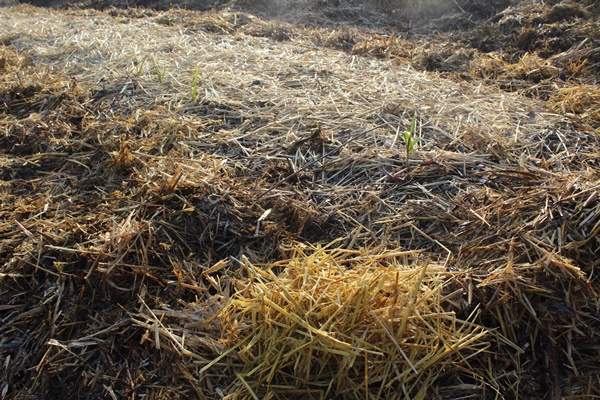
About the wind breaking straw bales, which are more like a straw hill the kids love to play on, the straw is wet and partially black, but not really decomposing yet.
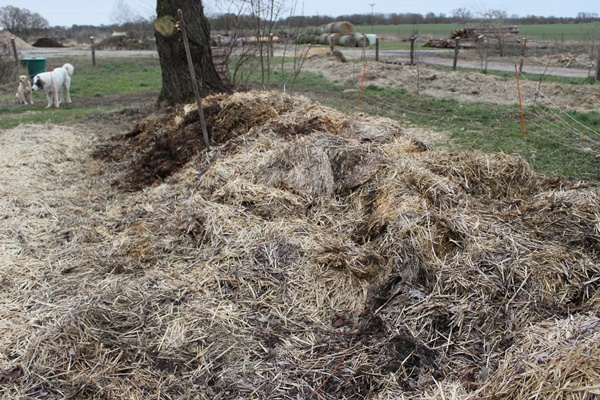
I was hoping to plant in this in the spring, but there is no soil to plant in. Since it is hard to reach with a tractor I am going to loosen the straw bit by bit with a hayfork. This will take some time, since it is heavy, but there is still some time until spring and if the straw has not decomposed enough by then, I will just make a hole and put some soil in to plant in. This amount of straw does not dry out so easily and make for a nice experiment this summer, since the summers generally tend to get dryer every year.

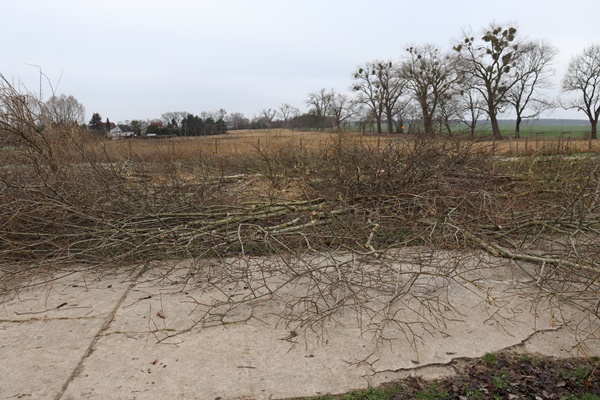
Extensive damage caused by Willow borer

Long overdue clearing of this Willow patch

It is such a shame, but after the guy from the environmental agency visited us, he confirmed that these trees all have willow borer damage and need to be taken down. These trees protect and give my “garden bed underneath the trees” a very good microclimate. The coming season this bed will be unprotected from the burning sun, temperature drops at night and the often harsh winds. I will have to think about what I could sow here coming season. Hopefully the tree stumps will sprout again in spring and the willow trees will grow back quickly.

But back to the current problem. The trees have to go, so my husband grabbed his chainsaw and started with the biggest tree consisting out of 4 trunks.

Starting situation:

And down they went.

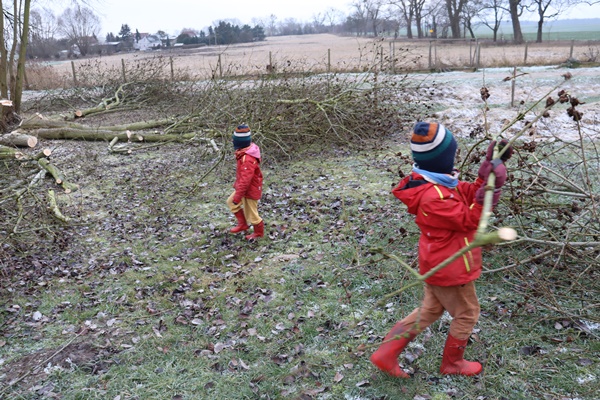
Our 2 older kids helped with clearing the branches where needed, so my husband kept space to move around safely.

After a coffee break a bunch of smaller trees where cut down and some just barely missed the elder tree.

Finishing of the clearing of this patch with the last medium size trees.

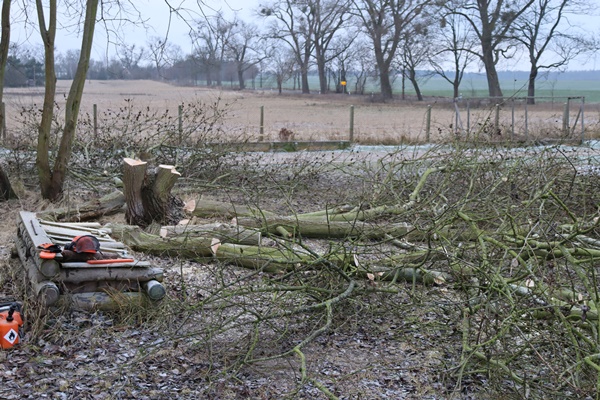
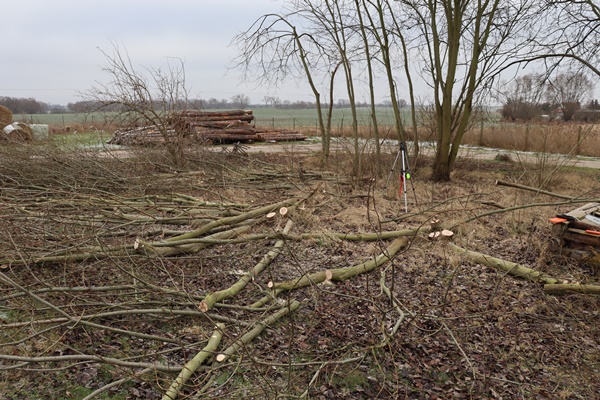
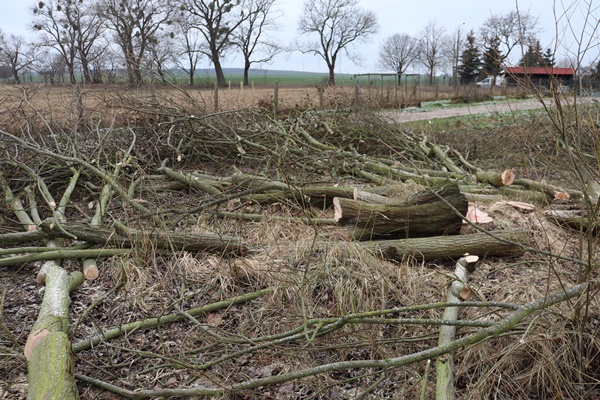
And all trees are cut down, finished before lunchtime. The cleaning up of this mess will take more time than that. The bigger logs will go for firewood and the branches will be chopped and composted.

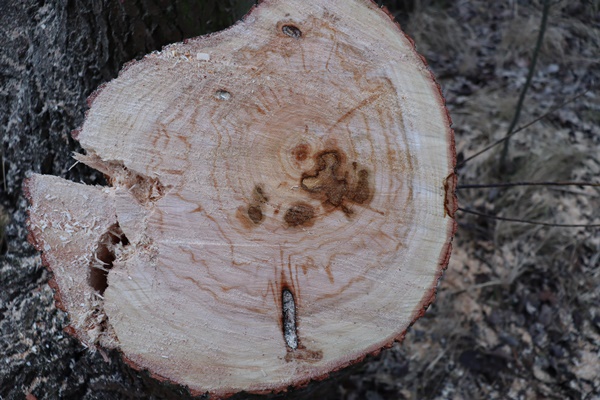
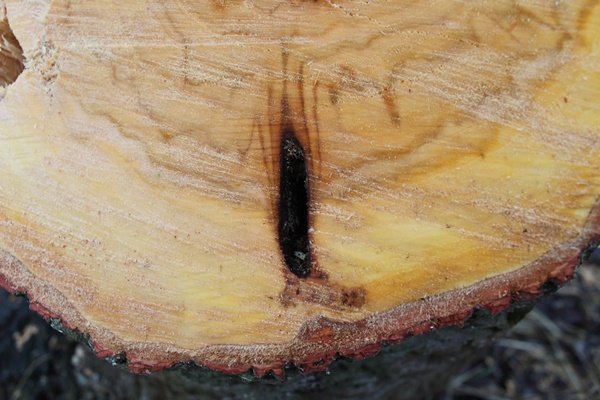
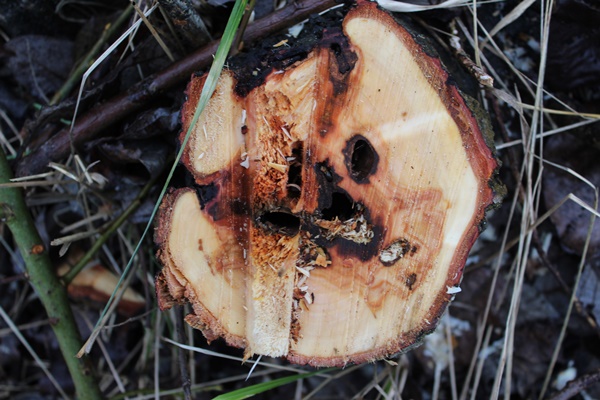
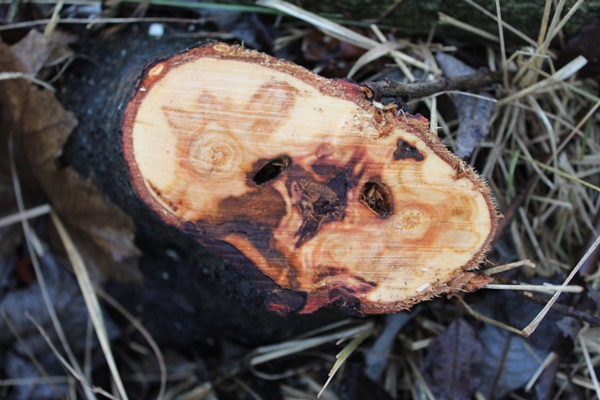
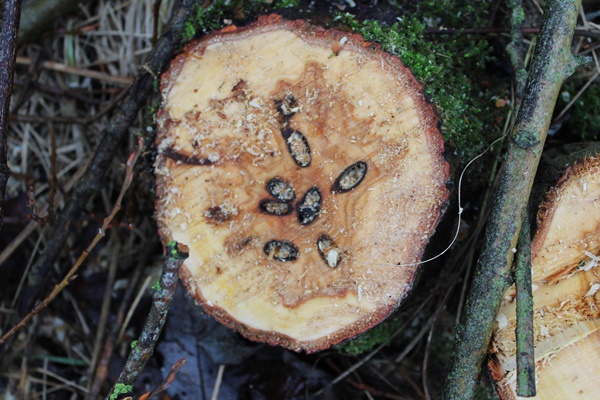
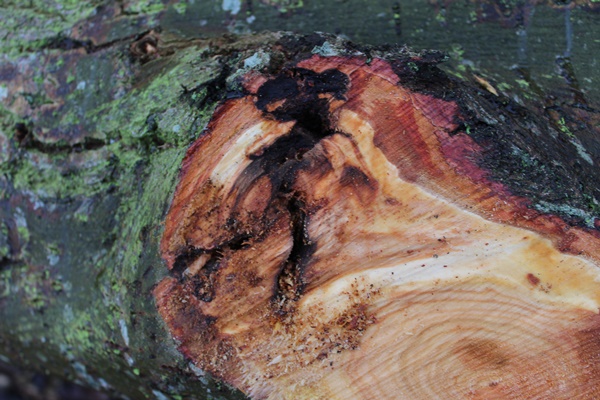
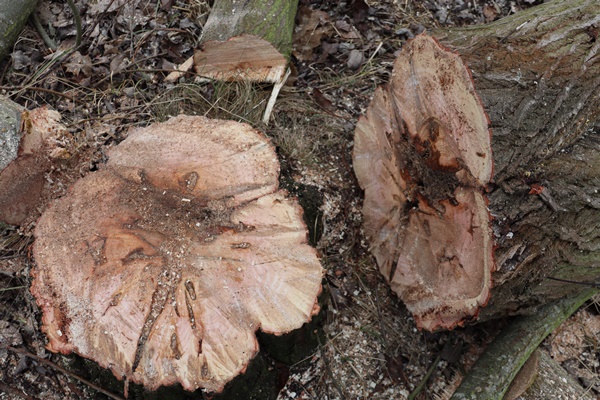
Here are some examples of the damage caused by the willow borer.

As you can see these are nice size holes. Around these holes the wood will start to decay. On some pictures you can see the darker brown. That part of the wood is decaying. Healthy willow wood is light in colour. Partially the centre of the trees has already turned into pulp and made the cutting down of the trees somewhat dangers.

All the tree stumps are cut of strait so the rainwater can fill up the holes and drown the willow borer to minimize its spreading.

2 days after the trees where cut down a willow borer crawled out of a cut of tree stump. The size of these creatures is impressive. They are much bigger then your normal caterpillar. Very good to see are the jaws with what they eat the wood.

If you are interested, my husband has also filmed this action. You can see this on our YouTube channel Straver Homestead.

Link to the video here