Growing season 2024: our hügelbeds in garden 3

What about the blight struck tomatoes and some other notes?

Our garden season 2024 was all about gardening the “wild” way and I think my approach about gardening the “wild” way was a little to literal. In the early stage of the plant growth I am not always sure what plant it is, so I let everything just grow up to the point where I was overwhelmed and did not know where to start in finding the plants I actually wanted to grow.

This is how things can end up looking like.

Overgrown garden bed with a red poppy, sunflowers, potato plants and lots of weeds

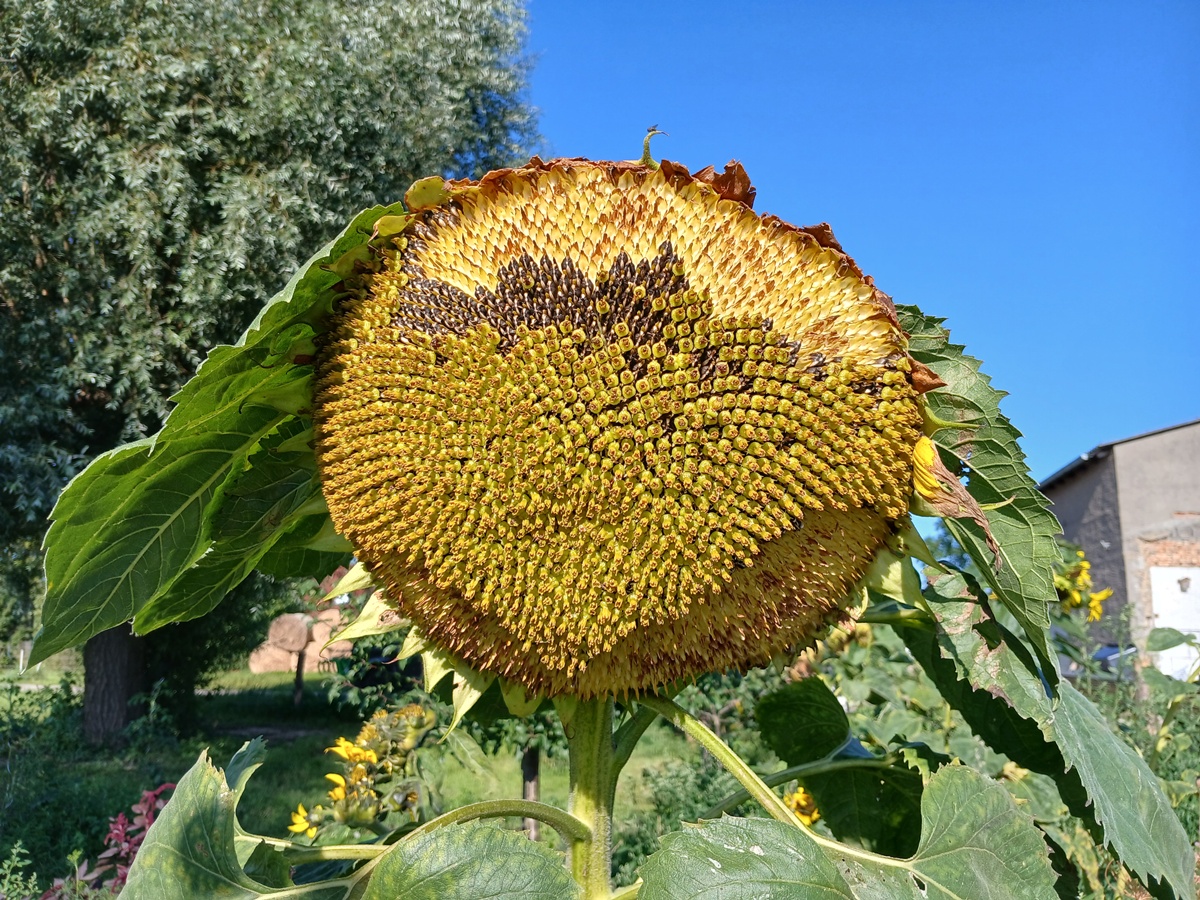
Middle auf August I harvested the potatoes in this hügelbed. It was difficult finding the plants and it was difficult to harvest because of all of the roots of all the other plants. While harvesting we “cleaned” most of the hügelbed by pulling out most of the weeds. We left most of the sunflowers for the birds, which have been eating on the sunflower seeds already. One important thing we have to note for the future is no sunflowers this close with the potatoes, since the potatoes close to the sunflowers where so much smaller as to the once further away from the sunflowers.

Harvested potatoes in a white bucket and a small pile on the ground in a partially freed garden bed with large sunflowers in it

I the other garden beds there where a lot of self sown red beets and amaranth, which was nice. Beginning of July we did a big clean up round with these hügelbeds, since the weeds also had taken over here. In two hügelbeds we freed the tomato plants and in the other hügelbed we found self set potato plants ready for harvest, some pumpkin plants and some flowers I had sown.

Hügelbeds with green plants on a sunny day

In this last mentioned hügelbed I had sown a lot of different things directly, but it took until early July before things started to sprout and grow. For the pumpkins this was too late. They did not give a harvest before fall came, since the wetter turned to cold for the pumpkins to ripen. Some basil, dill, nasturtium and other annual flowers did well. With our climate I, unfortunately, will have to pre-cultivate a lot of plants, unless we have a very warm and early spring. Well that means, keep a close eye on the wetter.

Pastel pink Zinnia

After the clean up I also sowed some carrots, spring onions and red beets. Obviously this was way too late, but the kid’s loved eating the small carrots in the fall anyway. I will relocate and plant out the spring onions with some spacing this spring to use this year.

Small carrots and spring onions surrounded by weeds

I had mentioned the blight struck tomato plants in a post last year. After I cut back everything that was diseased we got some nicer and dryer wetter and the tomato plants did give a harvest after all, but I did need to keep a close watch on them and cut diseased parts back now and then. Since the tomatoes did turn out ok, we will be growing tomatoes again, but I will start them a little later in the greenhouse and I will plant them in a different, airier garden bed.
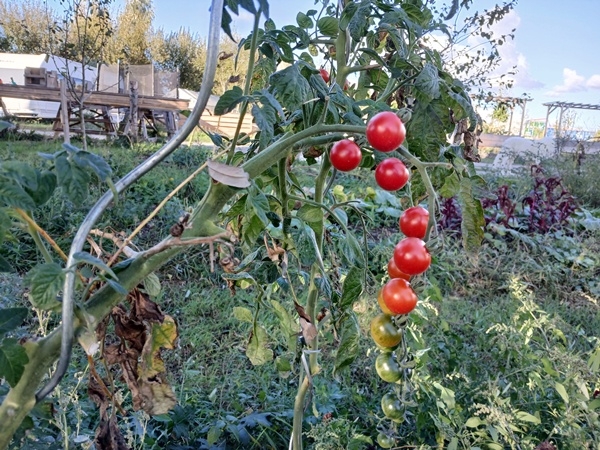
A vine with red and green tomatoes

End of September caterpillars started eating on the nasturtiums, but they where only on this plant.
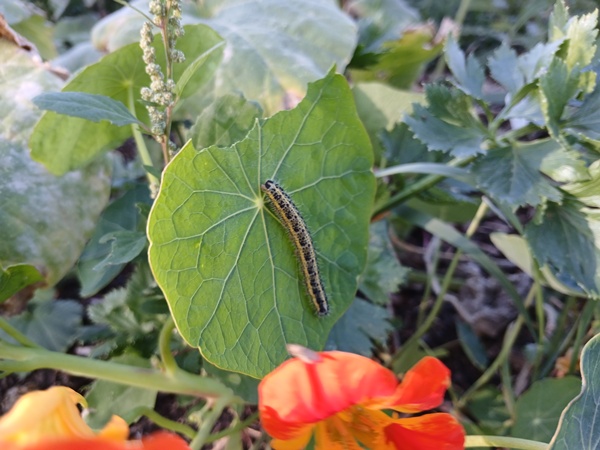
Caterpillar eating on a nasturtium leaf

Just some impressions:
Small green tomato plant in a garden
Middle sized green pumpkin plant in a hügelbed against a green background
Small annual flowers with a small potato plant in a hügelbed
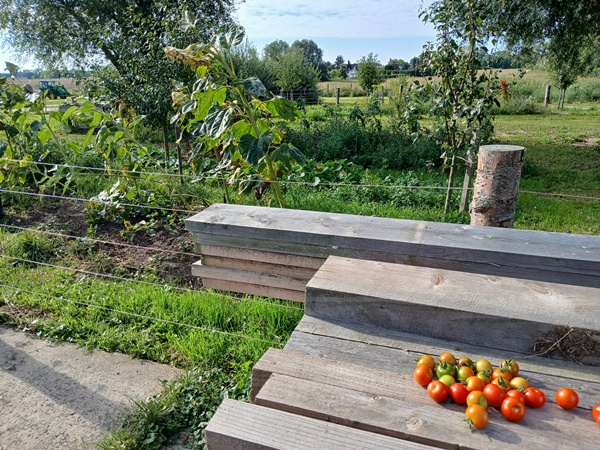
Some tomatoes lying in the sun to ripen some more on a stack of wooden boards against a green garden

Growing season 2024: The compost bed in our garden 3

Just some notes on what we did and what we should have done differently

After winter we rotary tilled some cow manure in this long garden bed and early Mai we rotary tilled this garden bed again in preparation to sow. The soil looks promising.

Clean garden bed ready to be sowed in

I sowed about 2 weeks later and as you can see in the next picture I should have removed some weeds first and the grass (and what ever else is growing there) around the edge of the garden bed should have been mowed long before as well.

Messy looking garden bed with hay mulch in a small corner

After sowing I covered the bed with old hay.

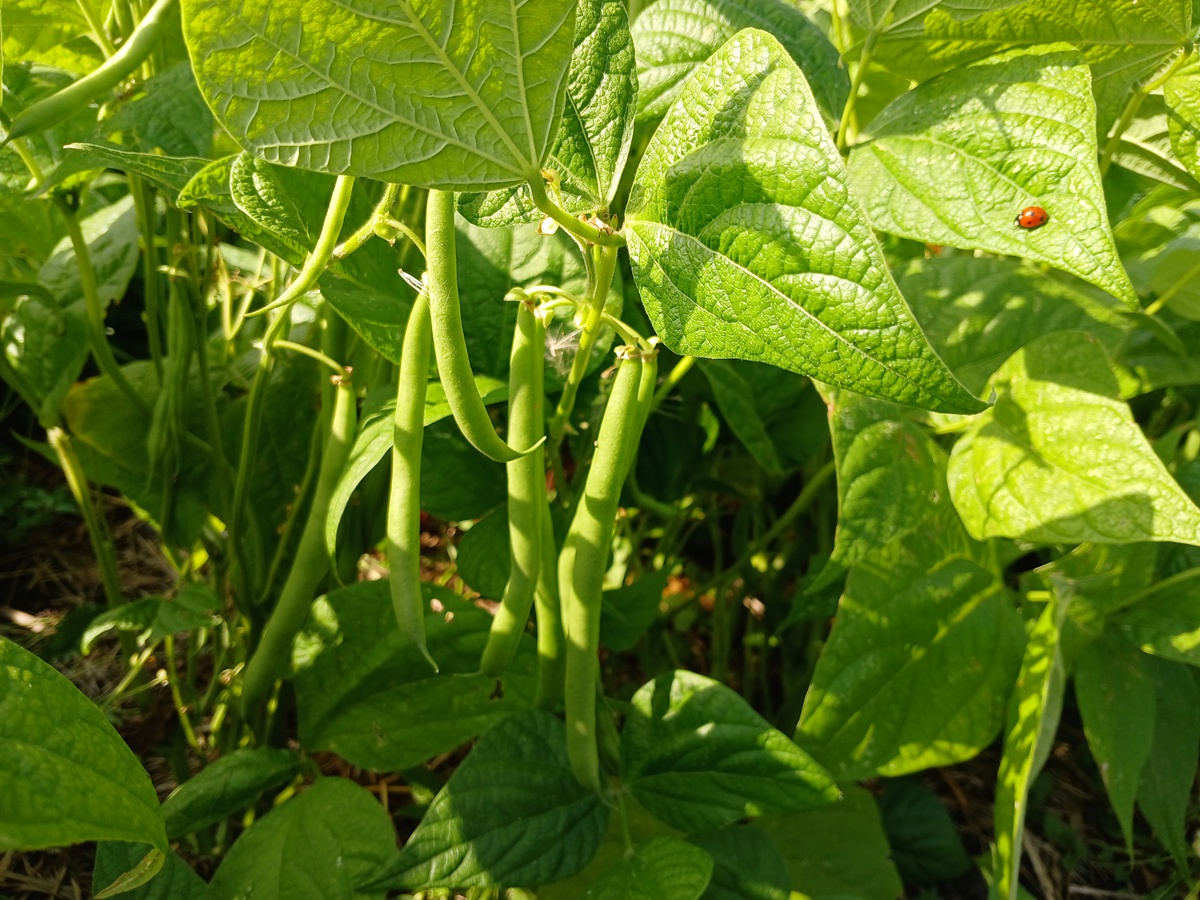
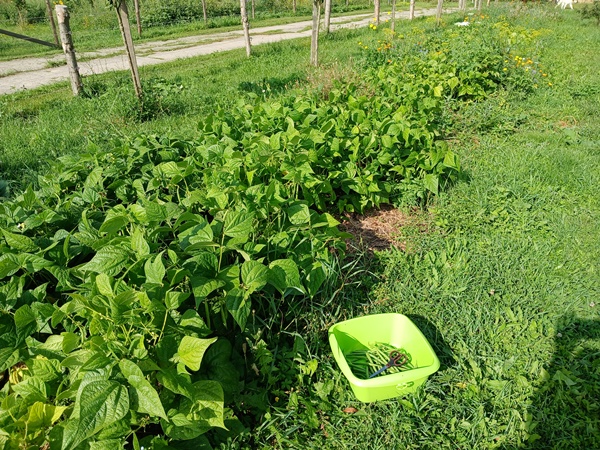
I only grew green beans, peas and flowers here. The broccoli and cauliflower did not sprout. The flowers where for the insects and I used them as a divider between the different variations of the vegetables. This bed is 1.8 Meters wide and I sowed 3 rows of green beans beside each other from about 10 meters long. The green beans did well and I was able to harvest more than enough to last us until the next growing season. The only thing I should do differently is have more space between the rows, since the density made it difficult for me to harvest and I should succession sow, since it was really too much to harvest at one time.

A garden bed packed with green bean plants and a harvesting tub with harvested green beans

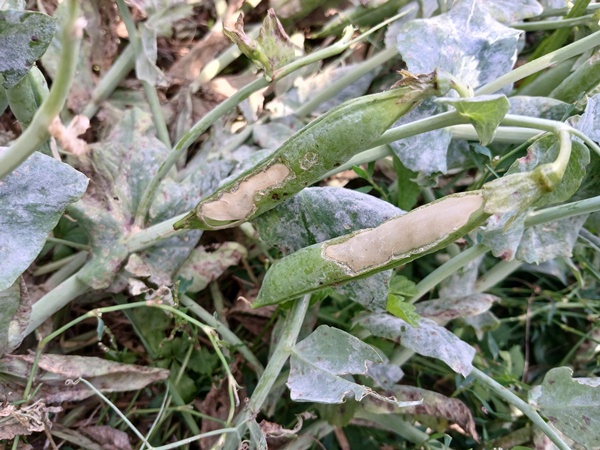
The peas where ok, but I really should start to trellis the peas. It is not really beneficial for the pea plants to lay on the ground. A lot of the pots looked unappetizing and got eaten at by slugs due to that, but the peas we could harvest tasted so good. There is nothing like home grown peas.

Pea plants lying on the ground with pea pots eaten at by slugs

Another attempt in dealing with the couch grass

Remodelling our Garden 2, planting perennials densely and removing the raised beds which have no fruit trees

The raised beds

Our garden 2 with the raised beds has been very overwhelming with the couch grass growing threw every where. We had already removed some beds that where already completely overgrown with couch grass as you can see in this post. Constantly pulling out the couch grass in this many raised beds is simply to time consuming. Another problem was that our lawn mower tractor did not fit in between the raised beds to keep the grass on the walking paths low. Therefore we decided to change the purpose and our approach in garden 2 completely.

Our garden 2 will be for the fruit trees, which are already there, flowers, strawberries and herbs. Only the vegetable patch will be for growing annual plants, mainly vegetables.. The plan is to have the raised beds, the ones with the fruit trees in them, so full with plants that there will be no room for the couch grass. The raised beds without fruit trees will be removed, so the pathway maintenance will be much easier.

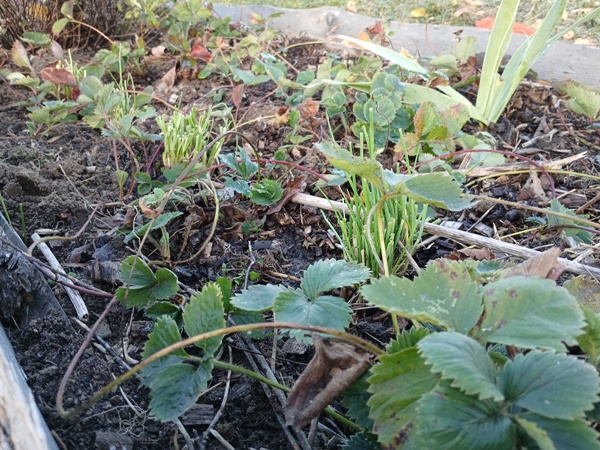
Raised bed with chives, strawberries and iris

This means a lot of plants, mainly strawberries, need to find a new home. The currant bushes found a new spot in between the blueberry bushes in the berry garden. The herbs are combined with strawberries and found places in the raised beds which are staying. We have not finished this work yet, but we are getting there.

Newly planted raised bed with peppermint and some garlic
This peppermint was planted in the spring. By fall the roots where grown trough the entire raised bed.

The vegetable patch in our garden 2

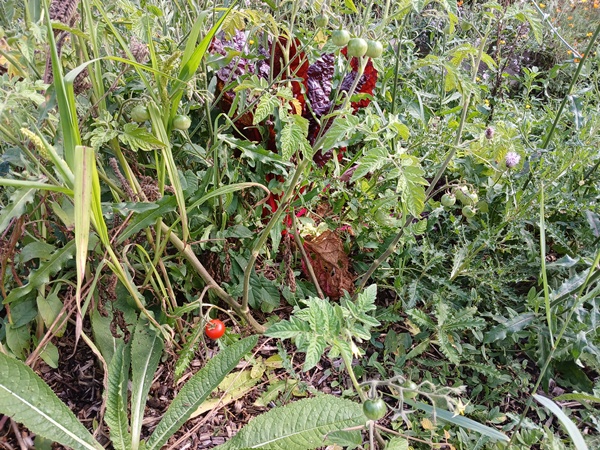
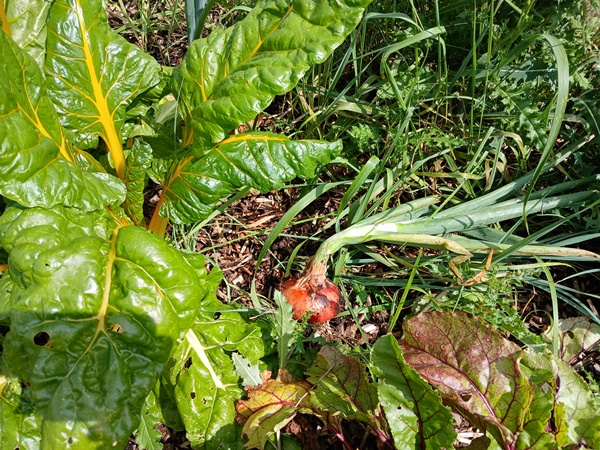
The vegetable patch is very much taken over by the couch grass, but still gave us a nice harvest of onions, red beets, chard, parsnip and even some tomatoes from a volunteer tomato plant.

A very overgrown garden patch with red beets, onions, chard, phacelia and couch grass

We did not rotary till the vegetable patch last year and the couch grass took over most of the patch. We will have to do something about that. With the treeless raised beds being removed we will also extend the vegetable patch. Since also the kid’s raised beds will be filled with perennials, they will have the vegetable patch for there annual plant wishes the coming growing season.

Chard and an onion ready for harvest in an overgrown garden patch
A big phacelia with a lot of couch grass behind it
A beautiful big phacelia giving colour to the vegetable patch
Tomato plant cooping in an overgrown garden patch
Volunteer tomato plant cooping in an overgrown garden patch
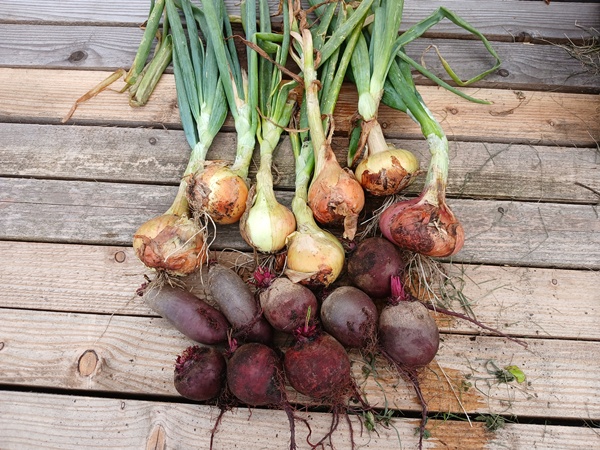
Freshly harvested onions and red beets displayed on a wooden table
Part of the harvest