A raised bed full off couch grass, so sad, but also some surprises
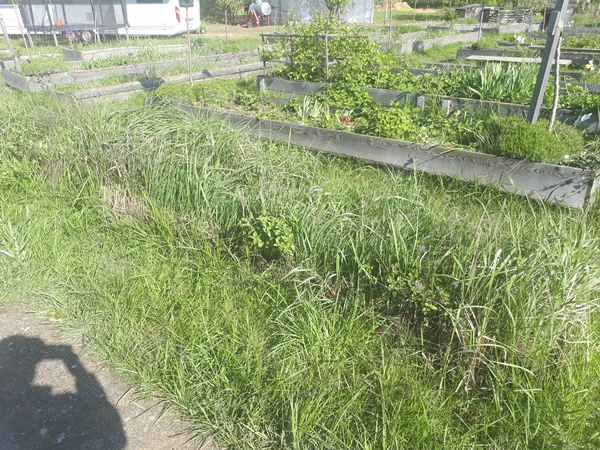
One of our raised beds was on a spot where there was a lot of couch grass and we neglected to do anything against the couch grass before we made the raised beds. This was one of the kid’s garden beds and we just let them do as they liked and that was not pulling out the grass. After 2 years the raised bed looked like this.
It is very much overgrown with couch grass, although not entirely.
For the most part the soil of the raised bed is one thick layer of roots. The couch grass roots do not really go down, but grow horizontal, sending up new grass regularly. After some time the roots have woven a thick carpet.
It feels like a miracle if anything else would be able to grow in there, but it did. We found some strawberries hanging in there and growing taller to be able to get some sunlight.
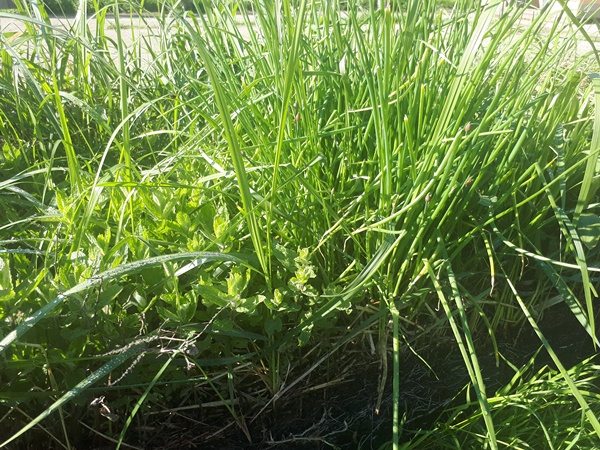
But not only strawberries, we had a section with mint, also a root invasive plant, with hardly any couch grass growing through. Same with the tuft of chives growing next to it.
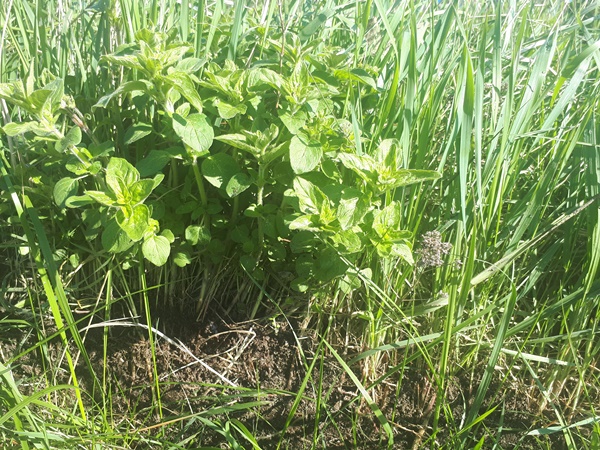
There also was a big plant of oregano in the bed, which mixed in with the couch grass. This made it hard to harvest. We had a lot of work separating the oregano from the couch grass, since we do not want to eat the grass.
Since it is impossible to get rid of the couch grass in this raised bed and we have a new idea for growing food without the interference of the couch grass we cleared this raised bed to make space. We took of the wooden sides and picked up the soil/root carpet that was left with the tractor bucket. The “carpet” really held together and was easy to remove. It was just a thick layer on top of the normal ground.
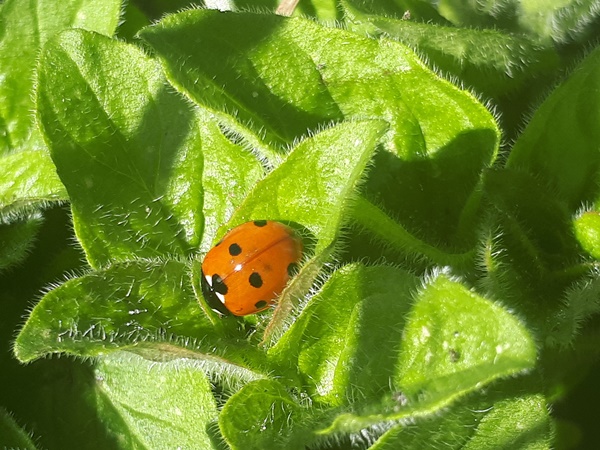
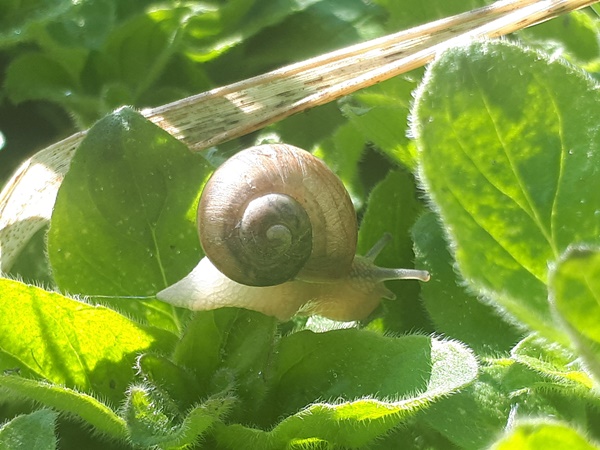
While clearing the “carpet” we found some lady bugs and this beautiful little burgundy snail.
As for the reason for clearing this space, you can read about it in an up coming post.
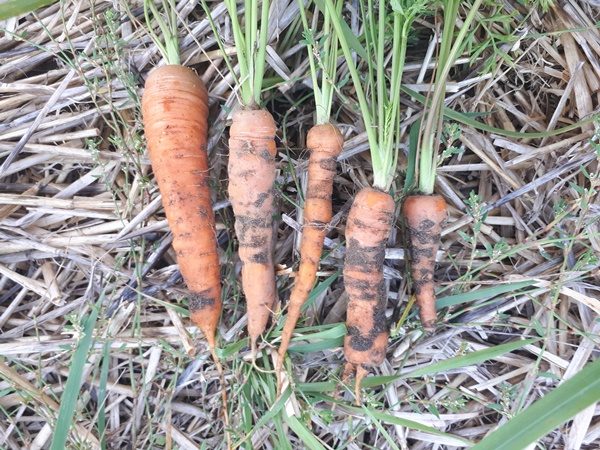
The garden season 2023 started dry and hot, which was not very useful for gardening. As mentioned in a previous post the carrots did not want to sprout. We found only 5 carrots in our raised beds and the onions we harvested where ratter small.
Freshly harvested carrots
Freshly harvested onions
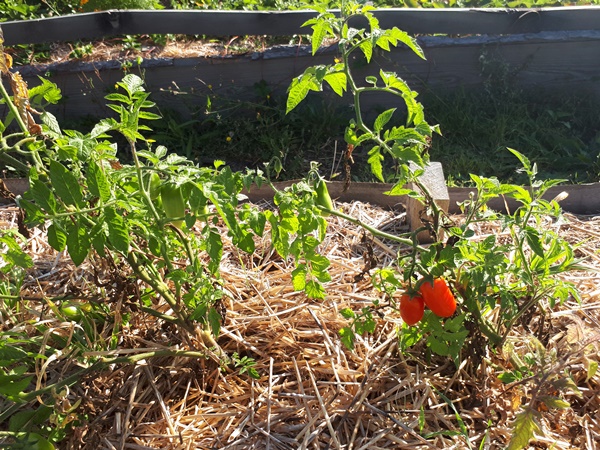
Where the carrots did not sprout, we planted tomatoes and peppers. I had pre-cultivated way too many to grow only in the greenhouse. We improved the soil a little with some manure and sawdust before planting. With the hot and dry wetter and us not watering much the tomatoes and peppers obvious did not do well. The tomatoes where only small brown sticks standing in the ground, but in August the wetter changed. We got rain on a regular base and the tomato plants started growing a little from the roots again. We even where able to harvest a few tomatoes before the blight came.
Tomato plant in September
Tomato plant in September
My daughter did a better job. She had this beautiful healthy looking tomato plant with some bright green tomatoes. When the tomatoes where ripe, she was quicker with harvesting then I was with taking a picture, but the taste was wonderful. The kid’s generally are very serious about there own gardens and love to water, so the tomato plants in there gardens obviously did better.
Tomato plant
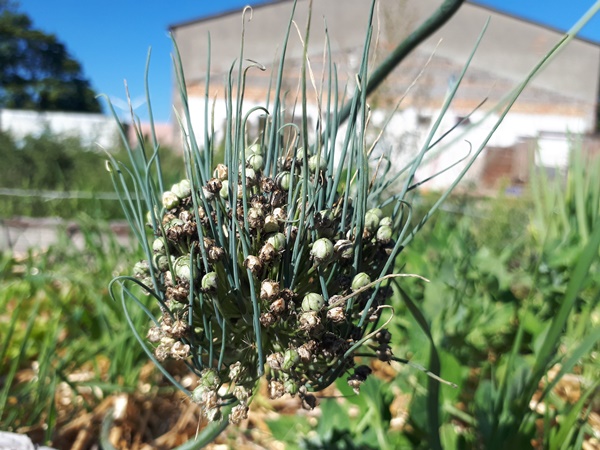
In the growing season 2022 I had left some leeks in the ground and they flowered beautifully. The only thing is that I missed out on the right point to harvest the seed. When the wetter changed and we had more rain some of the seed started to sprout right where it was. The seed head of the leeks looked very interesting, as if it has hair. I still was able to save some seed from the seed head, because not all seed had sprouted. We will use some of it in the coming growing season.
Hairy leek seed head
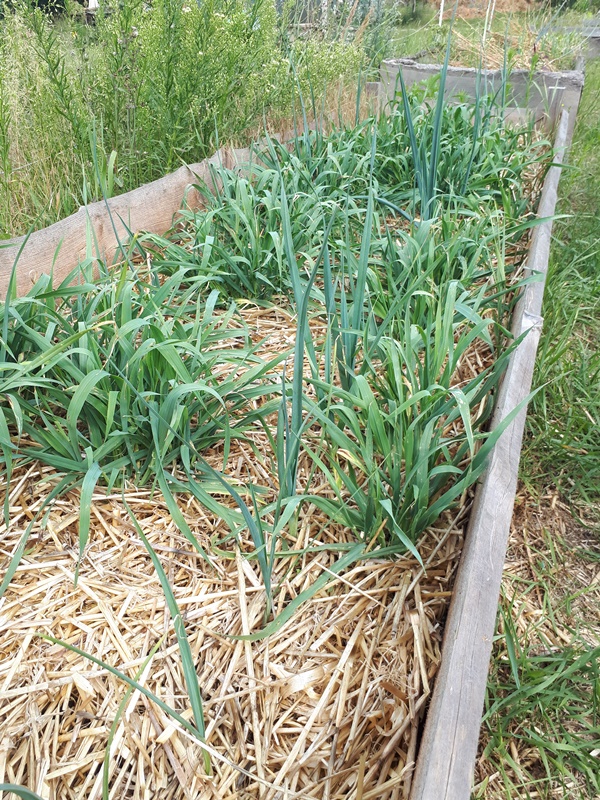
What I am definitely not liking is using straw as mulch in the garden. There are still so many seeds in there, which sprout, that I always have so much grain growing in the gardens. In this raised bed the leeks are partially hidden from all of the grain growing there.
Weedy leek patch
I took out all of the grain (and also a lot of couch grass) to give the leeks some space.
Weeded leek patch
Last fall we made a lot of biomass on a hay field. With this stuff the seed had long fallen out before we mowed it, so that should be much more to my liking as the straw. This biomass will serve as mulch for the gardens in the coming growing season, so we will see if the seed really has all fallen out before we pressed it to bales. Or maybe we will have gardens filled with plants from the hay field.
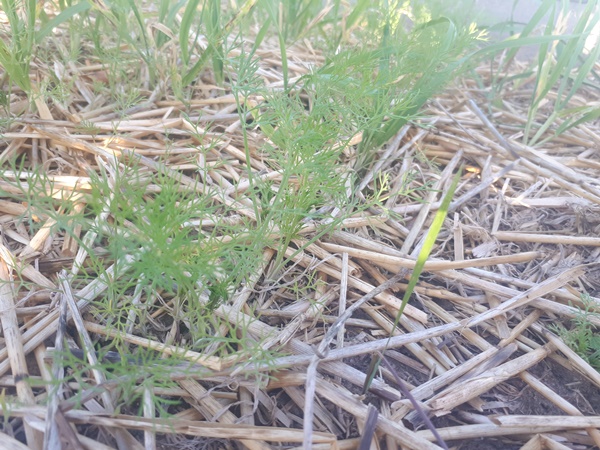
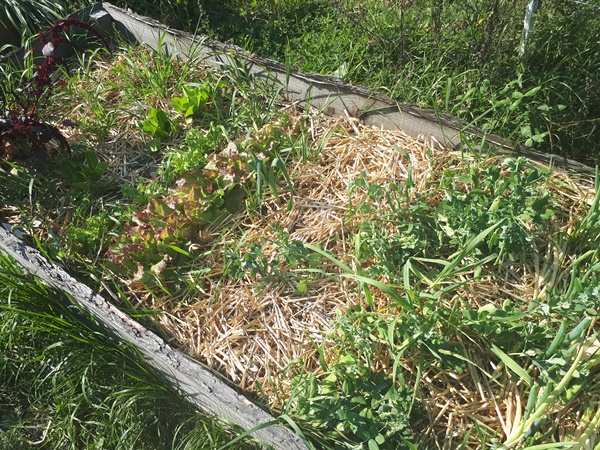
After the wetter turned in August we did some new sowing. We sowed dill, different varieties of lettuce and some sugar peas, which sprouted well and we even could harvest from, before the first frost came. I was positively surprised about that with the late sowing in August, but we had a long and mild fall, so sowing this late in the season will probably not work every year.
Small dill
Lettuce and peas
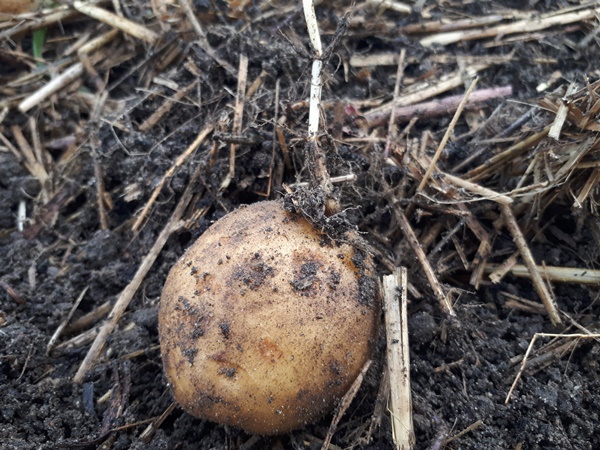
In one garden bed I planted a few potatoes, but we have a big problem with the couch grass coming trough every where. The roots of the grass actually just grow right trough the potatoes and I could put a big part of the harvest into the compost. Such a shame.
Potato with couch grass root grown in
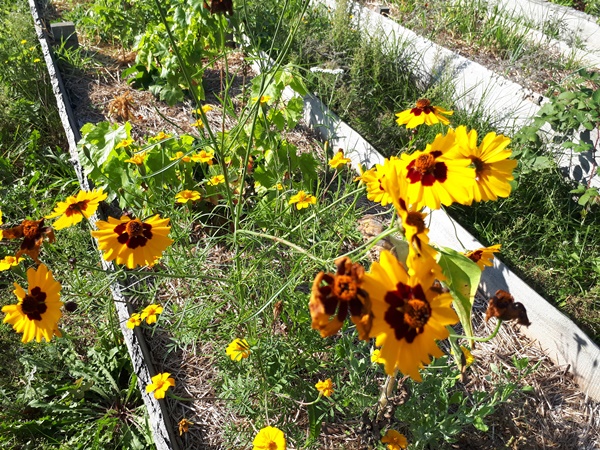
We also planted some flowers, but we should do a lot more to attract predator insects.
Flowers
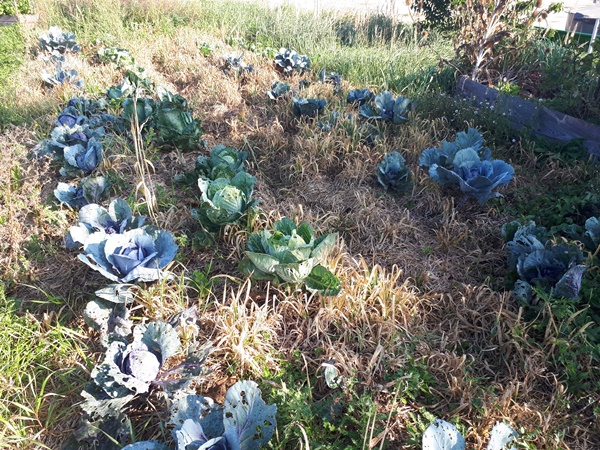
Last but not least our garden 2 also has a normal garden patch which was rotary tilled last spring (because of the couch grass). We planted red and white cabbages there, with celeriac in between. We planted a lot, counting in losses to pests, for instance, the caterpillar of the white cabbage butterfly. As you can see on the picture here we also used straw as mulch and the entire patch was full with grain already turning brown since I took the picture in the fall.
Cabbage patch
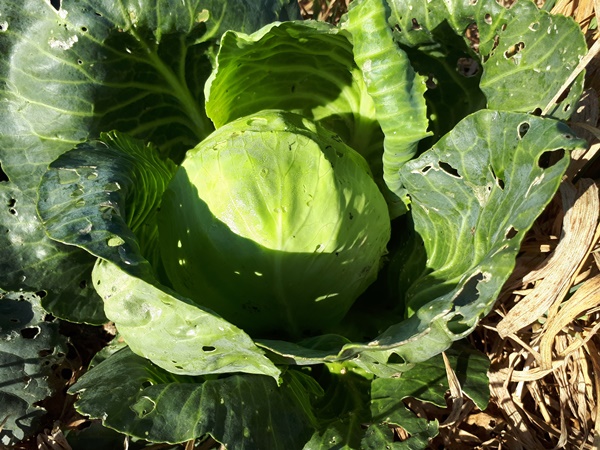
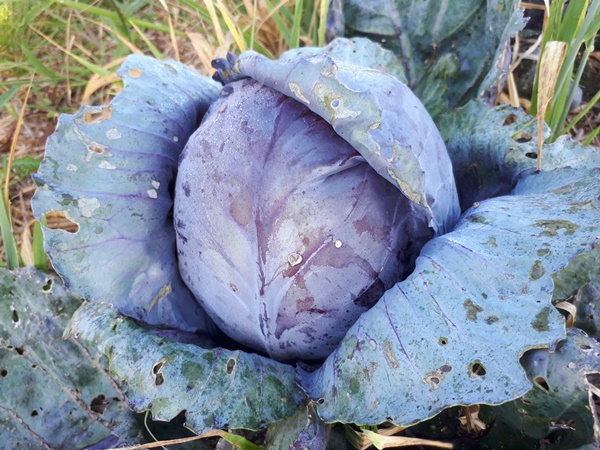
As expected some cabbage plants did better then others and there where more then enough pests. All in all this patch did alright. A part of the cabbages formed nice big heads.
White cabbage
Red cabbage
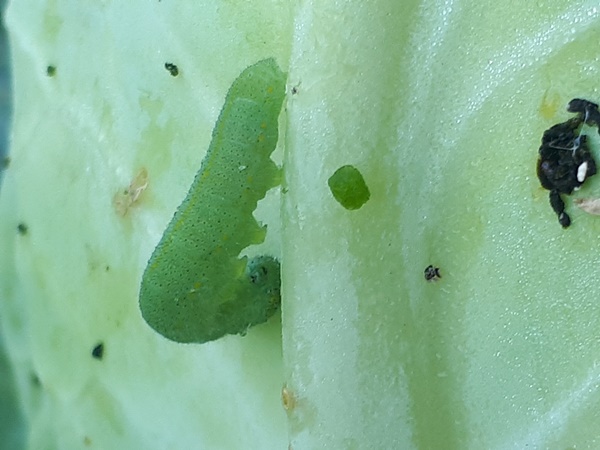
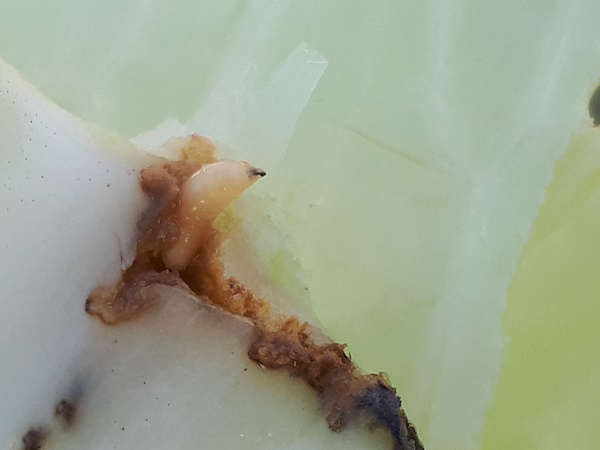
There where a lot of pests like this caterpillar (probably the cabbage moth, Plutella Xylostella) and this maggot (probably a small cabbage fly, Delia Radicum).
cabbage moth caterpillar
Maggot of a small cabbage fly
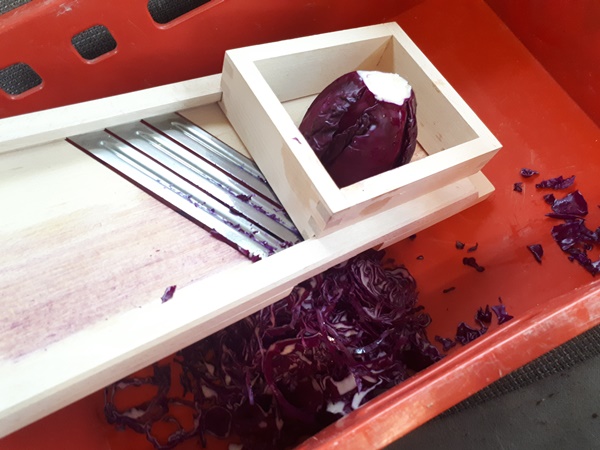
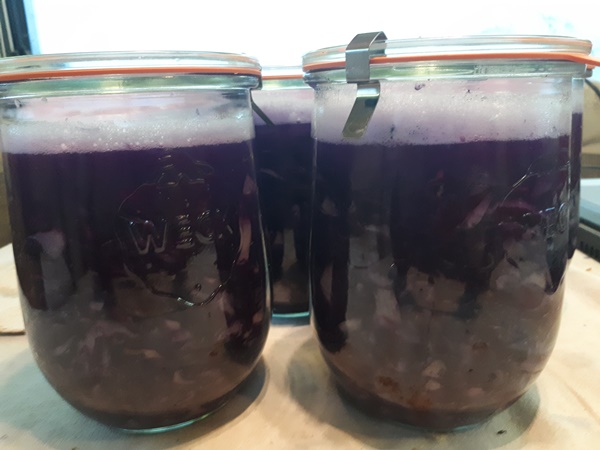
I could harvest more then enough cabbage heads to make enough sauerkraut to last us until the next harvest. I bought this slicer especially for making sauerkraut and I must say that the sauerkraut becomes much better as to when I cut it with a knife. Obviously with a knife I can not cut the cabbage as thinly as with the slicer and when I am making this kind of bigger batches I will always use the slicer from now on.
Slicing cabbage
Sauerkraut in the making
Unlike the cabbages the celeriac did not do to well. Most of the plants did survive the dry and hot spring and summer start, but they stayed small and did not make any tuber. As I understand celeriac needs a lot of water to make a tuber, so I think this is not really the right crop for us to grow.
Celeriac
Celeriac
Luckily I had a celery variety for the stalks for the first time this year, which thrived very well in the greenhouse. We liked this celery for our soups very much, so we did not have to go without. We will grow this variety on a bigger scale this year.
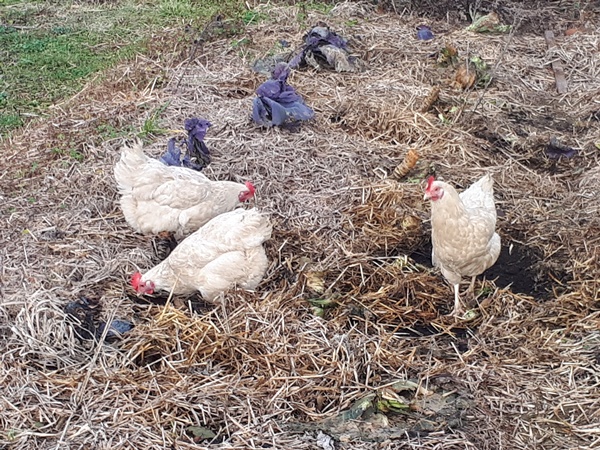
After harvesting was done we let the chickens into the garden to help on pest reduction.
3 white Sussex chickens free ranging
Concluding I have to say that the garden soil is slowly improving, but it still has a long way to go. Having a drought spell is terrible, because the soil dries out so quickly and becomes so hard (like concrete) that if we water, the water just flows of to the side and waters the walking paths in stead of the garden soil.
The couch grass also is a big problem. It is all over in the original ground and on the walking paths. We can not dig it all out, that is just too much and we would have to empty out all of the raised beds again and dig out all of the fruit trees in order to do so.
Well, we are going to have to think of a new approach for these raised beds for the new garden season. We are having some thoughts there, but that is for a different time.












 Beautiful Chaos