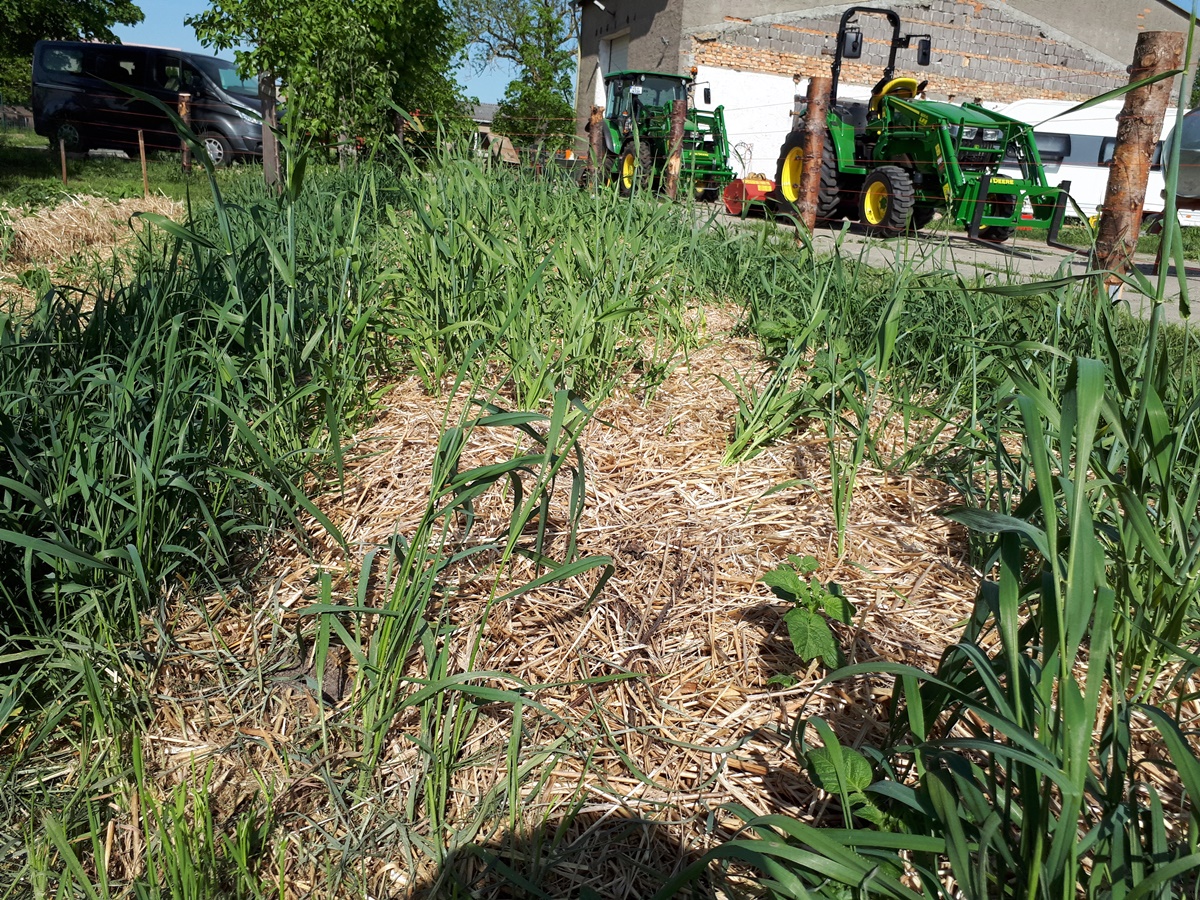
Well that is the question on hand. The pressure of the couch grass on our property is overwhelming. It is not everywhere a problem, but where we have created garden beds we have a hard time getting rid of it. 3 years ago we created 3 hügelbeds, not really aware of the couch grass and what it exactly does. Obviously the grass, among other “weeds”, started to grow into the beds. This is how the hügelbeds looked like last fall.

Hügelbed to no-dig bed
After harvesting the volunteer potatoes that grew here last year, I restructured the hügelbed on the left side to a no-dig bed by flattening out the soil, putting the old mulch as a border around it and put new hay as mulch on top again, link. After a while I needed to ad some more mulch to the border. Wind had blown some away and rain had pushed it down, so the soil wasn’t covered any more. But that was no big deal. More problematic was all of the couch grass growing there, link.
We pulled out all of the couch grass as far as we could get it done, put card board down and put a big layer of straw on top.
Sheet mulching around a no-dig garden bed
It took a while before we found the time, and some useful wetter, to start with the middle hügelbed. This was a real tuff one with a lot of couch grass grown into the hügelbed.

At the end I reduced the width of the bed to only half its original size, but I think I got right about every couch grass including the roots out.
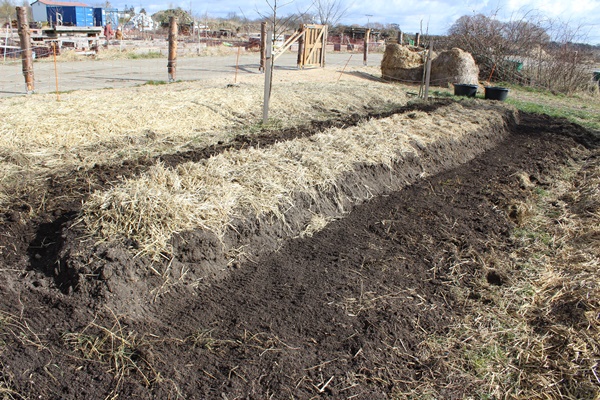
Unfortunately, unaware of the durability of couch grass, I did not dispose of the couch grass and its roots, but left them to decompose in between the 2 no-dig beds. I learned later that this was a bad idea. We put a lot of cardboard down, making sure to connect and overlap with the cardboard we had already used for the left no-dig bed.

My husband brought us a lot of hay with the tractor, so we could divide a very big layer over the cardboard.
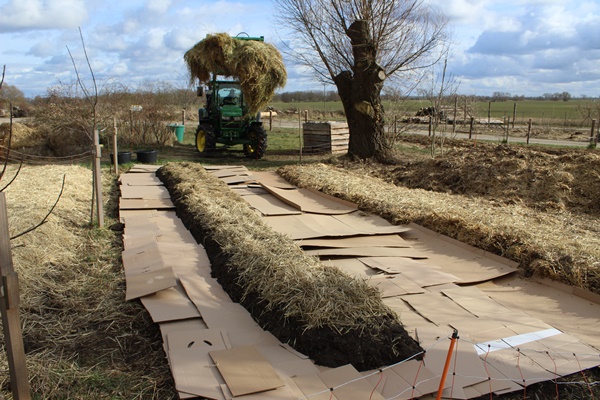

We put the hay down almost as high as the no-dig bed was, so I put some sticks in the ground along the no-dig bed, so I would find it back again.

We love strawberries and we definitely need more of those, so I planted strawberries in this entire no-dig bed.

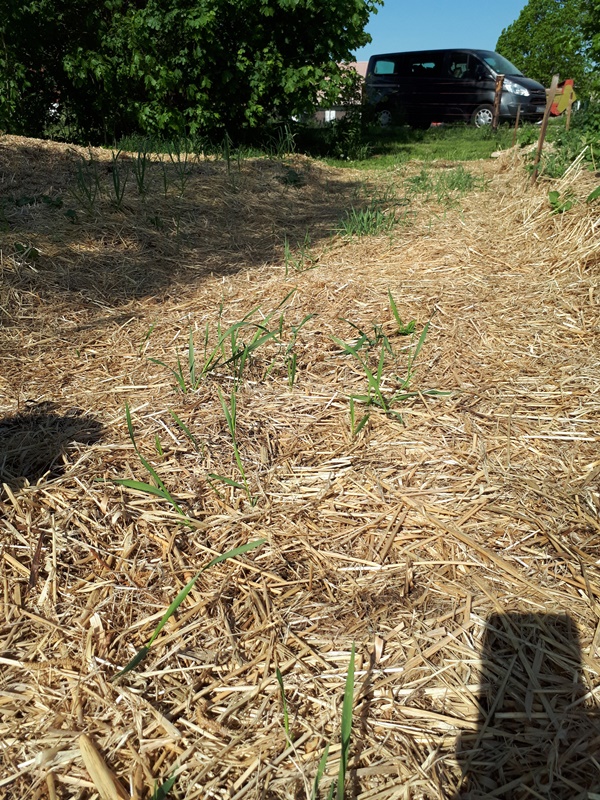
With the sheet mulching we thought we could fight the “weeds” including the couch grass. Well we thought wrong. In winter, when noting was growing, everything looked promising, but about 2 months later the couch grass grew through the sheet mulch. Well, I guess we will have to pull this couch grass out by hand until it does not come back.
About the couch grass
We never got around to prepare the last hügelbed which looked like this by the time spring came.

I found a very interesting video on Youtube (link) about couch grass which undermined my enthusiasm for gardening on our property a bit. Well sheet mulching does not block couch grass at all. Actually the only 2 ways to get rid of it is spraying poison or carefully dig out every little piece of the roots, leaving nothing of it back. Spraying poison is not an option for me, but digging out every single piece of root is not really an option for me either. Our clayy soil is so hard that I can hardly dig into it and it is so full of couch grass that I would have to dig out all of the soil (including the stones and rubble) to a curtain debt (with an excavator) and dump that some where it does not bother us. That would be a bit of an overkill in my eyes.
Tilling the hügelbed
Now back to the third hügelbed. Our new approach is to till the bed now and make it into a no-dig bed later. Tilling makes the soil loose and brings in some organic matter. The hügelbeds are made from compost soil, but I do not know from what organic matter it is made. The soil is so very dry and hardly takes on moisture, so I hope, with the mulch material tilled in, this will improve. Obviously tilling it does not make a no-dig bed, but I do not plan to dig this garden bed in future again.
This hügelbed has a lot of couch grass around it and some spread through out the hügelbed. We pulled out the couch grass as far as we could get it done.
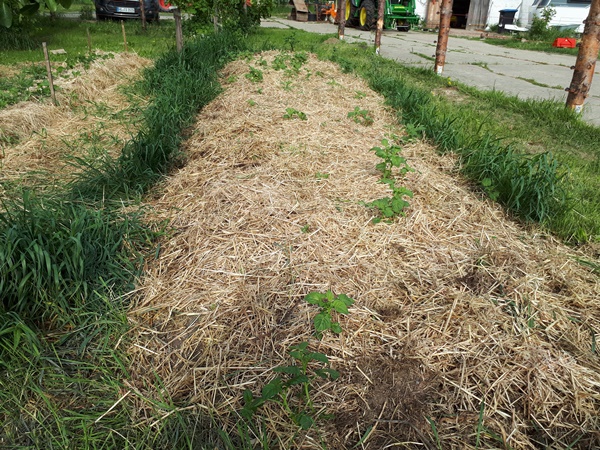
After that I mowed around it, spreading the grass clippings over the hügelbed.

There where also some volunteer potatoes sticking there heads up. We even found the first Colorado beetle on one.
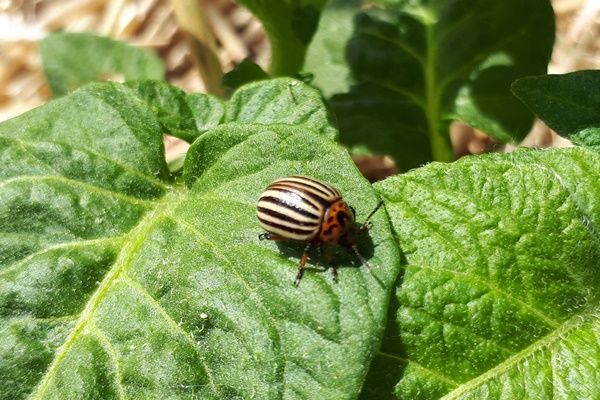
The kids found liking on pulling the volunteer potatoes out, they even found some useful potatoes we later cooked.
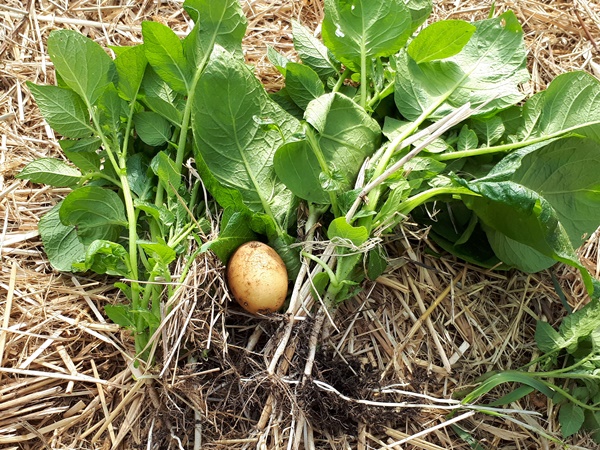
We left the plants on the hügelbed. Organic matter is organic matter and the soil can use it. My husband tilled the hügelbed with our rotary tiller.
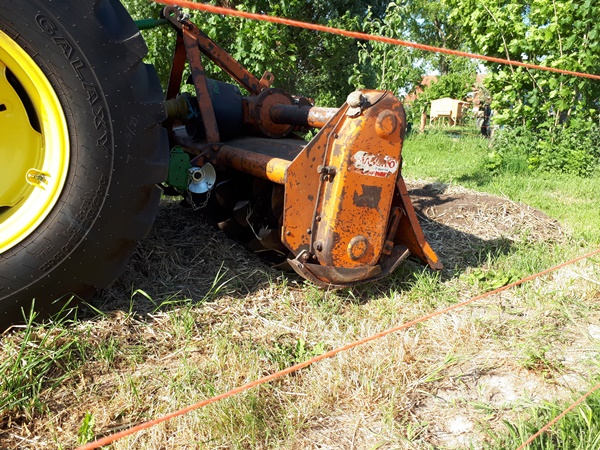
We left the garden bed like this for a few days hoping any “weeds” and left couch grass would pop there heads up, so we could pull them out.

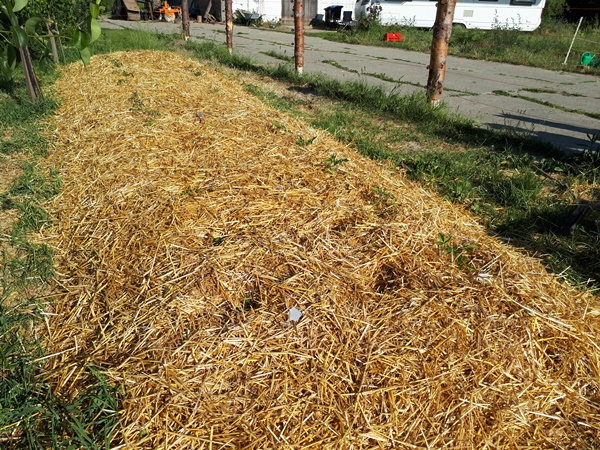
Probably because of the drought we are having, nothing sprouted or popped up there head, but roots close to the surface will dry out this way. We tilled the garden bed again and hat to even it out by hand. After that we watered the garden bed thoroughly and immediately covered it with a very thick layer of straw to keep the moisture in and suppress potential “weeds”.

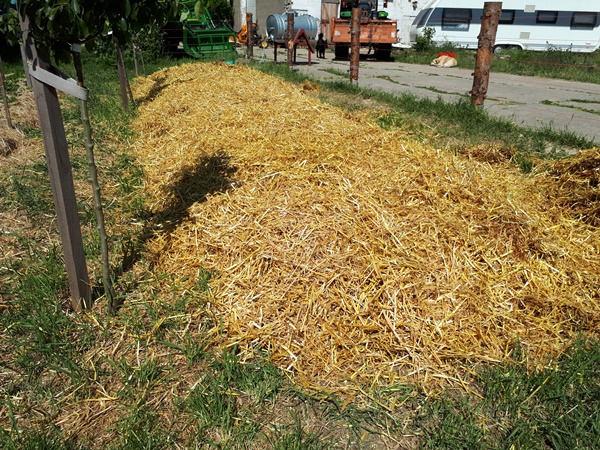
We planted this garden bed with tomatoes, some leftover cabbages and some leftover root celery. Time will show if this approach was a good idea.
With or against couch grass?
But what about my title “Fighting the couch grass”? Well, I am fighting the couch grass, but is it the right approach? How does nature deal with couch grass, so it won’t take over everything? What is couch grass actually good for? If I would just leave it, would my vegetables be able to thrive? Couch grass spreads something which prohibit other plants to thrive, so that is not really an option. It would be nice to know how nature restrains the couch grass.
Colorado beetle, where did they go?
Another observation I would like to point out, which has nothing to do with the couch grass, is about the Colorado beetle. We actually found 3 of them on this hügelbed on the volunteer potatoes. Other than that we have found none. This is a surprising thing, since we have had so many Colorado beetles in the years past and we have more than enough potatoes growing on our property. Volunteers and planted once. Could it be the drought, or have we attracted enough predators by now? Whatever the case is, we are very happy about it.

 Beautiful Chaos