Sowing beans in a weedy garden bed

When weeding is too much, why not leave them…

I am having a really hard time keeping my garden beds free of weeds. My main problem is the couch grass (I have different types of rhizomes grass, I don’t know if they are all called couch grass). It is everywhere and really needs to be removed, so the garden beds I have cleared, I go trough on a regular base to keep them that way. The couch grass is constantly popping up again. The roots are in the original soil underneath the raised garden beds and to deep to actually dig up and I already have plants growing in a lot of the garden beds. The only thing I can do is constantly pull out the couch grass as good as it goes hoping to hunger out the roots until they die off.

Because off this I was not able to give time to all of the garden beds and as you can see on the picture this bed is pretty full of weeds, which also spread ground covering. Obviously a good ground cover is not bad, but does it interfere with the vegetables I want to grow here?
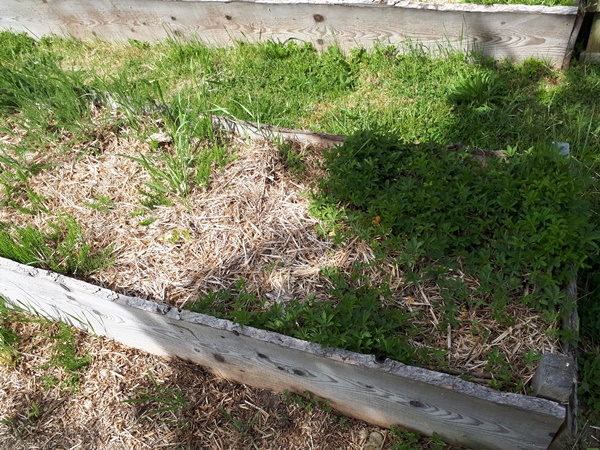
A “weedy” garden bed with yarrow and creeping cinquefoil

On the left side there is yarrow, which I know to be a medicinal herb. What I did not know is that it takes over entire areas of the garden. Making this post I learned that it attracts beneficial insects and repels some pests, which is a good thing of course.

The right corner is full of a low growing leafy “weed” with yellow flowers, which is an absolute winner as it comes to ground covering. It is called creeping cinquefoil (Potentilla reptans). Once this is growing somewhere you will not get rid of it anymore. Even the tiniest root will grow on again and it makes runners, like strawberries do, to spread. However this also is a medicinal herb and is supposed to help against inflammation.

Well to make a long story short. I am planting and sowing and I do not want to go trough the effort of weeding everything out (only the couch grass has to go).

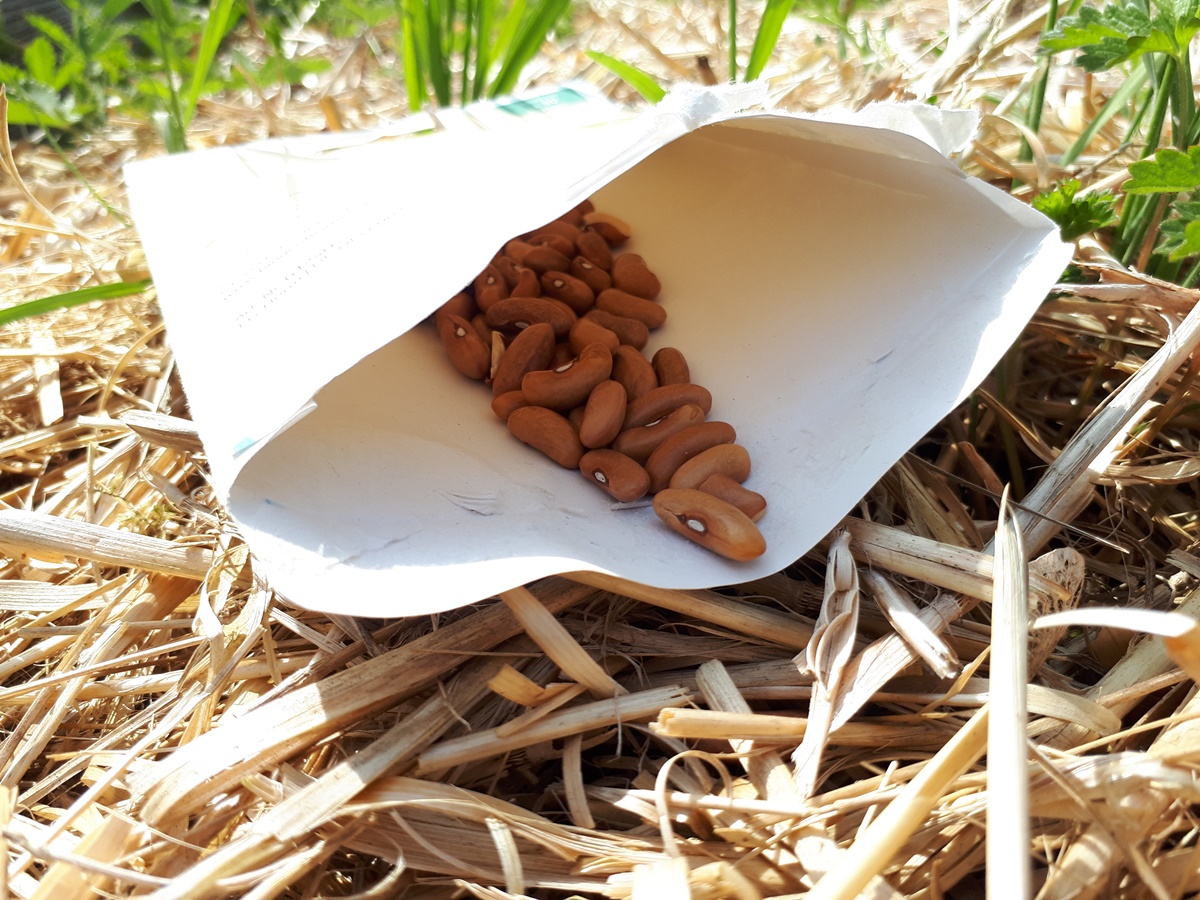
I sowed 2 rows of green beans in this garden bed. I simply sowed in the weeds and we will see what happens. A plant attracting predatory insects and a plant covering the ground aren’t bad things after all.

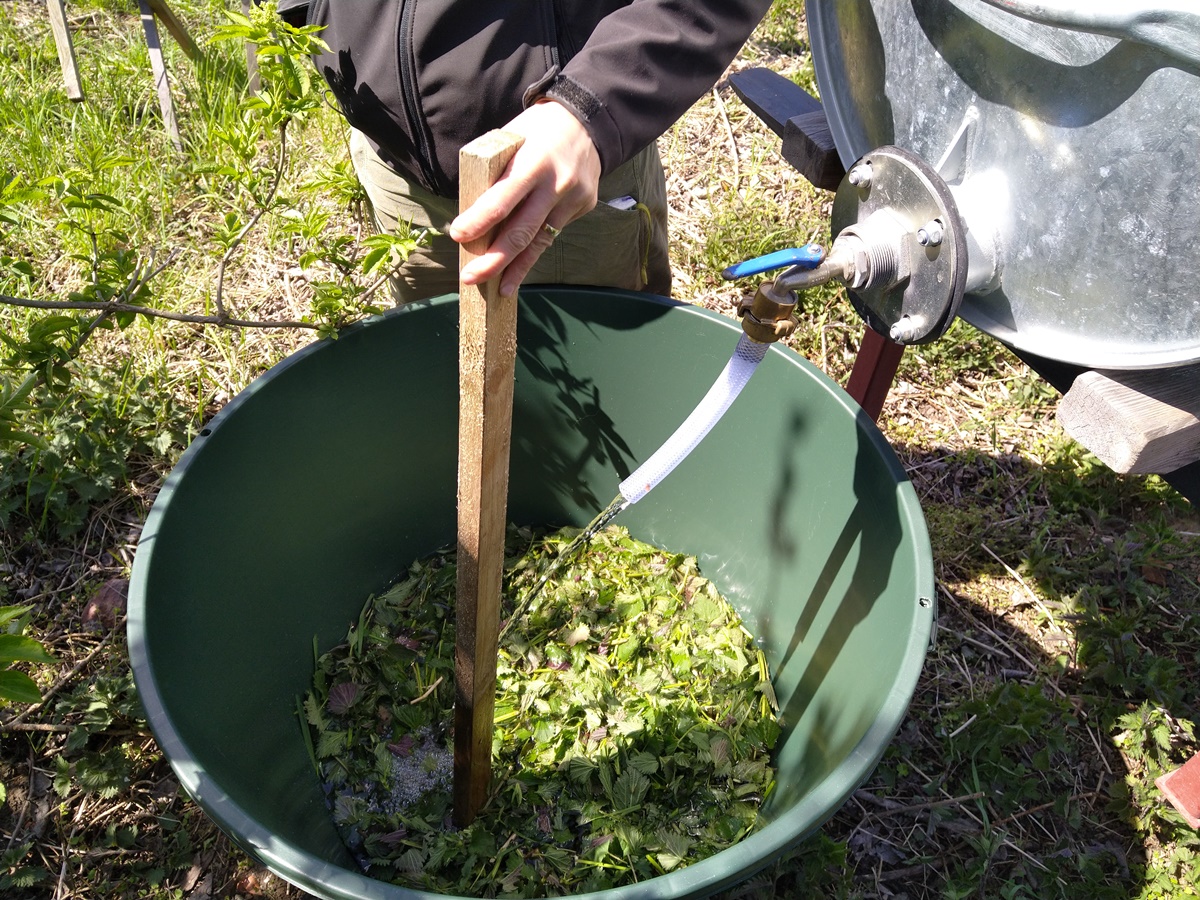
Making stinging nettle manure

How to? It is as easy as this…

For years I have wanted to make this, but some how I never came to it. Now we finally did and it is so easy.

We have a lot of stinging nettle growing on our property. After winter, I just had to wait until they grew to a usable size for cutting off and collecting.

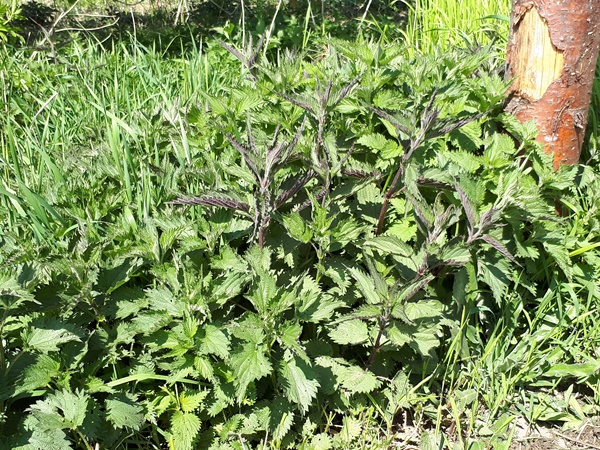
A patch with stinging nettles

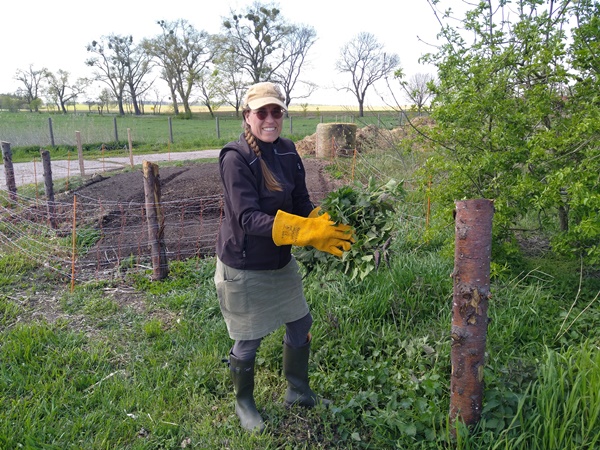
I used a hedge trimmer to cut the stinging nettle off and putt on some very thick gloves to collect them.

A women collecting cut off stinging nettles with thick yellow gloves

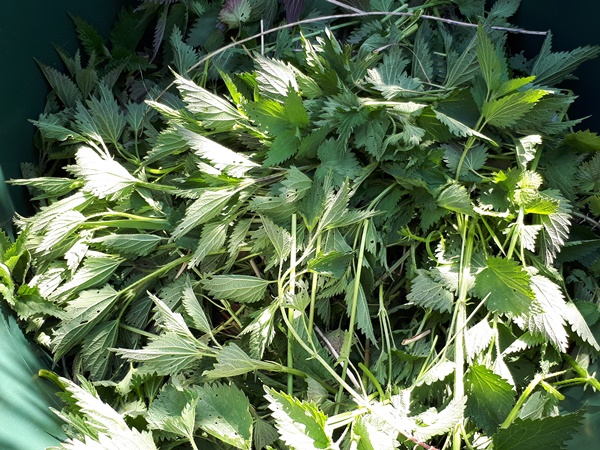
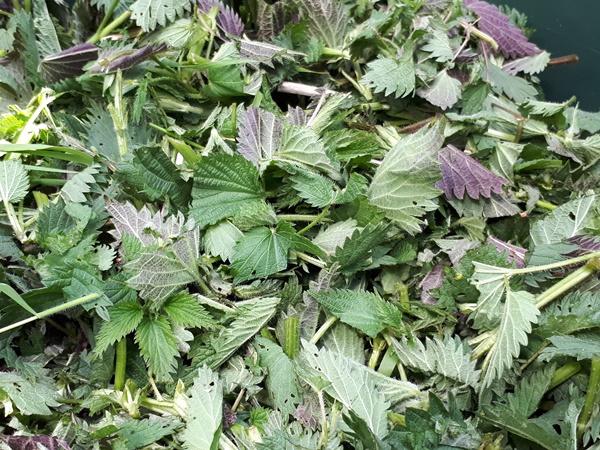
I used a new rain barrel to prevent mold from growing and collected stinging nettle until it was ¼ full. I used the hedge trimmer to cut the stinging nettle into smaller pieces right in the rain barrel. I put the rain barrel underneath an elderberry tree, where it has shade at least a part of the day.

Cut off stinging nettles collected in a rain barrel
Stinging nettles collected in a rain barrel, cut up

The stinging nettle was topped off with water (the rain barrel is half full) and I gave it a good stir. My husband made a funny video of this.

I put on the lid, which does not close air tight, and waited for about 3 weeks.

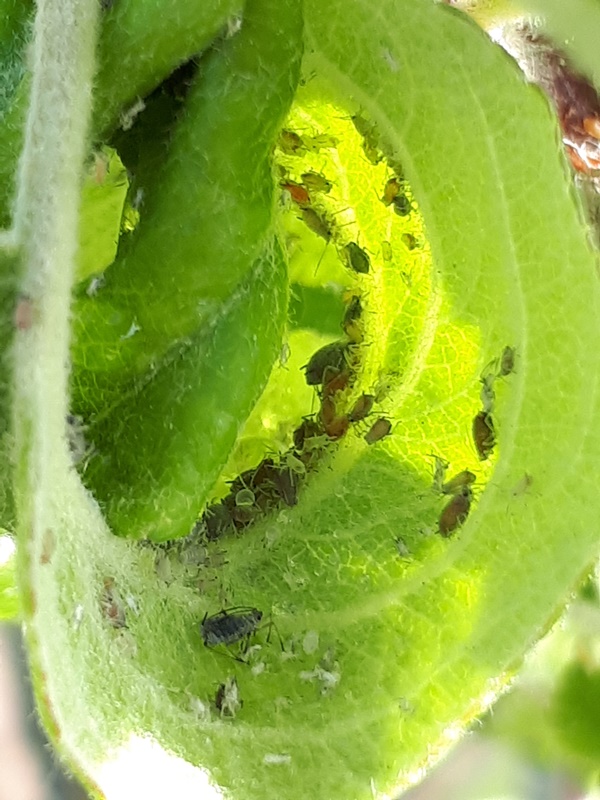
In the mean time our fruit trees in the raised beds are struggling. We are already having a drought and the soil in the raised beds is of the heavy clayy type, which hardly holds any moisture. It will take some more years of adding compost and mulch before it will be a good soil for the plants and the trees. Against the caterpillars the stinging nettle manure will not help, but I do hope (with enough watering to go along) that it will strengthen the health of the fruit trees and will help against all of the aphids inhabiting them at the moment.

Aphids in a rolled up pear tree leaf

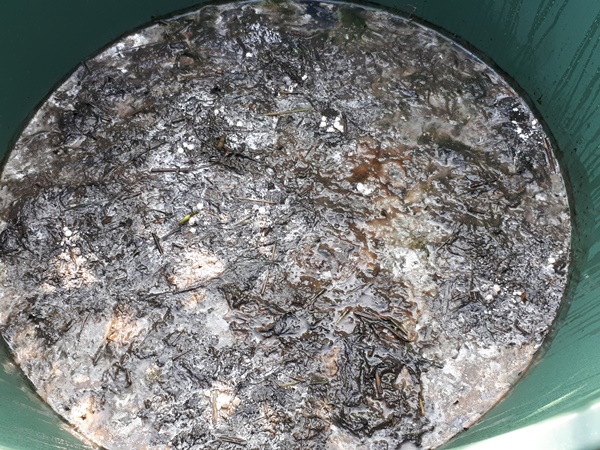
After about 3 weeks of waiting this was what I found after opening the lid.

Stinging nettle manure with wild yeast growing on top, in a rain barrel

It might not show on the picture very well, but the stinging nettle manure is covered with a lot of white spots. I was very disappointed thinking this was mold and I would have to throw the stinging nettle manure away. But, after doing some research on the internet, I have learned that it is no big deal. We have to filter the stinging nettle manure anyway and the plant roots only take what they want and do nothing with the mold spores. I just should not water over any leaves. Since I mostly made the stinging nettle manure for the fruit trees, that is no big deal and I was relieved. The stinging nettle manure is finished when it is not bubbling any more and besides from the mold it can also be possible to have wild yeast growing on the top, which is no problem at all.

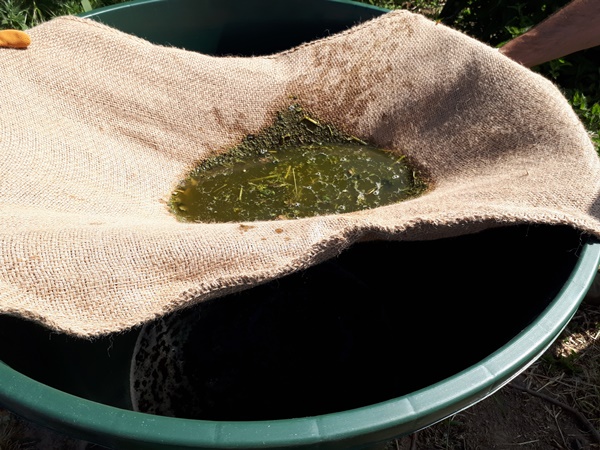
The stinging nettle somehow fell apart completely, so we could only poor everything trough some kind of filter. We decided to try this with a burlap sack we held tight over another rain barrel. At first this worked very well, but with all of the plant material the fluid did not run trough very quickly, so this took some time and was a very stinky matter.

Stinging nettle manure being filtered trough a burlap sack to collect in a rain barrel
Filtered stinging nettle manure run trough a burlap sack and collecting in a rain barrel

The stinging nettle manure should not go bad, so I will see if the amount I made (about 50 litres) will last the season, or if I will have to make a bigger amount next spring.

I will use it to strengthen all of my fruit trees and I will use it for the vegetable plants in my raised beds (without pouring over the leaves). Since the soil in there is very poor of nutrients I think it will help the plants. I will watch the plants in other gardens very carefully, but if I see anything like aphids or other problems they will get some as well.

O je, as I have read the stinging nettle manure should be diluted 1:10, so I am just going to but a nice bottom in my watering can and fill the rest up with water. I am not sure how often I should use the stinging nettle manure, but for now I will repeat it every 2 weeks with my fruit trees in the raised beds, until I see improvement.

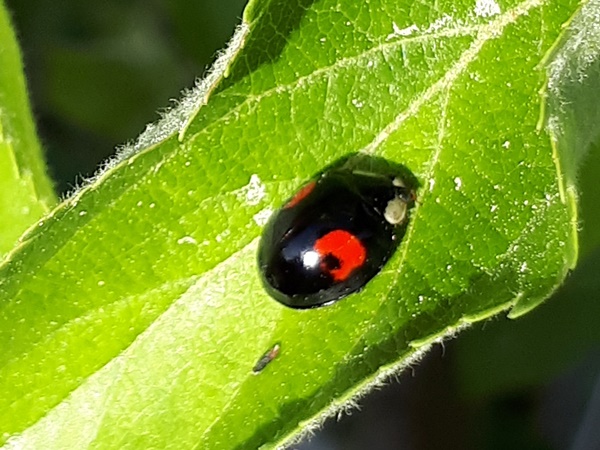
And we have some alleys against the aphids. We found a lot of ladybirds on our fruit trees, so we are very happy about that.

Black Ladybird on a leaf
Orange Ladybird on a leaf
Mating Ladybirds on a leaf
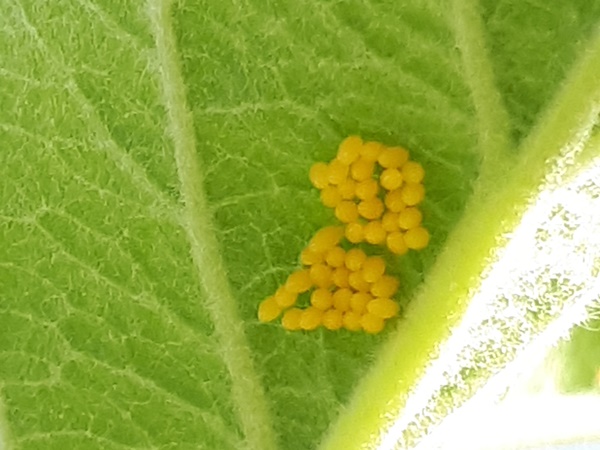
Ladybird eggs underneath a leaf
Ladybird eggs