Growing potatoes in straw round bales

Not quite what I had expected

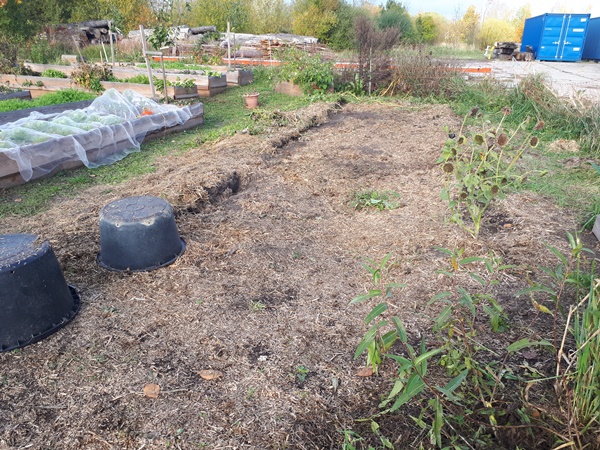
In a garden update post from this spring I had mentioned sprouting potatoes in my storage. I had planted these in straw bales which I use as a wind protection. Here is a picture from this spring.

The potatoes in the straw bales seemed to do well despite the heat and the drought. The plants where nice and green, unlike many other plants turning yellow. Such decomposing straw bales do keep moisture in well.

Unfortunately some straw bales fell to the side and the rainwater just run to the ground without soaking into the soil for the potatoes. These 2 straw bales did not give many potatoes and they where very small.
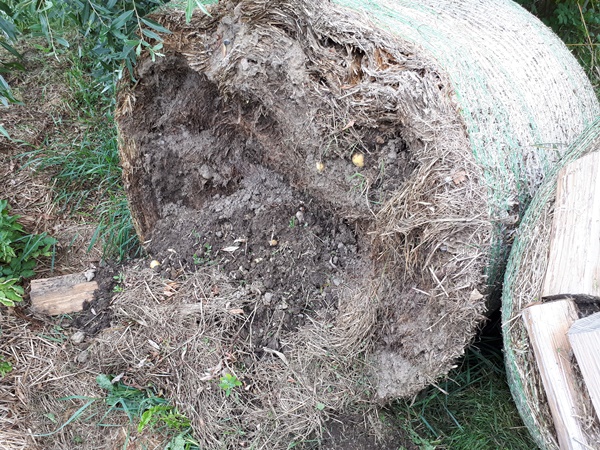
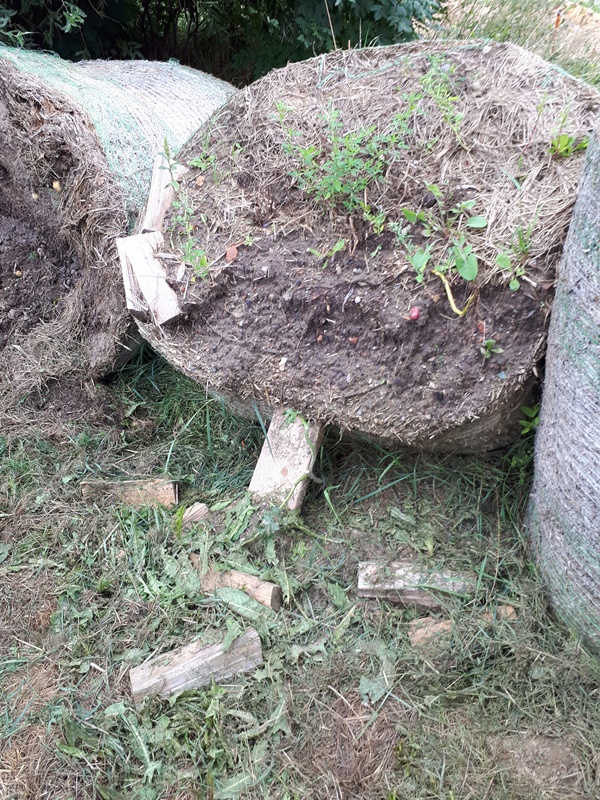
Some of the straw bales fell in itself and if there would be any potatoes to harvest I was not be able to reach them.
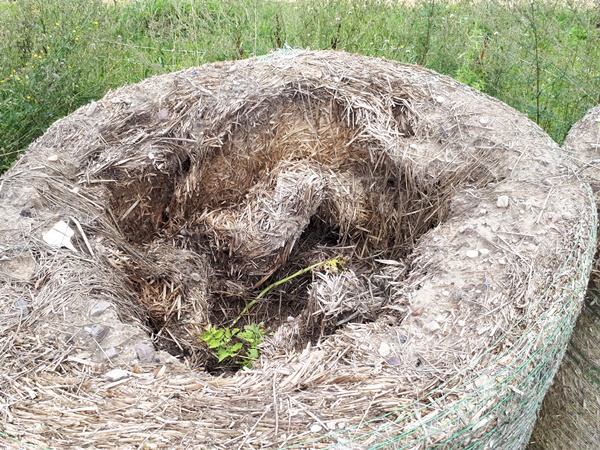
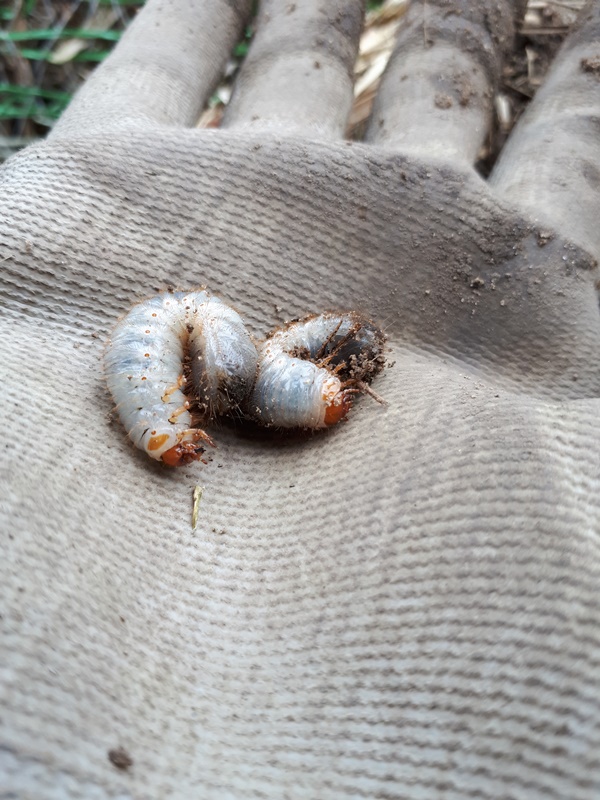
In one of the straw bales I found around 30 pieces of larva of a cock chafer very compact together. I searched and hope I found all. This straw bale did not give much yield as well.
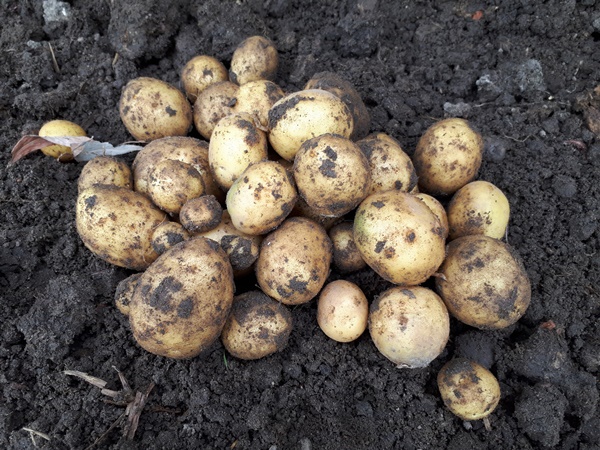
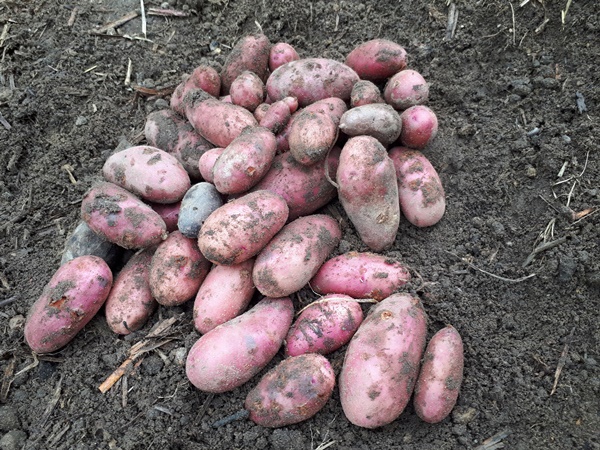
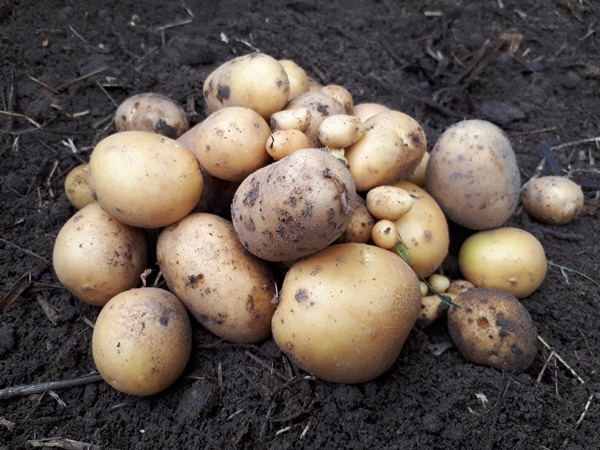
One straw bale was partially hidden underneath a tree and had protection from the burning sun most of the day. This I noticed in the yield from this straw bale. This was a lot more then in the other straw bales. This straw bale gave about 3,5 kg. In comparison the other 4 straw bales, I was able to harvest, also gave around 3,5 kg. So growing in the straw bales this way does not give me the advantage I hoped for in times of heat and drought. The straw keeps moisture in, but the plants do not really root into the straw. Therefore the moisture is not really available for the plants. (Of course this was a small scale experiment with very lose boundaries)

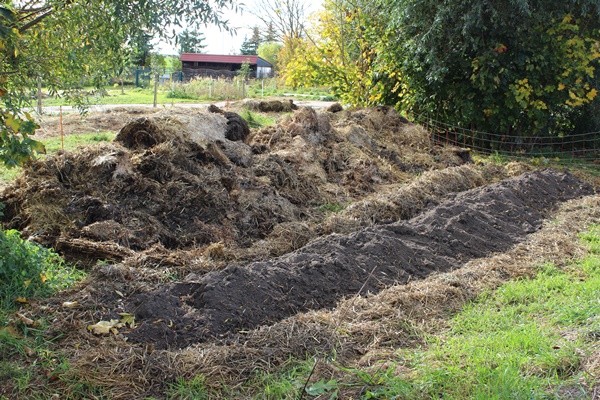
The straw bales have decomposed so much by now that we removed the netting around them and have a somewhat messy pile of straw left. We will leave it over winter like this and see how much it will decompose further. I hope in spring it will be ready for us to grow food in it. For now the pile of straw is still a wind protection for the hill beds beside it.
Harvesting and processing cabbages and carrots

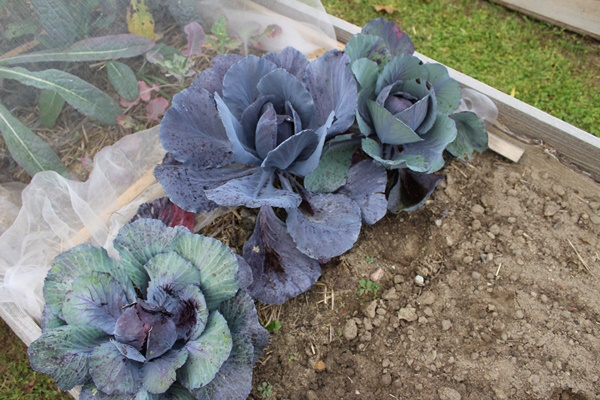
After the first night frost I wasn’t too worried about the cabbages, since they have a cover, but since it is getting colder the cabbages do not really grow any more. So I planned in to harvest and process them.

After going around in the garden I only found 4 small heads I could process, so I decided to harvest a bunch of carrots as well. We had just eaten the last of our fermented carrots and I really needed to make some more.

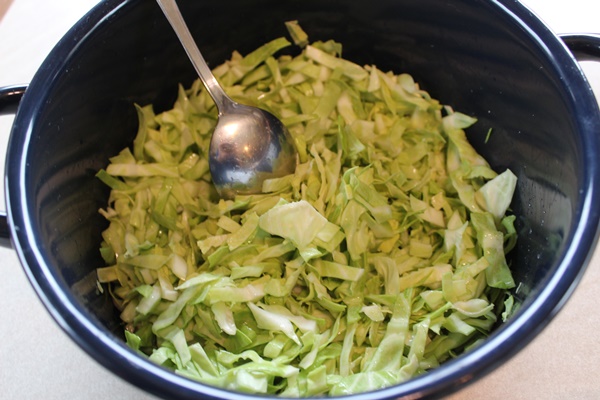
After harvest I started with cutting up the cabbages. I used the white cabbages to make sauerkraut, since my son only wants sauerkraut from the white cabbage and not from the red. I mixed in the salt and let it sit for an hour or so before working the cabbages to get some liquid out. Then I packed it in a glass. A smaller glass would have done. Since we are completely out of sauerkraut at the moment I will have to buy some cabbages to make a useful amount of sauerkraut.

The carrots I only washed thoroughly, cut of some bad spots and cut into strips. I had enough for 2 glasses in which I packed the carrots tight. Pouring enough saltwater to cover the carrots and these are done. I put the glasses into our barn to ferment. In a few weeks we will be able to enjoy our ferments again.

For diner I cooked the red cabbage and added some leftover beef and some herbs. Easy and tasty. (I forgot to make a picture of this meal)

We had the first night frost

O no. I was not prepared for this yet.

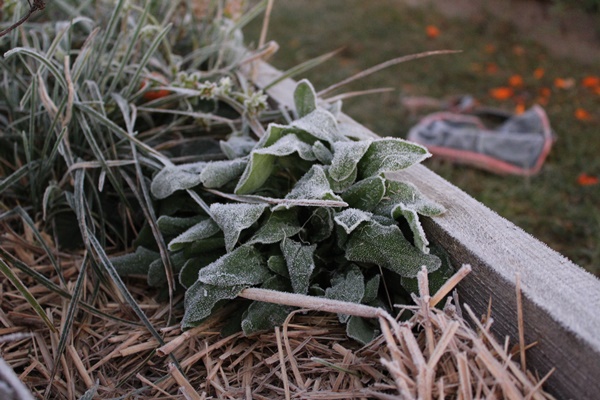
The first frost gave an amazing view and everything looks so pretty coated with a thin layer of white crystals.

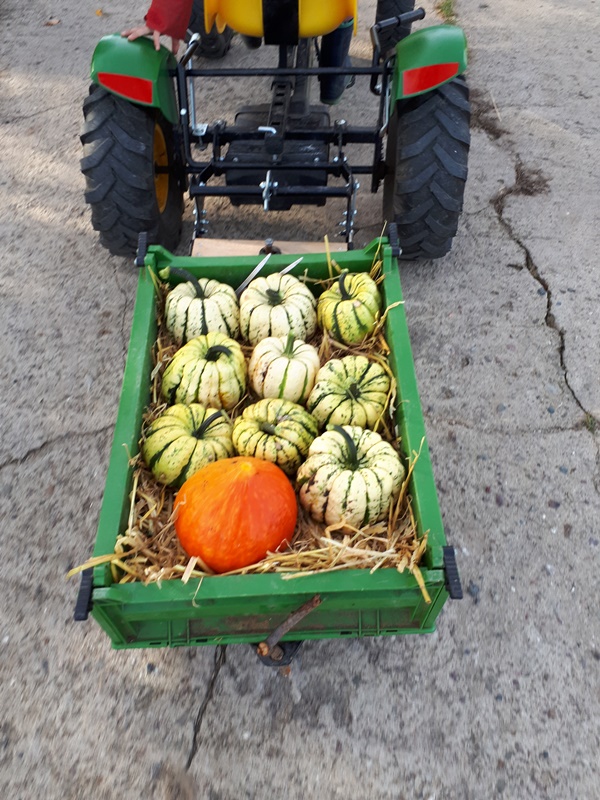
The only thing is that I have not harvested everything that is sensitive for frost. So the first thing we did, after it became a bit warmer outside, is harvest all of the pumpkins we could find. Our kid’s helped me with that and brought all of our pumpkins to our barn.

The pumpkins are definitely damaged by the frost

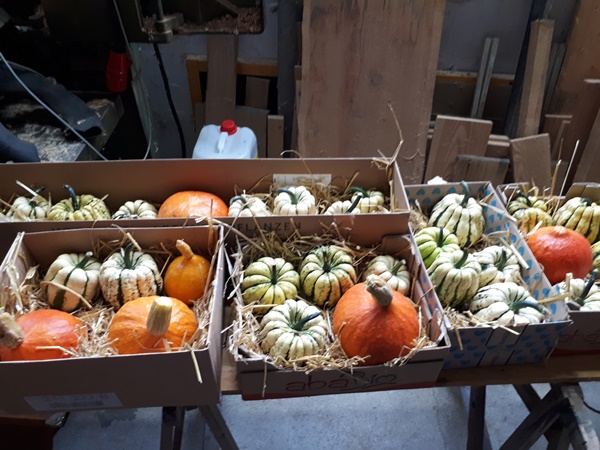
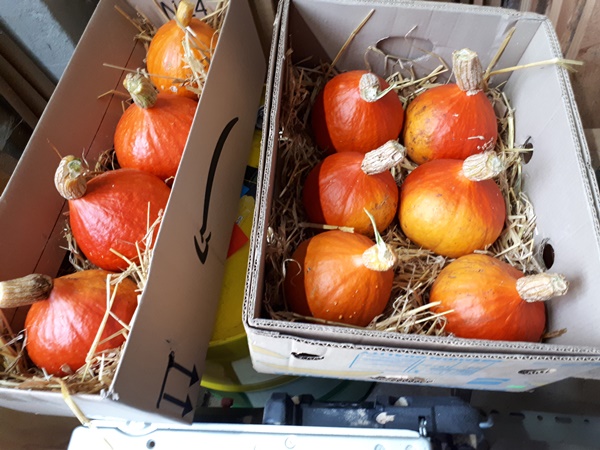
We gave the pumpkins a nice bed of straw in some boxes. We put them in the best place we have to ripen. We put them in our barn in front of the windows (facing west, the only side with windows in this barn). Unfortunately we have only 10 – 12°C in our barn. The pumpkins would like temperatures of around 20°C to ripen better, but that is something I can not offer. I hope this will do and try to process them before they turn bad. We have 15 pcs of Hokkaido Solor from only 2 plants and 30 pcs of Sweet Dumpling also from only 2 plants. Not all pumpkins are ready to eat yet, but we can give them some time. Or they will ripen enough to eat, or they turn bad and will land on the compost.

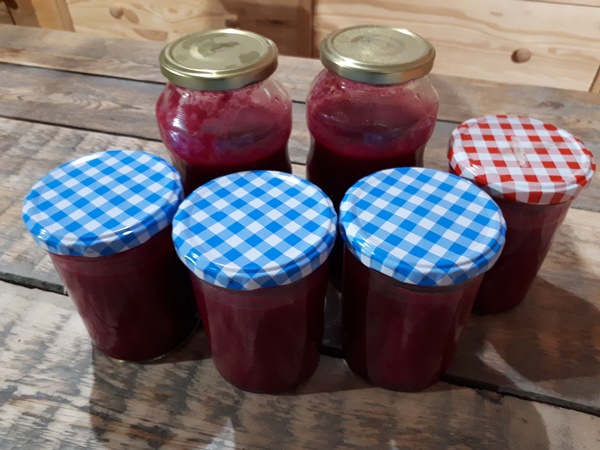
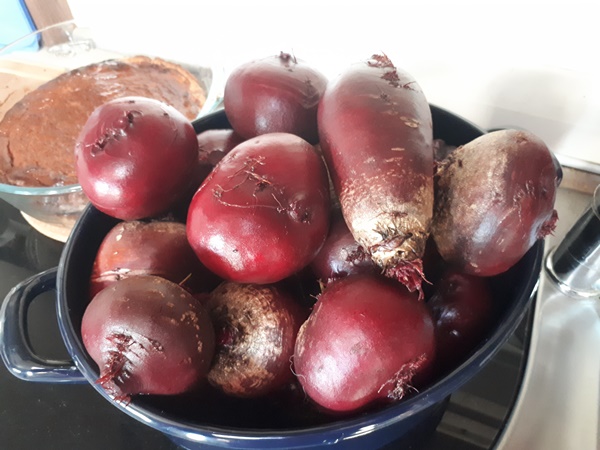
Beside the pumpkins I also have a lot of red beets in a bed and harvested only half to process. All at once would have been to many to process. The easiest thing was to make a big batch of soup. I filled these in smaller jars, since the kid’s do not always want to eat this and put these in the freezer. Of course we also eat from the freshly made soup.

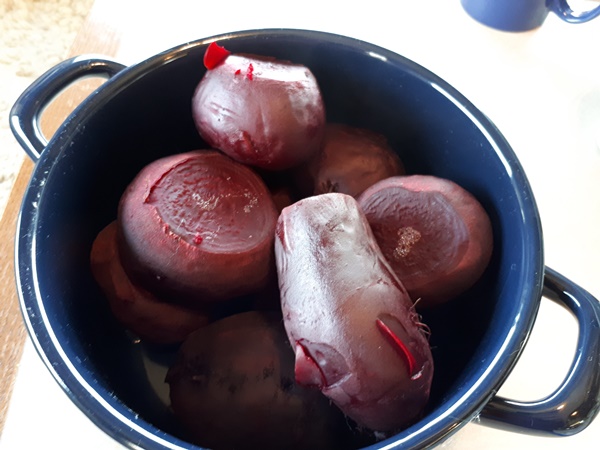
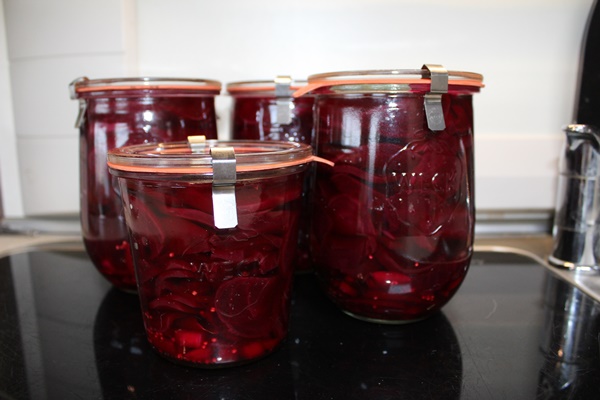
Other than that I cooked a big batch of red beets in my instand pot and pickled these. Since the red beets where fully done I keep these pickled red beets in the fridge. Canning this is not an option any more, since I do not like squishy beets.

Only a part of the red beets needing to be processed (with a pumpkin pie in the back)
The first batch of red beets done in the instand pot and ready to be peeled
Pickled red beets

After this one night frost the wetter turned very nice again and I left the rest of the beets in the ground, since we have other things to do. One of those things was taking down our greenhouse roof which gave a nice free space to plant lots of cabbages next year.