Preparing the greenhouse for the new growing season, sowing and starting seedlings for planting outside
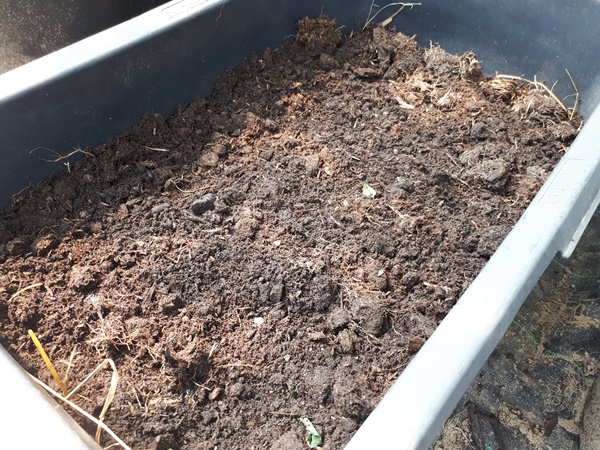
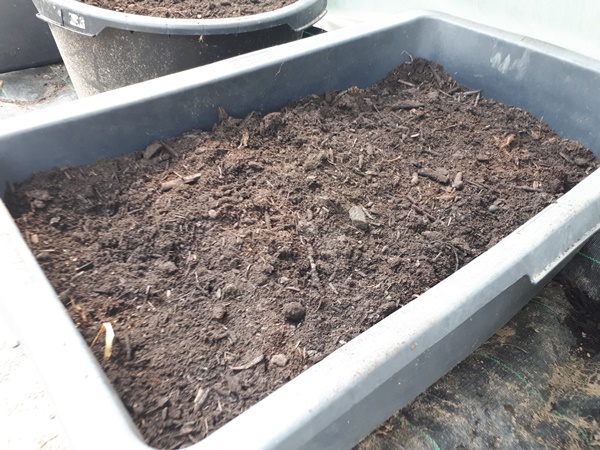
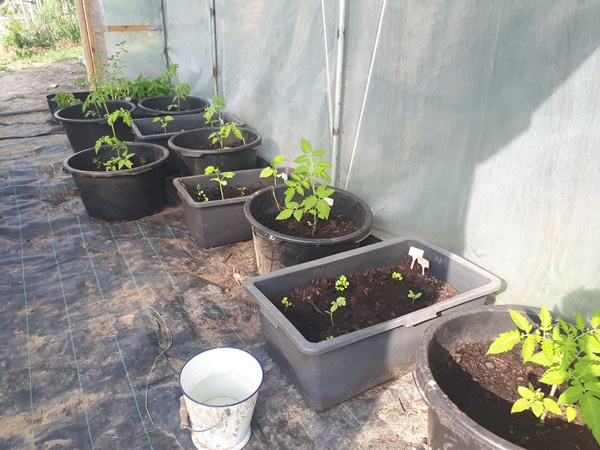
It was already the 20. of Mai when I started to prepare the greenhouse for the new growing season. I gave all of the planters a nice thick layer of compost and started sowing.
I sowed almost everything that should stay in the greenhouse direct into the greenhouse planters. I sowed cucumbers, for fresh eating and pickling, watermelon, some tomatoes, basil, dill, one courgette and flowers. Only the celery, chilli and lettuce I pre-cultivated in trays. I have been watering the greenhouse every day and all sprouted well. Up until now there has been no real problem with pests yet, but I do keep a close eye on everything.
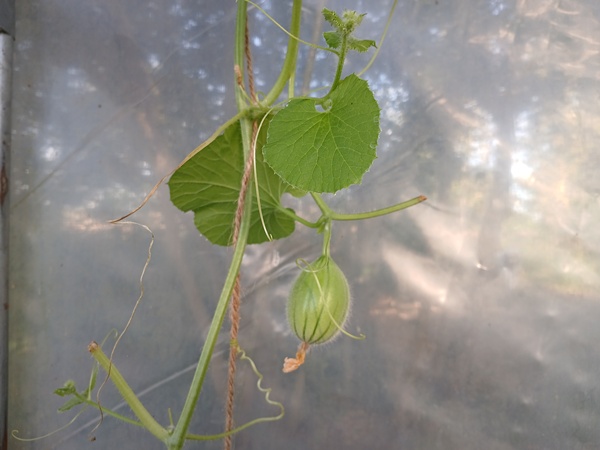
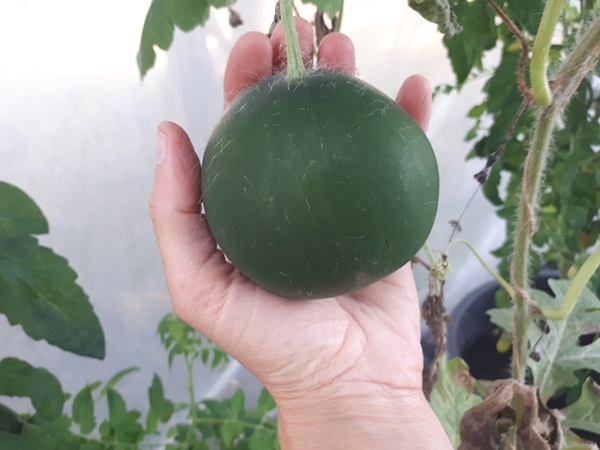
For the first time in years the watermelons are taking off really good and are even forming fruit already, as you can see on the picture above.
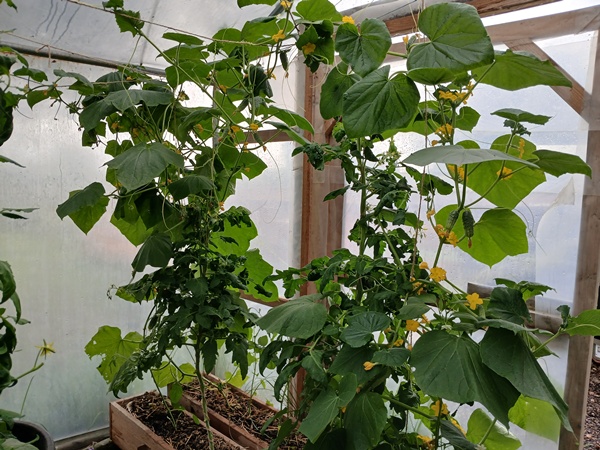
With the cucumbers I keep on top with cutting of any side shoots and if I see any leaves with a discolouring or any damage I remove it. This way I hope to keep the plants healthy as long as possible. The first pickling cucumbers are already forming.
In the middle June I planted some lettuce in the greenhouse planters and we have been eating from it already, as to the lettuce I planted outside at the same time, which is still too small to harvest from.
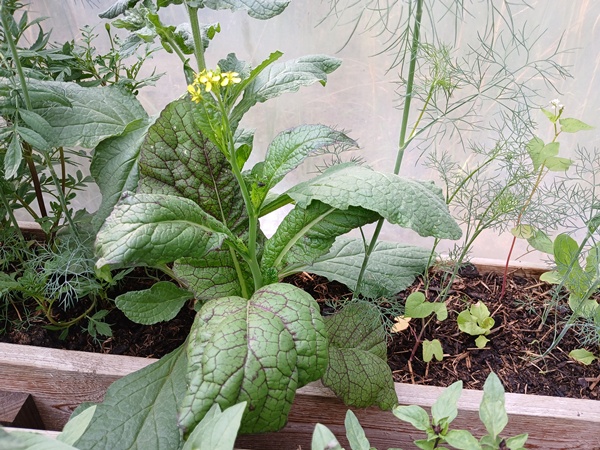
A volunteer Asia-Salat Red Giant appeared between some dill and went into flower already. I will let it go to seed and self-sow.
The Asia-Salat I have in the greenhouse still looks good, but all of the Asia-Salat and radishes I planted/ sowed outside are perforated and dying. We have a big problem with cabbage flea beetles (phyllotreta). About middle of June, when the wetter has been a bit dryer, everything outside started to have little holes in the leaves.
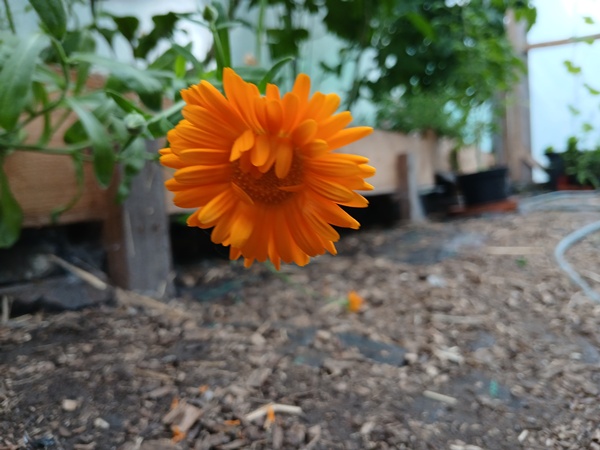
I have sowed borage and marigolds for the insects in the greenhouse and the borage has started flowering already.
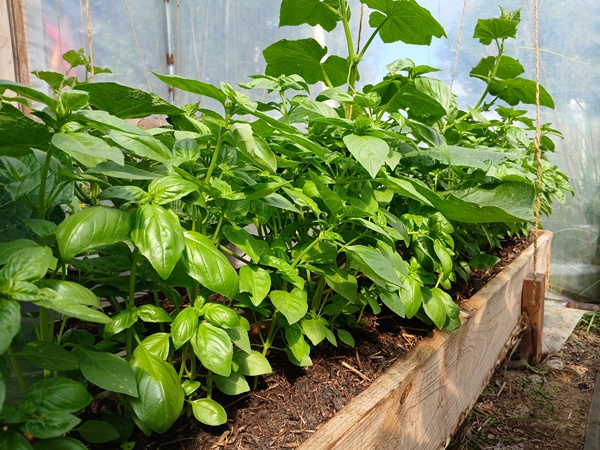
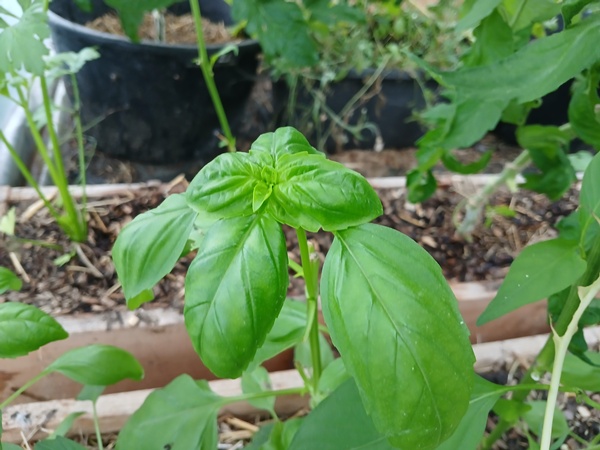
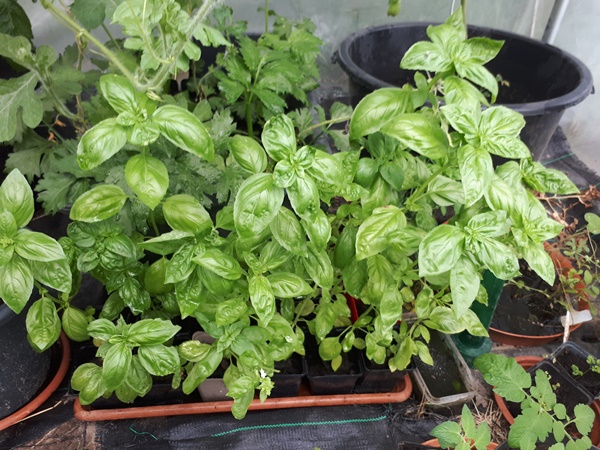
The basil is ready for harvesting and will be turned into a delicious pesto soon. I have large-leaved basil, like I always have, red basil and Thai basil. The last 2 are new for us and we will try out how they taste. If we like them we will grow them more often.
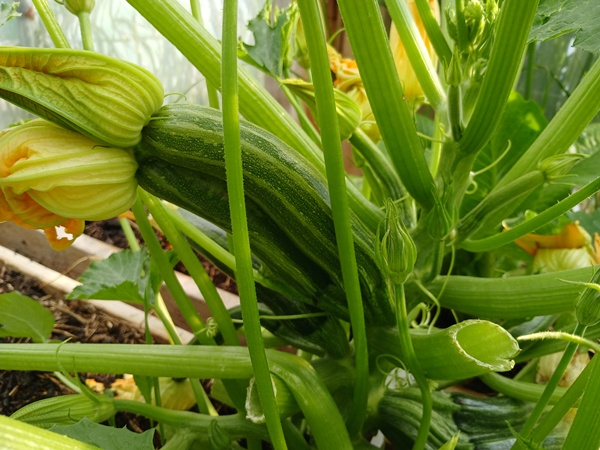
I am very happy I gave the space and sowed one seed of courgette in a planter in the greenhouse. It sprouted wonderfully and thrives very well. We will be able to harvest the first courgettes in the coming days.
Strangely enough with the courgette I sowed in little planters to plant outside later, only one seed sprouted. A few weeks later I sowed again, but double this time. Now many more sprouted, so it is looking good on having lots off courgettes this year.
I am only wondering why the first batch did not want to sprout. Maybe it was to cold standing on the ground. I should provide for some shelving before next spring. This would give me some more space to pre-cultivate seedlings as well.
At the moment everything stands on the ground and the seedlings in the trays also put there roots into the soil below, which is not very helpful. Also I thing I have been using the wrong soil for pre-cultivating. The seedlings in the trays came up nicely, but after some time some of the seedlings did not look so good anymore, the tomato seedlings did not really grow and some seedlings simply died. We also had a few slugs that caused some damage among the seedlings. Another possibility is that the seedlings just where to long in the trays, but I found the seedlings to small to plant, only they just did not want to grow a little more.
I was thinking that the soil I used was maybe not ideal, so looked for something better. I did not find soil to pre-cultivate locally, so I bought a good potting soil and sifted out the larger pieces. I am trying this out with lettuce and with another batch of celery. Time will tell if this is better.
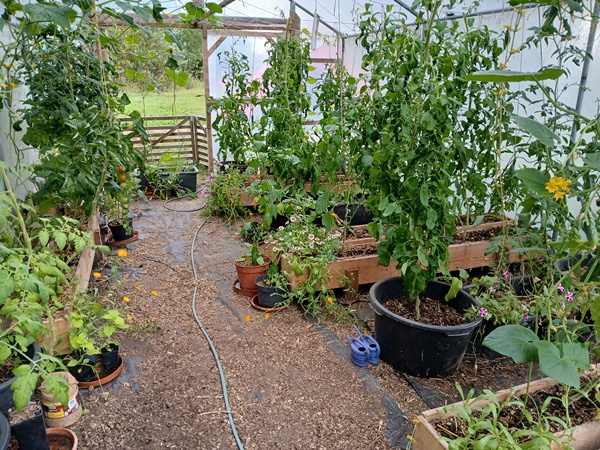
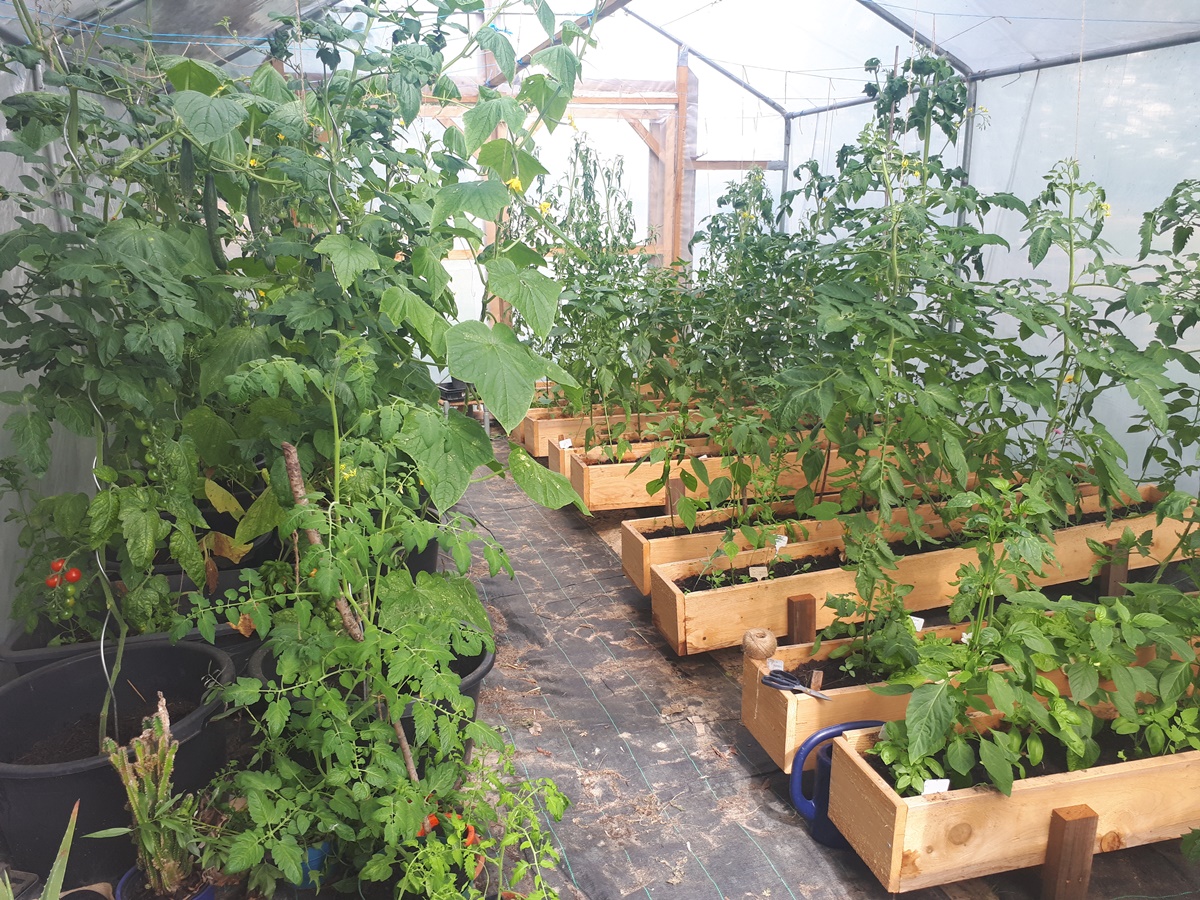
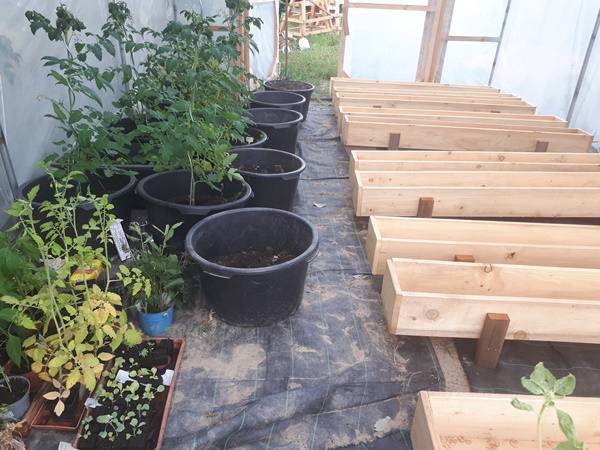
To finish this post an overview picture of the greenhouse at the moment. The courgette is right around the corner, so that is not visible.
What we changed in our greenhouse, what we grew in our greenhouse, what problems we had in our greenhouse and what to keep in mind in our greenhouse for next growing season
The garden season actually started in our caravan by sowing tomatoes and peppers middle of April. This was around the same time we found our 4 geese a new home, so the greenhouse came free again. The geese had built a nest and started to lay eggs.
A big geese nest out of straw and hay
At this point the gander became very aggressive. Since the geese did not stay inside there fence and we have children playing outside, the geese had to go. The geese had picked on everything growing in the greenhouse. I had replanted welsh onion from the garden to the greenhouse, so I would be able to harvest some of there greens, or some onion over winter, but that was all gone. The only thing surviving was some lamb’s lettuce in a spot where the geese could not reach. It already started to flower, so we did not eat it.
Lamb’s lettuce
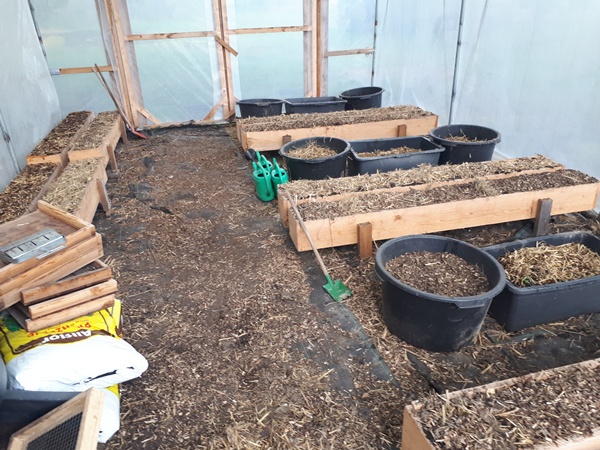
Next thing up was preparing the greenhouse for the new garden season. I had planned to take out some planters, but I did not. We only repositioned the planters already in the greenhouse and later on actually added some mortar buckets. We gave all planters a nice layer of compost and some mulch and the greenhouse was ready for the new season.
Greenhouse prepared for planting
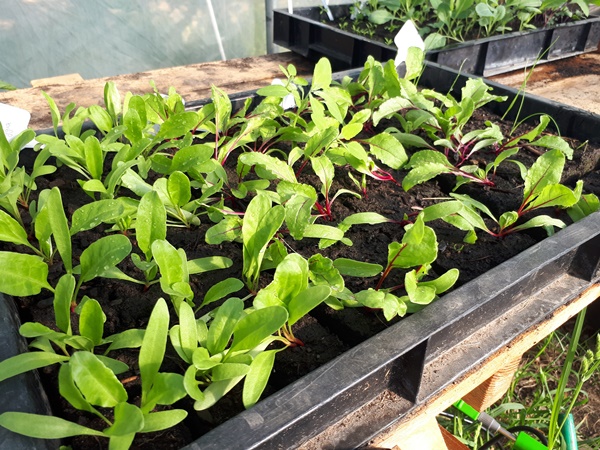
I was very eager to start the garden season, so I sowed some peas, carrots, red beets, Asian salad and lettuce in two of the wooden planters. The peas and Asian salad where quick to sprout.
Pea and lettuce seedlings
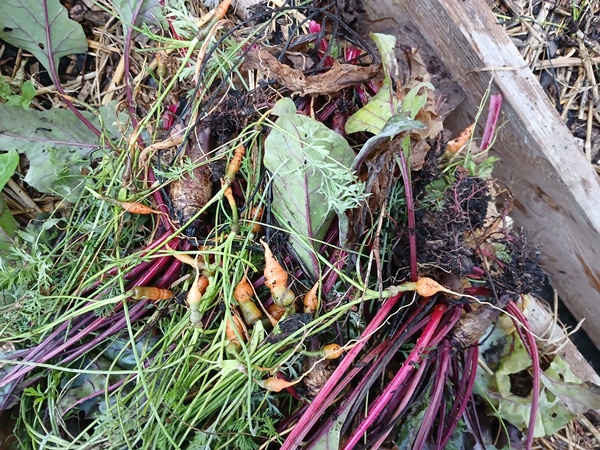
The carrots and red beets did sprout, but did not really grow the entire season. By the time I harvested them in the fall, they looked like this.
Small red beets & very small carrots
Beginning of Mai we prepared soil blocks and sowed some corn, lettuce, flowers, etc., so by the end of Mai we had some nice seedlings in the greenhouse waiting to get planted.
Corn seedlings
At this time we also transferred the tomatoes and peppers to the greenhouse. We planted some of the tomatoes and peppers in the greenhouse directly and the plants that where left, we planted in small plant pots to transfer outside as soon as the wetter allows for it.
Tomato seedling
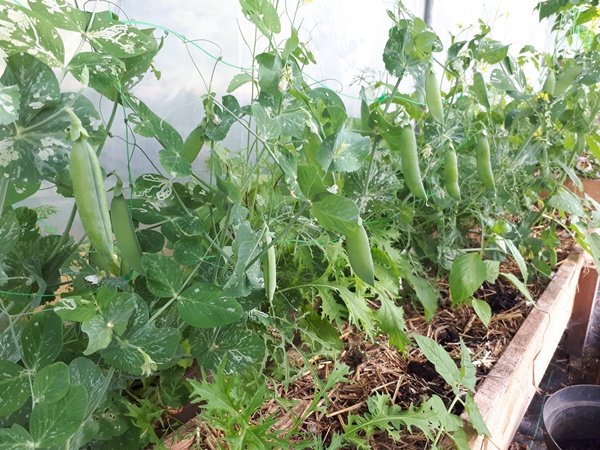
Middle of June it looked kind of nice in the greenhouse with peas ready for harvest and lettuce and Asian salad to harvest from every few days.
Peas & Asian salad
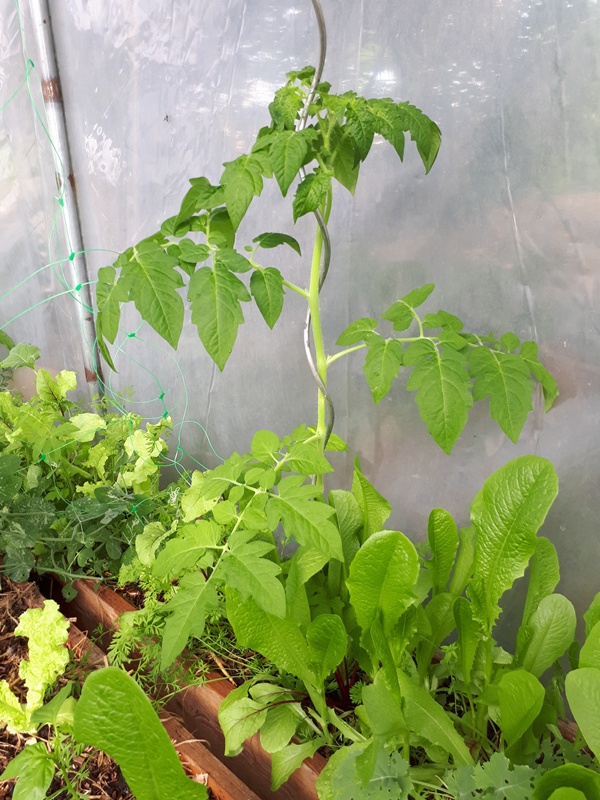
We even got a volunteer tomato plant which was a lot bigger as the tomato plants I started from seed in our caravan.
Volunteer tomato plant
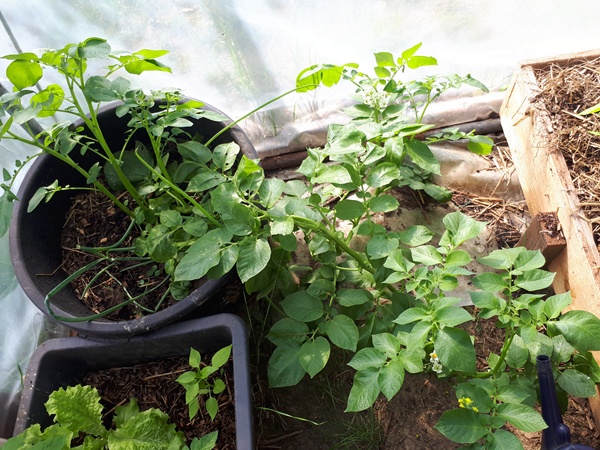
I also had planted a potato in one of the mortar buckets to see if I could get an earlier potato harvest this way. Middle of June it had put on some flowers.
Potato plant
By the time middle of July came the foliage just became very long and fell over and I was curious how the potatoes in the ground did, so I harvested the potatoes. This only gave two hands full of medium size potatoes and in the mean time I had already harvested potatoes outside, so planting potatoes in the greenhouse does not give me an advantage. I used the space that came free to sow spring onions.
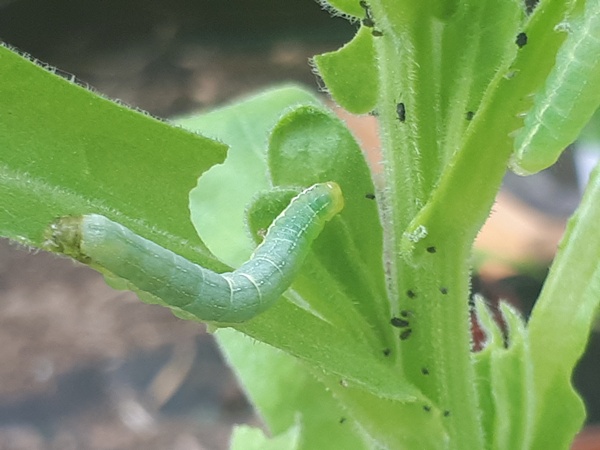
By the end of June we started to have some problems with pests. A lot of plants started to get holes in there leafs, or leafs are eaten away entirely. One of the easier pests we found was this green caterpillar.
Green caterpillar
Later on we also found a lot of brownish caterpillars, which hid on top of the soil during the day, so we spend quite some time searching for those to contain the damage they where causing.
Due to the ratter chilly and wet wetter conditions I sometimes left the greenhouse closed, which was good for the watermelon and the sugar melon we also planted somewhere in June. Problematic was that this caused a high humidity, which caused blight at the tomato plants. As soon as we noticed that, we started opening both doors in the greenhouse to create airflow, regardless the wetter.
Inside the greenhouse
We also took all of the foliage of the plants that was contaminated and where able to stop the blight from spreading further this way. The first tomatoes where just starting to ripen and after we got the blight problem solved we where able to have a nice tomato harvest. I even tried to make some tomato powder, since at some point we had more tomatoes as we where eating trough.
Tomatoes & cucumbers
Going on about the cucumbers, they had a very slow start, but in the end provided us with some nice cucumbers for fresh eating. I think the slow start was because they where planted to shady at the left wall of the greenhouse. Outside there are some willow trees which grow its branches partly over the roof of the greenhouse, causing a lot of shade at that side of the greenhouse. Since these willow trees are in need of a “haircut” this will be no problem next year.
Other than that I have been reading about how to take care of cucumber plants. Apparently they only have life in the (if I remember correctly) first 40 to 50 cm of the growing point and it is best to take of all of the foliage further back from that point. These leaves start to die off and attract disease and pests and can not help the plant anymore. While doing this kind of maintenance I actually noticed some caterpillars on cucumber leaves and I was very happy I took the time to do this.
Obviously I did the same with the pickling cucumbers which started at a much better position and did great from the start. The pickling cucumbers where planted at the right from the door and had the sunniest spot of the entire greenhouse.
Pickling cucumbers
They did so well that I was able to experiment with some pickling, since we love to eat pickled cucumbers. I had tried pickling cucumbers in the past and it was a total fail, but I had been informing myself and found a way to keep the pickling cucumbers somewhat crispy. The only problem left is that the pickled cucumbers are to acidic for our taste. At least for the canned once. I also made some with a different brine that does not need canning, but gets stored in the refrigerator in stead. These are ok, but mostly the home made pickles will be used in salads, where the acidity gets lost in the mix of ingredients and dressing.
Pickling cucumbers
Of course I also grew basil again. I planted them divided between the tomatoes and pepper plants. They did well and I made a nice amount of pesto.
Basil
I also grew the celery variety for the stalks. I grew some for the first time last year, since I did not have any luck with growing celeriac in the past. I liked the celery very much for adding to soups and grew more of it this year. I dried the leaves for seasoning and the kid’s cut the stalks into pieces, which we froze. They will be added to soups over winter.
As for watermelon and sugar melon, I can not help myself but trying over and over again every year. We actually harvested one watermelon and 2 sugar melons in October and let them ripen some more inside. The melons tasted great, but, is all of that effort worth it for only one melon per plant?
The sugar melon was still very small end of August
I also had some flowers divided in the greenhouse to help attract pollinators.
PetuniaMarigold
The way I laid out the plants in the greenhouse
Seen from the door, on the left there where 3 mortar buckets. The first one with the celery and a sugar melon and the second and third with basil and a watermelon. Following that there where 4 wooden planters. The first planter at the wall had the cucumbers and the second planter at the wall had volunteer tomatoes. The planted cucumbers in this wooden planter somehow disappeared. The first planter standing next to that had one tomato plant in the middle and the pepper plants where eaten. The planter next to that had a pepper plant in the middle and tomato plants to each side of the pepper plant. I should have taken the volunteer tomatoes out from the planter at the wall, since this was too crowded, the tomatoes where hard to harvest and more vulnerable to blight.
At the right side of the door it started with a wooden planter with the pickling cucumbers and some pepper plants and next to that another wooden planter with 2 tomato plants and 3 pepper plants equally divided.
Next to that came a small walkway and three mortar buckets. The middle one was for one of my kid’s and the 2 outer once had a tomato plant. Then a small walkway again and 2 wooden planters. The first planter had 2 tomato plants and 3 pepper plants equally divided and the second planter had 5 pepper plants. Then after a small walkway again 3 mortar buckets with the middle one for one of the kid’s and the outer 2 with a tomato plant.
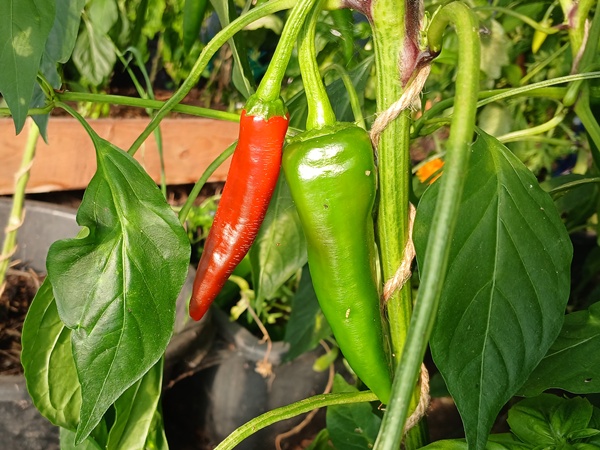
Chili
After that again a small walkway and 2 wooden planters. The first one with 7 pepper plants and the second one with 2 tomato plants and 3 pepper plants equally divided. And ending with 3 mortar buckets after another small walkway. Again the middle one for one of the kid’s, the one in the corner with a potato and the other one with another tomato plant. Beside this one, at the end of the main walkway, we added another mortar bucket with 2 sugar melons and some flowers.
We hat interplant everything with some lettuce and basil.
Generally speaking the greenhouse felt too crowded for me and the basil was somewhat hidden, but we did get a good harvest out of the greenhouse and the hole family loved snacking directly of the plants.
Plans for next growing season in the greenhouse
Since we got so much chilli peppers this year we will not have to bother growing so many next year. I would like to grow some more basil and plan to fill 2 entire wooden planters with basil instead of popping some plants in here and there. Since the pollard willows have been pruned again there will be full sun for the entire greenhouse next growing season. Therefore I can swap out positions for tomatoes and cucumbers, since the cucumbers definitely need the most sunlight and sunlight will be enough in the entire greenhouse. With all of the sun burning on the greenhouse, maybe the melons have a better change next year. O, and the celery could do with some more space as well next year. But it still is quite some time until the next season starts, who knows what changes I will come up with by then…
Nursery in the spring and filled up with tomato plants, pepper plants and some more over the growing season
We build this greenhouse in the spring on the base of the broken play tent of our children. If you are interested here is the link to that.
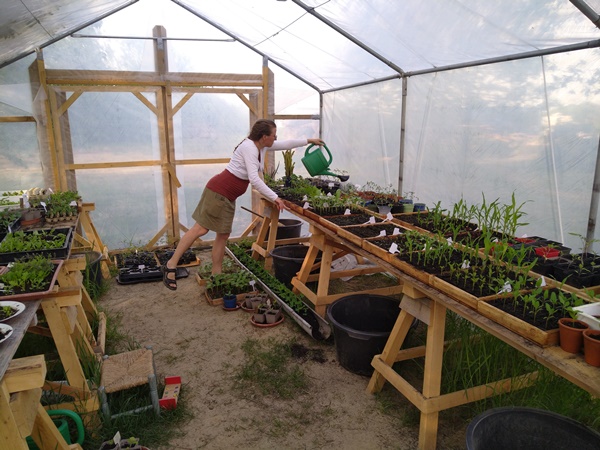
We first put up some make shift tables in the greenhouse and used the greenhouse as a nursery. I unfortunately do not have usable compost for starting seed, so I had the children sift out the bigger parts of potting soil I had purchased. My husband had made each of them there own sieves and they had a lot of fun. With the sifted soil we made soil blocks to sow in. We already had some crates, but my husband also made us a bunch of wooden trays exactly fitted for the soil blocks.
I had seen this in a video where one side of the tray is open. The idea is to put the soil blocks on a piece of cloth which hangs out of the open side. The over hanging cloth then needs to hang in a water reservoir of some sort. This way the cloth transports the water to the soil blocks and keeps them moist. Since I was not prepared with cloth and reservoirs, I will have to try this coming growing season. (A little reminder to myself to prepare!) This year I just used some water sprayers and a big tub we already had. The trays took turns soaking in the tub and in between soakings we would spray water over the soil blocks. Obviously this also functioned fine. It is just a little more labor intense.
We sowed a lot of different things like red beets, peas, cabbages, leeks, celeriac, different types of corn, lettuce, basil, amaranth, quinoa, sunflowers and different other types of flowers and everything else I am forgetting. This was a great joy. Everything sprouted quickly and the little seedlings did very well in the protection of the greenhouse.
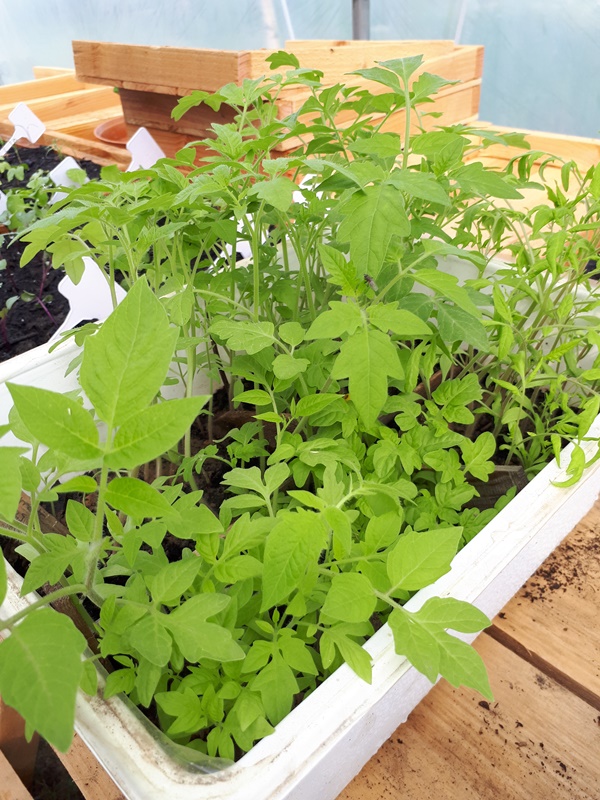
Also the peppers and tomato plants, I had sown indoors, transferred to the greenhouse as soon as the temperature did not drop too much anymore at night. The little seedlings where already getting to big for the sowing tray and we potted them op each in there own little pot. Since the kid’s filled the pots for me, this went very quickly. I went a little over board while sowing the tomatoes and peppers. I had way too many plants and did not know where to plant all of these, but as you could have read in a previous post we found places for them other than the greenhouse.
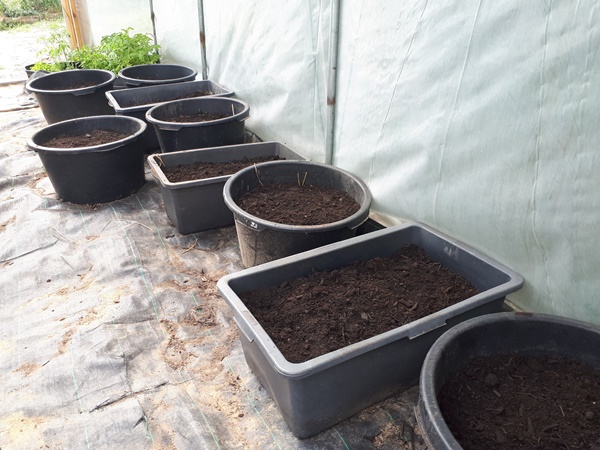
Well, after spring finally arrived (it stayed cold for very long this season) and we where able to plant a lot of the seedlings, one side of the greenhouse became empty and we started preparing for planting. We rowed up some mortar buckets and started filling them.
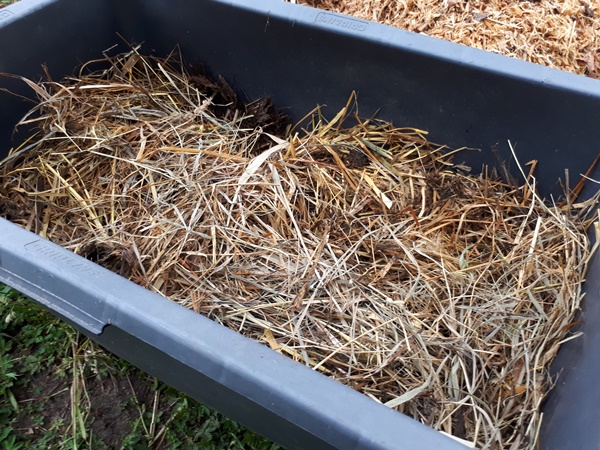
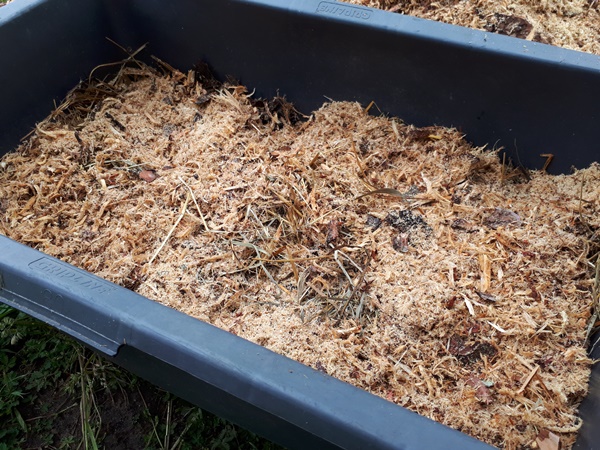
We started with a big layer of old straw and hay, then a layer of sawdust from our sawmill, then a layer of horse manure finishing with a good layer of potting soil to plant the seedlings in.
Mortar bucket filled half way with old straw and hayMortar bucket with a thin top layer of sawdustMortar bucket with a thin top layer of horse manureMortar bucket with a top layer of potting soil
We planted these mortar buckets with tomato plants, cucumber plants, some water melon and celery.
Beside the water melon, these plants where thriving and the soil kept its moisture even during the heat of summer. Obviously I would water almost every day. Only the cucumbers, I had planted 2 in one bucket, would suffer when I would skip a day of watering. I should have planted only 1 in a bucket.
It took us until middle of July to get to plant the rest of the plants in the greenhouse. For that my husband builds me these planters out of wood (about 20 x 20 cm, 2 meters long). I decided to work with planters, because there is only compacted sand, tree roots and couch grass in the ground.
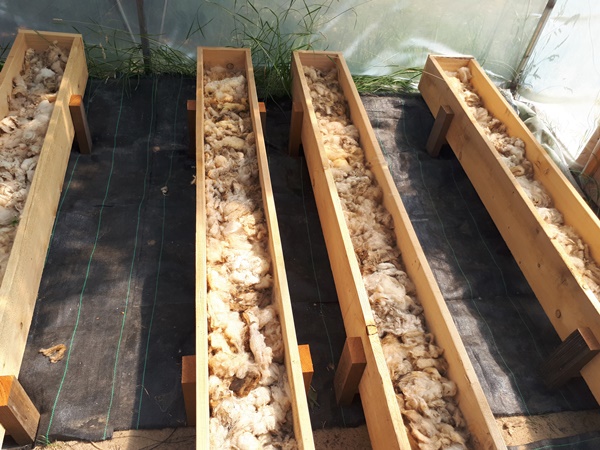
Since the planters aren’t very big, I started filling the planters with a nice layer of sheep wool to store moisture in the planters.
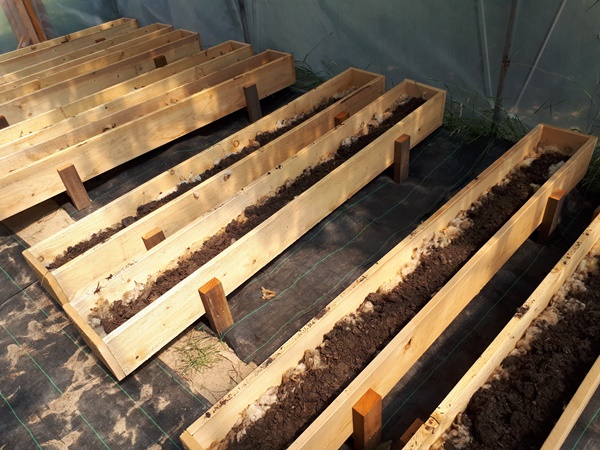
On top came a layer of horse manure for some extra nutrients, topping of with potting soil to plant in.
I planted 5 tomato plants in one planter. I always under estimate how big plants get and looking back, I would say 4 tomato plants in one planter are more then enough.
The peppers I planted 7 in one planter, but I think 5 would have been better. I have to trellis the peppers next year since there is too little soil for them to get hold in and the bigger plants fell over.
All in all we had a nice harvest from the greenhouse. We where able to snack on a lot of small delicious tomatoes right in the greenhouse. The kids loved that.
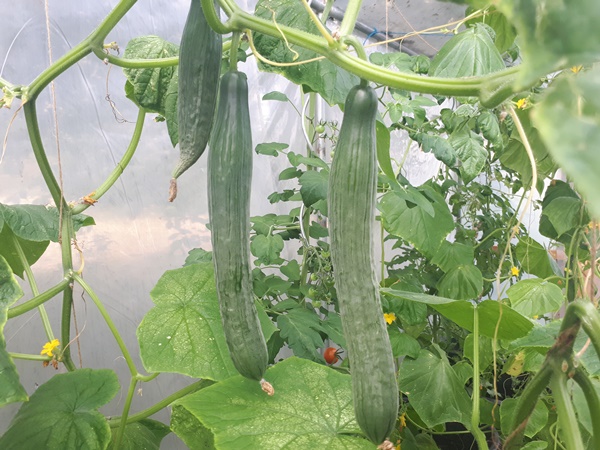
Once it became warm enough the cucumbers developed and we could eat cucumbers on a regular basis.
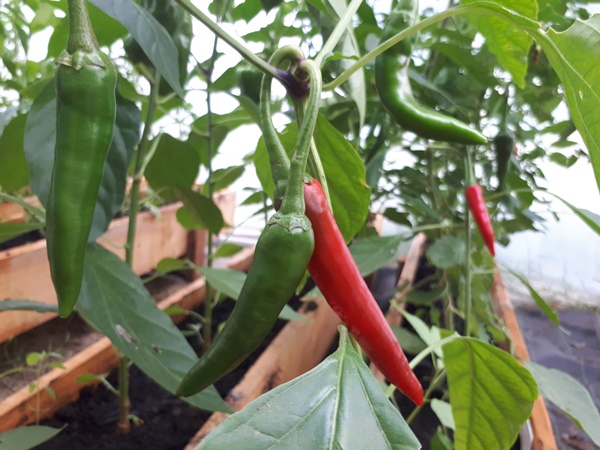
We had a good harvest of cayenne peppers for hot sauce which my husband loves.
I had also sown some basil, potted them up in some small planters, but never came to planting them. Luckily they did very well in the small planters and I made some pesto with them. I definitely should grow a lot more basil next year, but it needs to grow in the greenhouse. I don’t know why, but the basil grown outside does not taste good. Maybe it is to cold here to grow good basil outside, I do not know.
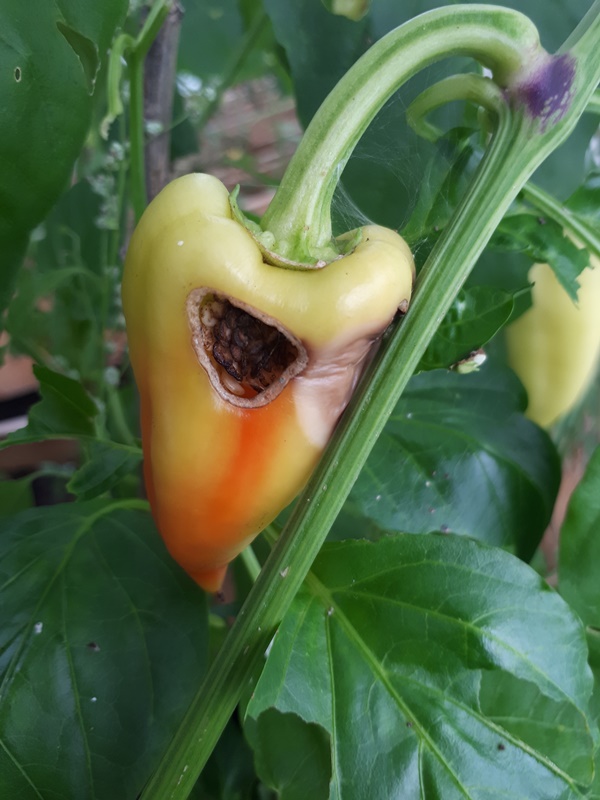
I was a little late with planting peppers, so we where lucky to be able to harvest some peppers at all. I tried to let some peppers ripen indoors, but they did not taste so good. I think we are to far north to grow peppers in a cold greenhouse and we will only grow a few pepper plants next season to see if they turn out better if planted earlier. Furthermore we had some bug problems. They eat the peppers we would have been able to harvest first.
We actually where able to harvest a very small watermelon we let ripen some more indoors (frost was coming). It was small, but tasted very well. We where well into the season before a watermelon started to form. A lot of flowers started small watermelons, but they turned brown quickly. It would be nice to know why.
The celery I planted was a variety for the stalks. I planted this type of celery for the first time, because I have little luck with growing celeriac. The celery thrived and we love the stalks in our soups, so it is a good substitute for the celeriac. I will have to grow a lot more of the celery next season and I will try to grow it outside as well. The celery is in the picture with the basil just peeking up from behind the basil.
Beginning of October the blight also struck inside the greenhouse. Most of the snack tomatoes where done and eaten, but the bigger tomatoes still had a lot of nice green tomatoes hanging on the plants. We harvested the good green tomatoes and the last cayenne peppers and I made them to hot sauce, so they would not go to waste.
After that we cleared the greenhouse. I wanted to try to use the greenhouse over winter for some lettuce, welsh onions and some dill. Then, one night, our runner ducks where taken by a wild animal and we started locking our geese in the greenhouse at night for protection. So that experiment is done with. A priority now is to build a decent coup with a door for the geese, before I need the greenhouse for starting seedlings in the spring.
Some Notes for the next growing season
In August the greenhouse was like a little jungle and I do not really like diving underneath the plants to look for eatables. Furthermore the wooden planters where to close to each other and I was damaging plants trying to get through for watering, so I am going to make some changes in the greenhouse.
I am taking out 2 wooden planters and space out the other 8 planters, so I will have more space for the 4 walkways in between them, starting with one planter at the wall and putting 2 planters together between walkways. Furthermore the height of the planters will be increased to give the plants more soil to root in and have more material (soil) to store moisture.
The 2 extra wooden planters will find there place next to each other at the wall where the mortar buckets are now. These will be for the cucumbers, so I can trellis them parallel to the wall, instead of having to trellis them to the middle of the greenhouse. This way I can reach the plants better. To utilise as much space as possible I will keep some mortar buckets in front of these wooden planters with enough space in between so I can reach the plants in the wooden planters behind them comfortably.
This way there will be space for 4 cucumber plants, 5 pepper plants, 10 cayenne pepper plants and 20 tomato plants. Basil and celery will be interplant in between those plants and the mortar buckets will be for the kid’s to use. They love to help with growing food and had been cramping every space in the greenhouse I had allowed them last growing season.
Visitors in the greenhouse
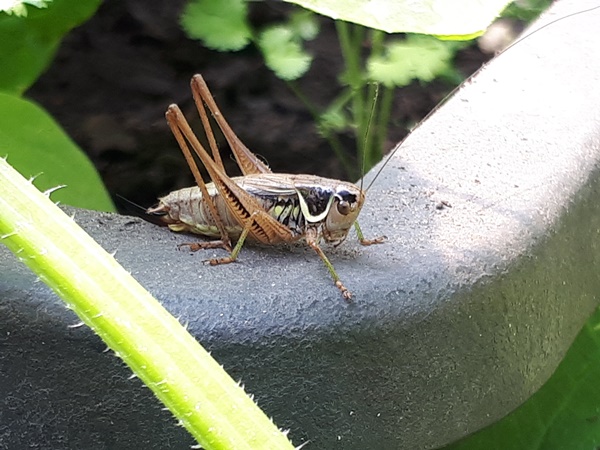
A beautiful spider in its webA beautiful grasshopper
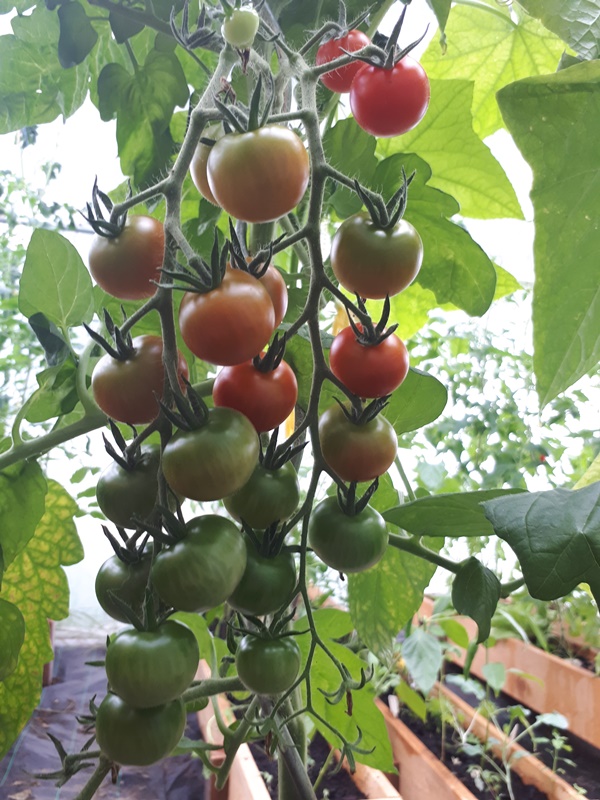
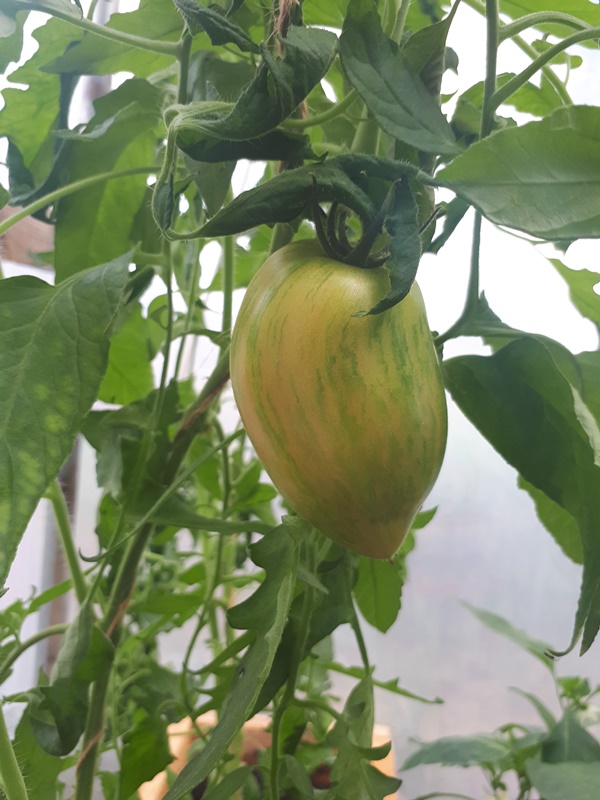
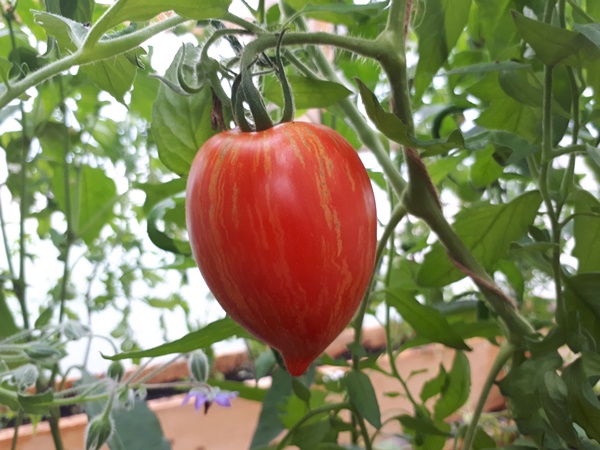
Tomato Marmorossa
We grew this tomato variety for the first time last season and loved it. It looks beautiful and tasted amazing. We saved seed from this variety for next season.















 Beautiful Chaos