Letting tomatoes just grow as they please

A bad idea in our climate, some small visitors, strawberry plants and red beets

In our garden 3 we do not only have the newly build composting bed where we grew potatoes in last growing season, but we also have 3 hügelbeds. We made these hügelbeds already a few years ago from compost soil we bought. We where not very happy with this soil from the beginning, because this soil does not take on any water. It is very dry and dusty. Mulching has helped a little and the breaking down of the mulch material is very slowly improving the quality of the soil.

In the middle hügelbed we had planted strawberry plants after I pulled out all of the couch grass roots I could find. The strawberry plants did not do great, but we where able to pick some strawberries. Partially the snails beaten us to the strawberries and well, I just did not water this bed. Mostly the strawberries made runners and at the end of the season there where so many more strawberry plants, which can be called a success. I recently dough out all of the strawberry plants and gave them a new location in our garden 2 with the raised bed. More to that in an upcoming post.

In the 3th hügelbed we had planted red beet seedlings, which did, despite not watering, wonderful. We harvested a lot of tasty red beets. There was one red beet that bolted and we let it flower and set seed.
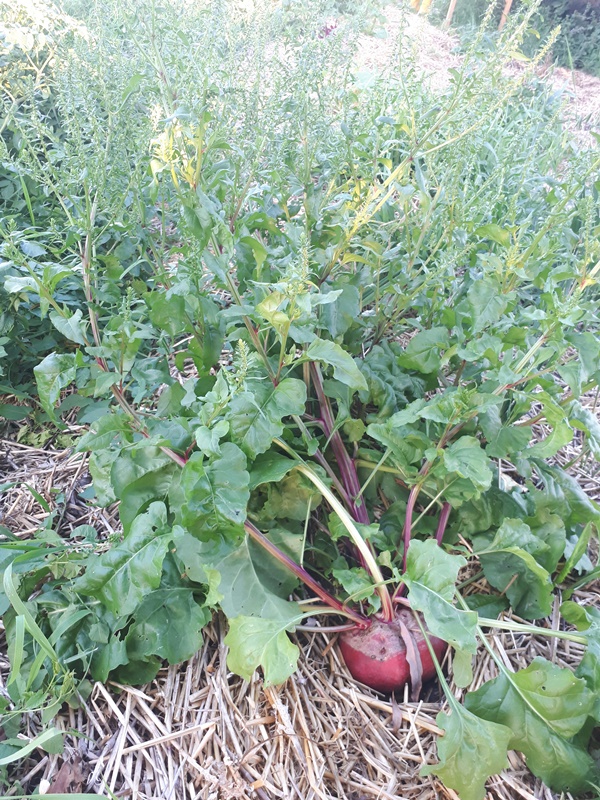
A beautiful big red beet that bolted and flowers

I had seen a video where was explained how to get seed from red beets. They would flower in the second year and you would need several flowering red beets so the flowers would be pollinated. This one red beet flowered in the first year and actually made useful seed al on its own. I did not harvest the seed, simply because I did not know when the seed would be ready and I just forgot about it. When I was digging out the garlic for relocation a few weeks ago, I actually found a lot of red beet seedlings peeking up from underneath the mulch. The garlic was already growing again, thanks to this mild winter (I did not find these while harvesting garlic last fall). So another accidental success which got eaten by the chickens after the seedlings became big enough to be seen.

Now to the tomatoes, which I actually wanted to write about. The tomato plants where in the first hügelbed and did surprisingly well outside. I did water these on a regular base.

Healthy looking tomato plants on a mulched hügelbed in front of a caravan

I interplant the tomatoes with some leftover cabbage seedlings, but the snails devoured these.

Red cabbaged in a mulched hügelbed with a lot of snail damage

I planted 2 rows of tomatoes. One row with Gardeners delight a wonderful snack tomato and one row with Marmande, a flesh tomato. There where about 15 tomato plants per variety and, as you can see on the picture, we did not trellis them. Well, that was a bad idea, but we just never came to that. We would have had to build a structure over the hügelbed and trellis every single tomato plant and we just did not make the time to do so. The tomato plants thrived and grew big and fell over and grew even bigger, they flowered and set on lovely tomatoes.

A tomato plant jungle with a lot of green and red tomatoes partially hidden among the leafs

As we finally started to harvest the first tomatoes, one tomato plant started to disease with blight. This was after the wetter changed from very dry to very wet in August. This first plant diminished ratter quickly.
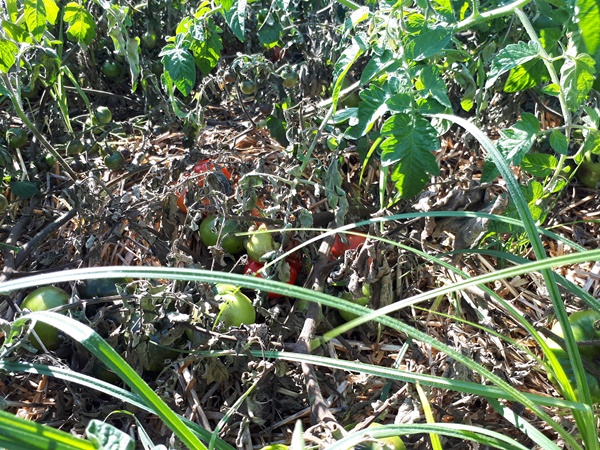
Tomato plant completely diminished by blight with some green and turning red tomatoes in its midst

I was positively surprise with how long it took for the blight to spread over to the other tomato plants. I noticed that the variety Gardeners delight kept up a lot longer than the other variety. I was able to harvest a bucket of tomatoes before we had to give up on these plants. It is a shame, but the bulk of the fruit still had to come when the blight spread completely all of a sudden.

Obviously I saved seed from healthy fruit from both varieties and I will definitely sow Gardeners delight again next year, since we all love these.

Tomato seed spread out on a paper towel, to dry and for easy sowing in the new season

The tomatoes grown outside do taste a lot better than the tomatoes grown in the greenhouse, so I am planning to grow some tomatoes outside again, but only so much as I can handle to trellis on time.

And what did I do with the diseased tomato plant? Now don’t be shocked, but we just rotary tilled the hügelbed with all that was there. It took 2 passes to get a nice result and get all of the organic material nicely incorporated and this organic material will help the soil to improve. The blight spores are every where in the soil anyhow, so why let the organic material go to waste?
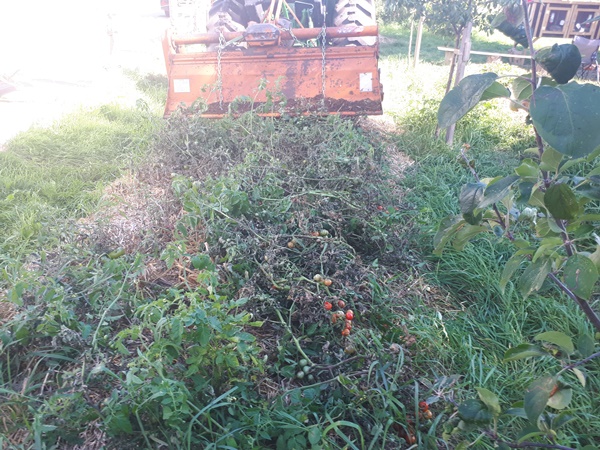
A hügelbed filled with blight diseased tomato plants to be rotary tilled with a tractor

Another nice side effect was that the seeds of all of the tomatoes where incorporated as well and they started to sprout and there where a bunch of seedlings in the hügelbed end of September. Obviously they do not have any change of surviving, but it looks nice for the time being.
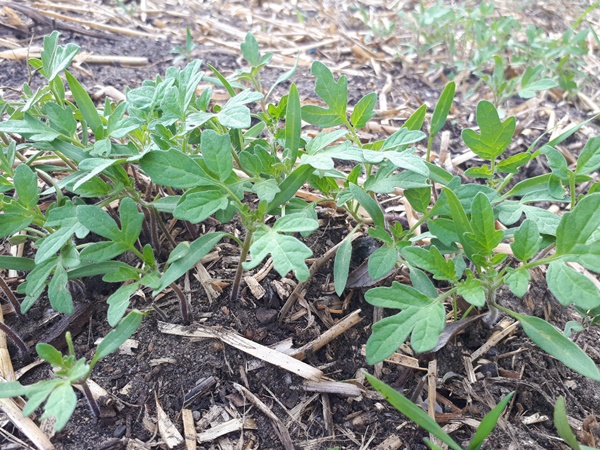
Tomato seedlings in a garden bed

In between the first and second hügelbed we have 3 fruit trees, one of them being a Mirabel. We planted these trees only a year prior and I was surprised we could already harvest fruit. The Mirabel was packed with delicious fruit we shared as they ripened.

Some ripe Mirabel hanging from its branch

We also had a lot of small visitors in the garden. From a few I took a picture.

To start of with the Colorado beetle. Here a picture of its larva.

The larva of a Colorado beetle on a potato leaf

We had potatoes growing in these hügelbeds in the past and of course did not find all potatoes while harvesting. So among all I mentioned above, there where some potatoes growing here and there in these hügelbeds. They eat some of the plants, but we collected the larva we could find and we had surprisingly little problems with the Colorado beetle in comparison to two years ago and before that, where we had to collect a lot of beetles and larva from our potato plants every morning to save our potato plants. Maybe because we do not spray, but collect by hand and let nature do the rest?

Next up is the hoverfly (Syrphidae) that is, when I am not mistaken. I couch these while mating. We seem to have a lot of these very useful insects, which contribute in diminishing lice.
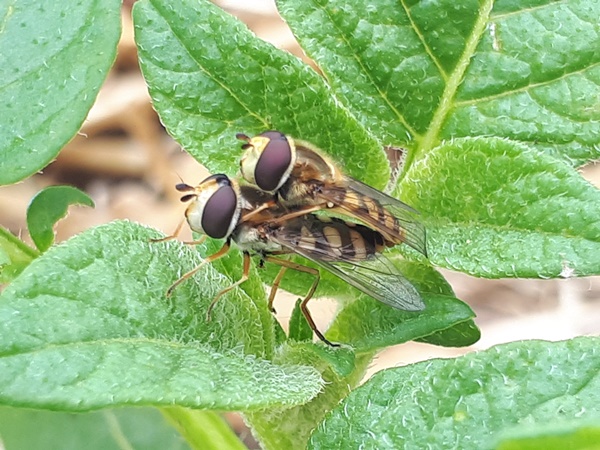
2 hoverflies mating on a potato leaf

Then I found this moth (or is it a butterfly). I find it hard to pin point the specie, but if anyone has an idea, he is more than welcome to put an info in the comments.
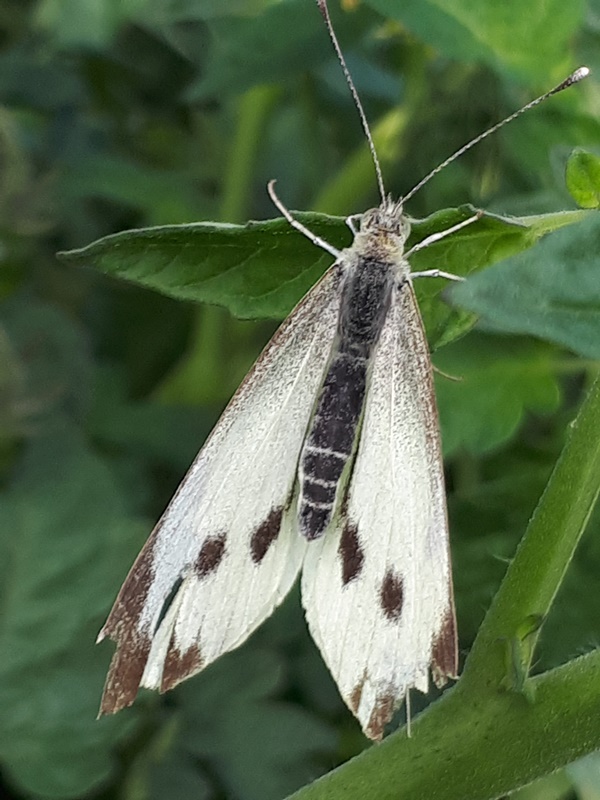
White and black moth on a tomato leaf

Last but not least we found this beautiful bright green pond frog decorated with its dark points. This was beginning of September when the wetter was damper. We where so pleased to find this small creature. That it is here must mean that, despite that our pond had fully dried out in 2017 and 2018, now that it has water again, it is still a healthy pond. The kid’s where so excited to watch this beautiful pond frog.
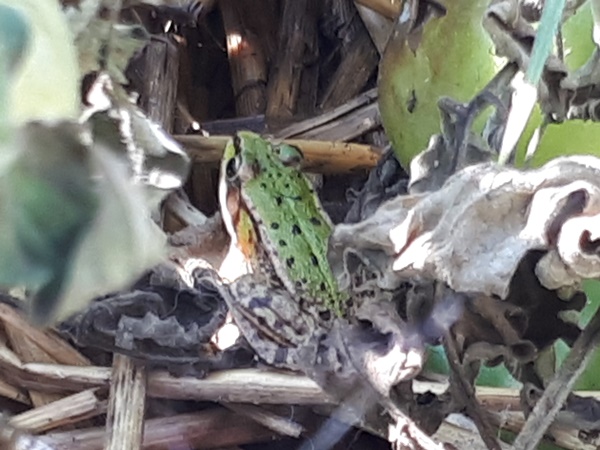
Pond frog hidden in the blight diseased tomato plants

That wraps it up for now.
What did my raised garden beds do last garden season?

The raised garden beds where not very successful, but they did have some fun things

The raised bed garden is our garden 2 on the garden plan.

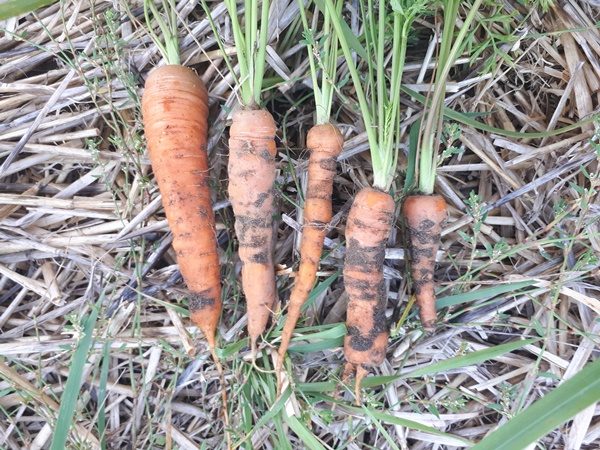
The garden season 2023 started dry and hot, which was not very useful for gardening. As mentioned in a previous post the carrots did not want to sprout. We found only 5 carrots in our raised beds and the onions we harvested where ratter small.

Freshly harvested carrots on straw mulch
Freshly harvested carrots
Freshly harvested onions on straw mulch
Freshly harvested onions

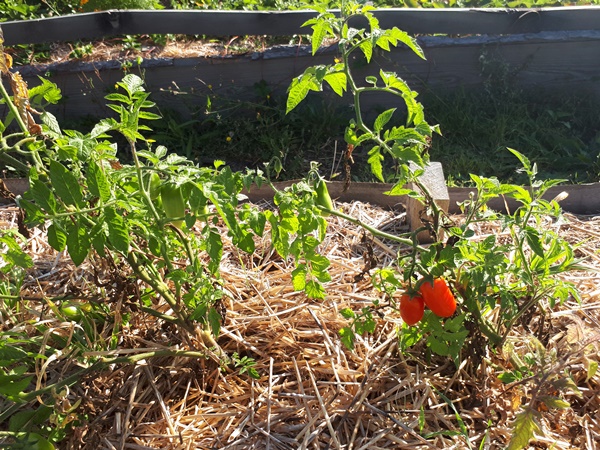
Where the carrots did not sprout, we planted tomatoes and peppers. I had pre-cultivated way too many to grow only in the greenhouse. We improved the soil a little with some manure and sawdust before planting. With the hot and dry wetter and us not watering much the tomatoes and peppers obvious did not do well. The tomatoes where only small brown sticks standing in the ground, but in August the wetter changed. We got rain on a regular base and the tomato plants started growing a little from the roots again. We even where able to harvest a few tomatoes before the blight came.

A small tomato plant with some green tomatoes starting to turn red, in a raised garden bed with straw mulch
Tomato plant in September
A small tomato plant with some red tomatoes, in a raised garden bed with straw mulch
Tomato plant in September

My daughter did a better job. She had this beautiful healthy looking tomato plant with some bright green tomatoes. When the tomatoes where ripe, she was quicker with harvesting then I was with taking a picture, but the taste was wonderful. The kid’s generally are very serious about there own gardens and love to water, so the tomato plants in there gardens obviously did better.

Healthy looking tomato plant with bright green tomatoes in a raised garden bed with straw mulch
Tomato plant

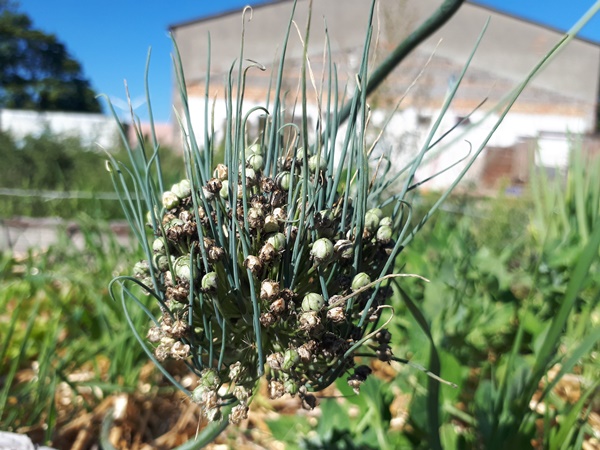
In the growing season 2022 I had left some leeks in the ground and they flowered beautifully. The only thing is that I missed out on the right point to harvest the seed. When the wetter changed and we had more rain some of the seed started to sprout right where it was. The seed head of the leeks looked very interesting, as if it has hair. I still was able to save some seed from the seed head, because not all seed had sprouted. We will use some of it in the coming growing season.

Leek seed head with leek seedlings growing directly out of the seed head
Hairy leek seed head

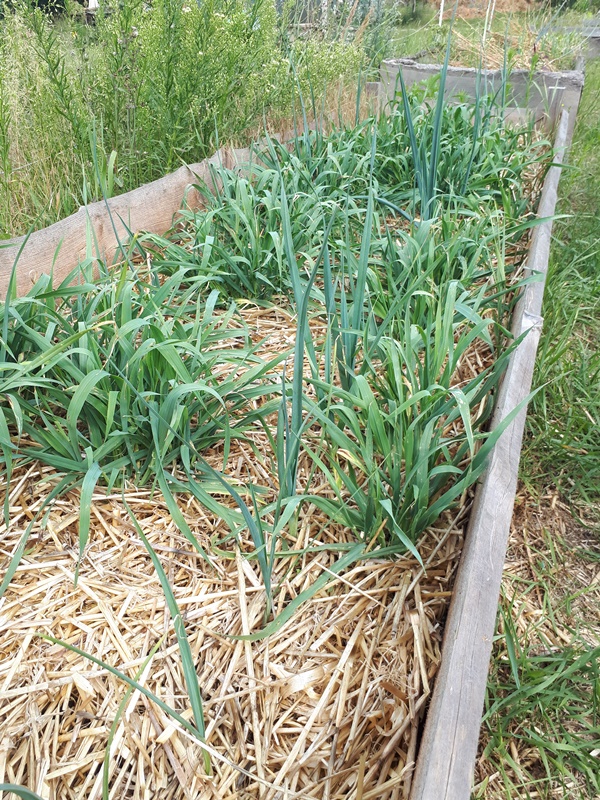
What I am definitely not liking is using straw as mulch in the garden. There are still so many seeds in there, which sprout, that I always have so much grain growing in the gardens. In this raised bed the leeks are partially hidden from all of the grain growing there.

Raised garden bed with 2 rows of leeks, partially hidden by grain plants
Weedy leek patch

I took out all of the grain (and also a lot of couch grass) to give the leeks some space.

Raised garden bed with 2 rows of, still small, leeks, mulched with straw
Weeded leek patch

Last fall we made a lot of biomass on a hay field. With this stuff the seed had long fallen out before we mowed it, so that should be much more to my liking as the straw. This biomass will serve as mulch for the gardens in the coming growing season, so we will see if the seed really has all fallen out before we pressed it to bales. Or maybe we will have gardens filled with plants from the hay field.

After the wetter turned in August we did some new sowing. We sowed dill, different varieties of lettuce and some sugar peas, which sprouted well and we even could harvest from, before the first frost came. I was positively surprised about that with the late sowing in August, but we had a long and mild fall, so sowing this late in the season will probably not work every year.

A row of small dill plants in a raised garden bed with straw mulch
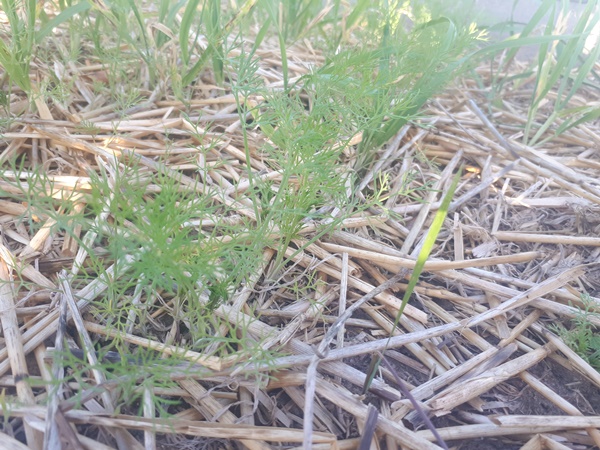
Small dill
Raised garden bed with some lettuce and peas and straw mulch
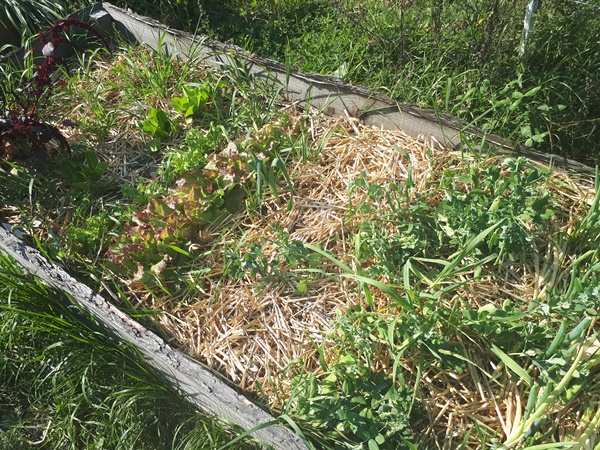
Lettuce and peas

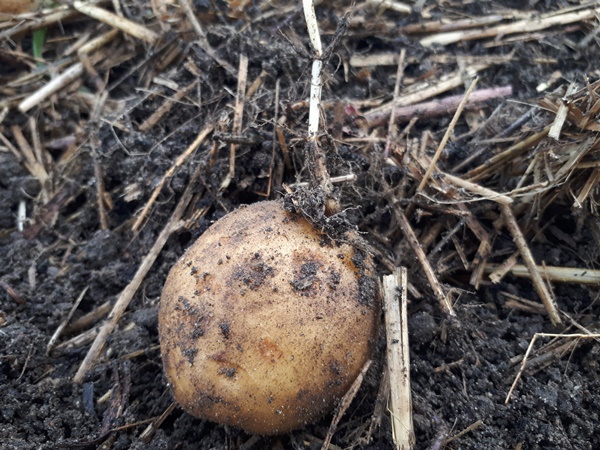
In one garden bed I planted a few potatoes, but we have a big problem with the couch grass coming trough every where. The roots of the grass actually just grow right trough the potatoes and I could put a big part of the harvest into the compost. Such a shame.

A Potato lying on the ground with a grown in couch grass root
Potato with couch grass root grown in

We also planted some flowers, but we should do a lot more to attract predator insects.

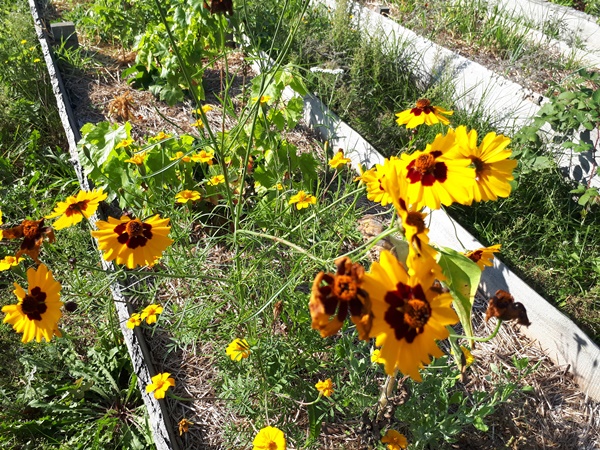
Yellow flowers with a red inner ring in a raised garden bed
Flowers

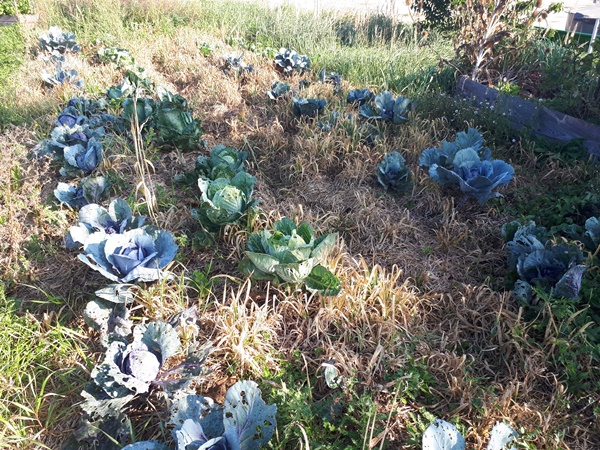
Last but not least our garden 2 also has a normal garden patch which was rotary tilled last spring (because of the couch grass). We planted red and white cabbages there, with celeriac in between. We planted a lot, counting in losses to pests, for instance, the caterpillar of the white cabbage butterfly. As you can see on the picture here we also used straw as mulch and the entire patch was full with grain already turning brown since I took the picture in the fall.

Garden patch filled with cabbages, celeriac and weeds
Cabbage patch

As expected some cabbage plants did better then others and there where more then enough pests. All in all this patch did alright. A part of the cabbages formed nice big heads.

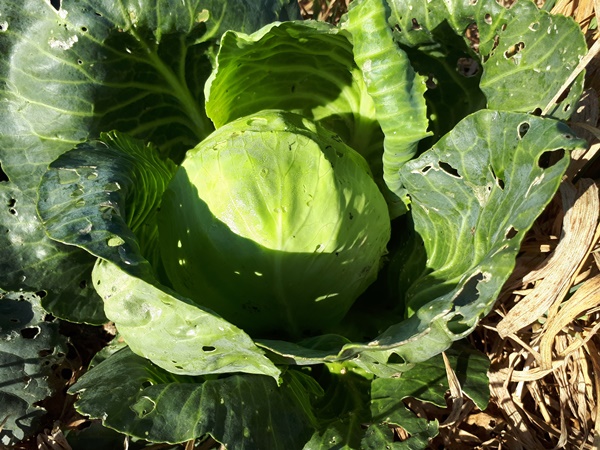
A nice big white cabbage head above straw mulch
White cabbage
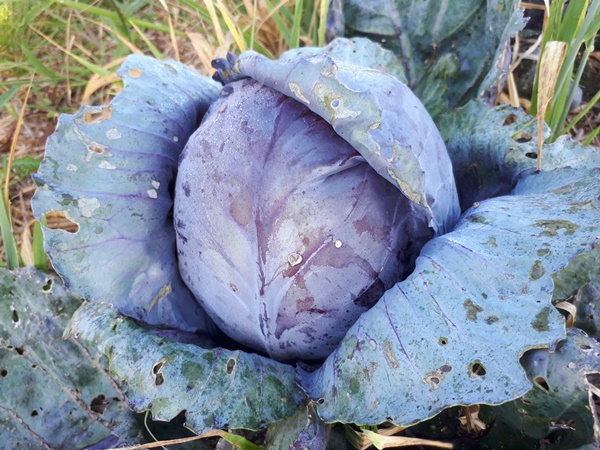
A nice big red cabbage head above straw mulch
Red cabbage

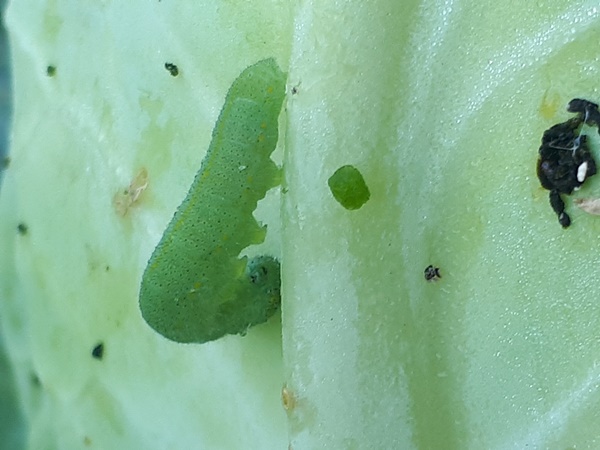
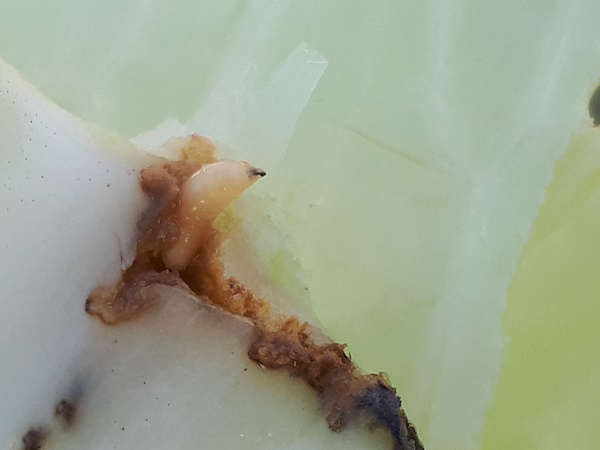
There where a lot of pests like this caterpillar (probably the cabbage moth, Plutella Xylostella) and this maggot (probably a small cabbage fly, Delia Radicum).

Green caterpillar on a white cabbage
cabbage moth caterpillar
White maggot looking out of a broken of white cabbage leaf
Maggot of a small cabbage fly

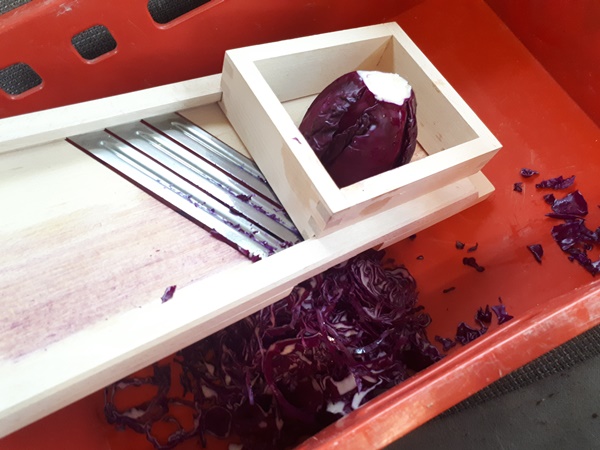
I could harvest more then enough cabbage heads to make enough sauerkraut to last us until the next harvest. I bought this slicer especially for making sauerkraut and I must say that the sauerkraut becomes much better as to when I cut it with a knife. Obviously with a knife I can not cut the cabbage as thinly as with the slicer and when I am making this kind of bigger batches I will always use the slicer from now on.

Slicing red cabbage with a sauerkraut slicer in a red create
Slicing cabbage
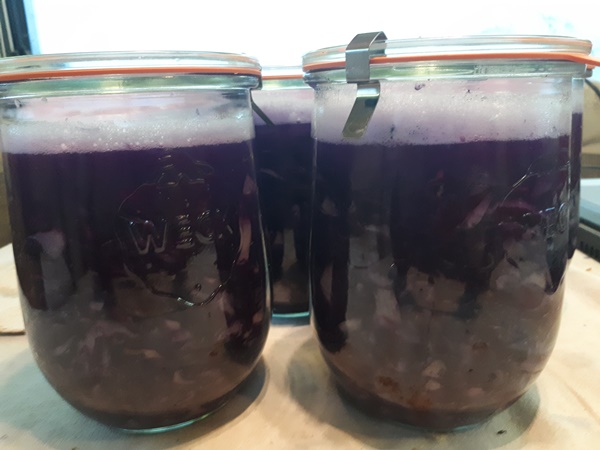
Weck jars filled with sliced red cabbages prepared to turn into sauerkraut
Sauerkraut in the making

Unlike the cabbages the celeriac did not do to well. Most of the plants did survive the dry and hot spring and summer start, but they stayed small and did not make any tuber. As I understand celeriac needs a lot of water to make a tuber, so I think this is not really the right crop for us to grow.
A little celeriac in front of a red cabbage in a garden patch mulched with straw
Celeriac
A little celeriac pulled out of the ground with no tuber formed lying on a garden patch mulched with straw
Celeriac

Luckily I had a celery variety for the stalks for the first time this year, which thrived very well in the greenhouse. We liked this celery for our soups very much, so we did not have to go without. We will grow this variety on a bigger scale this year.

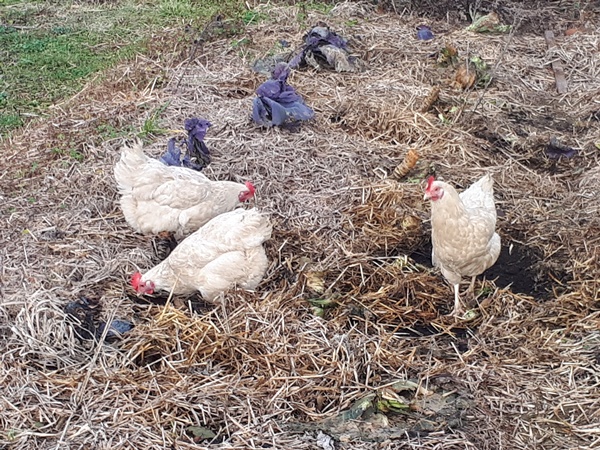
After harvesting was done we let the chickens into the garden to help on pest reduction.

3 white Sussex chickens free range in a cabbage garden patch which was harvested
3 white Sussex chickens free ranging

Concluding I have to say that the garden soil is slowly improving, but it still has a long way to go. Having a drought spell is terrible, because the soil dries out so quickly and becomes so hard (like concrete) that if we water, the water just flows of to the side and waters the walking paths in stead of the garden soil.

The couch grass also is a big problem. It is all over in the original ground and on the walking paths. We can not dig it all out, that is just too much and we would have to empty out all of the raised beds again and dig out all of the fruit trees in order to do so.

Well, we are going to have to think of a new approach for these raised beds for the new garden season. We are having some thoughts there, but that is for a different time.

1st Growing season on our newly build composting beds

What did we sow/ plant and what did we harvest?
The new composting beds in garden 4

I ended my last post about building these compost beds (link) with sowing some green manure (mustard and lupines, since they sprout at low temperatures).

Small mustard plant and a very small lupine plant growing in a compost bed
A mustard plant & a lupine plant

Well, the mustard did very well. It grew very big, bloomed beautifully and gave us a lot of new mustard seed. We actually managed to harvest a lot of the seed and sowed it on empty beds later in the season. The fall-out seed sprouted again and grew and bloomed again before winter came.

Mustard seed and there shells against a red background
Mustard seed

The lupine did not do so well. All of them stayed very small and partially turned brown. Some of them actually managed to bloom a little and gave us some new seed we also harvested.

Lupine seed and there shells against a green background
Lupine seed

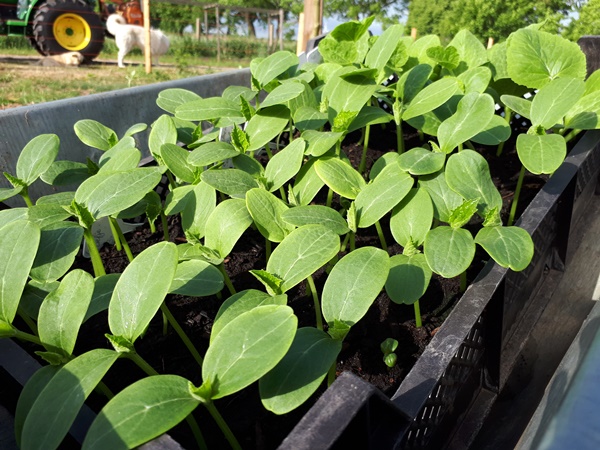
Since last spring was so cold for so very long we only started planting beginning of June. We raised a lot of seedlings in our new greenhouse, corn, pumpkin, sunflowers and other flowers.

Pumpkin seedlings in a create in a wheel barrow with two dogs in the background
Pumpkin seedlings

We planted them and where already doubtful if anything would really grow, since the material we had brought out did not seem broken down enough. We planted the seedlings anyhow, since we did not really have other garden space available and wanted to give the beds a change. The mustard seemed to do well, so why not something else.

A few days after we planted there was damage to a part of the seedlings which had nothing to do with the soil. On about 2 meter of the compost bed almost all seedlings where bent over close to the ground as if an animal rolled over them. This was such a sad sight.

A bent over corn seedling on a compost bed
A bent over corn seedling

To keep things short a summary of the different plants we had planted here and how they did.

Sunflowers

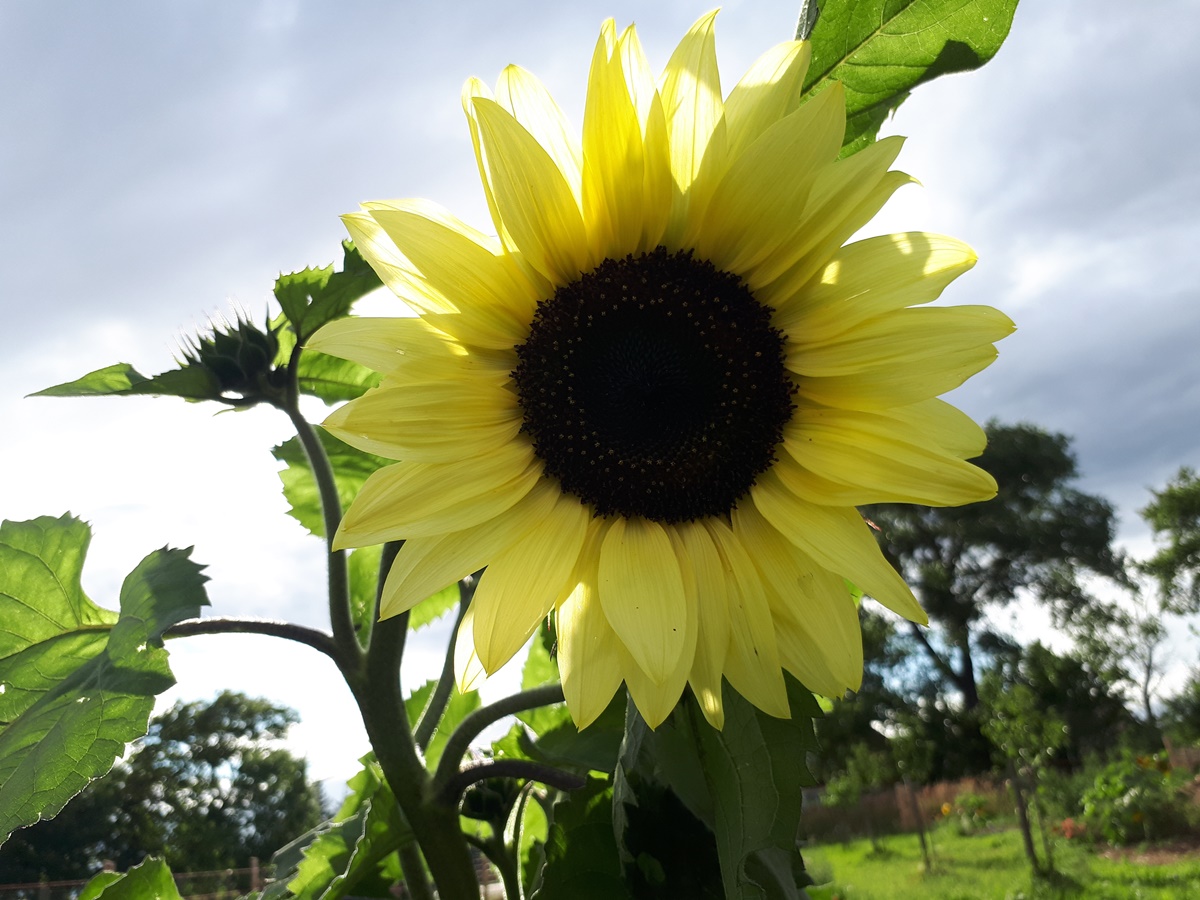
The sunflowers did not thrive, but they did not die either. They stayed very small and made a very small flower head. On the other hand there was a very beautiful pastel colour sunflower we did not plant our selves (a thank you to the birds) which did wonderful.

Beautiful pastel coloured sunflower in the sun against a garden background in the sun against a garden background
Beautiful pastel coloured sunflower

The sunflowers did make new seed, which where a feast for the chickens and the wild birds.

Pumpkin

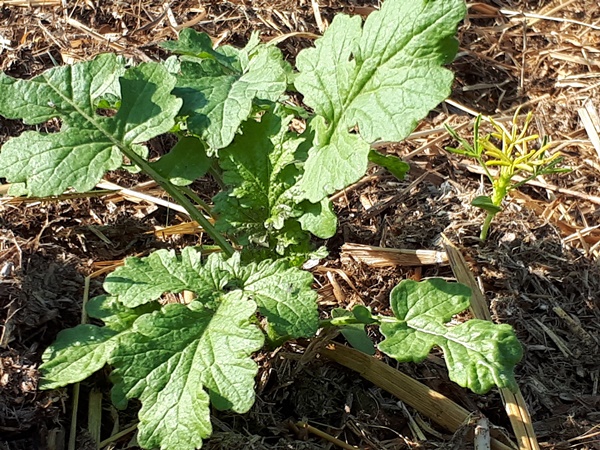
Only one of the more then 30 pumpkin plants we planted survived. The compost bed is on a slight slope and this pumpkin plant is right on the bottom, so maybe over the years more soil has been washed down here by the rain on top of which we put our compost material and this pumpkin plant had better conditions as the others. Soon we realized that the compost beds lack nutrients and we started dividing the chicken manure from the coop around the pumpkin hoping that this pumpkin plant would survive and fruit.

Healthy looking pumpkin plant with a flower, the start of a pumpkin with the faded flower still on there and a yellow unripe small pumpkin in the sunshine
Pumpkin plant with pumpkins in different stages

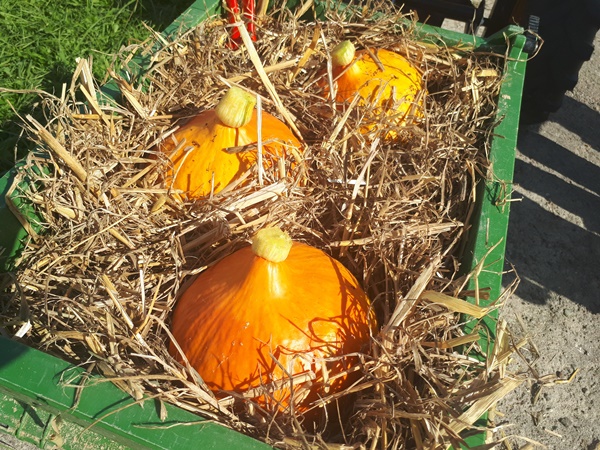
I am glad to say that it worked and this one pumpkin plant gave us a lot of delicious pumpkins for soup and puree.

3 beautiful orange shiny ripe Hokkaido pumpkins in straw in a child’s toy trailer
beautiful orange shiny ripe Hokkaido pumpkins

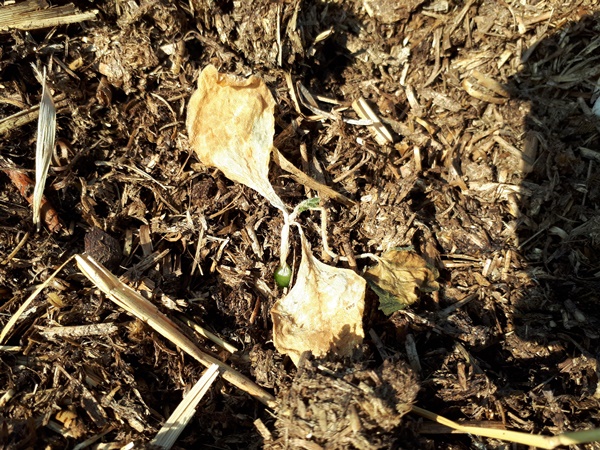
All of the other pumpkin plants we planted looked like this. If this is sunburn or they just dried out, I am not sure.

Dried out pumpkin seedling in a compost bed
Dried out pumpkin seedling

Corn

With the corn it was the same story. Most of them looked like this after a few days.

Dried out corn seedling in a compost bed
Dried out corn seedling

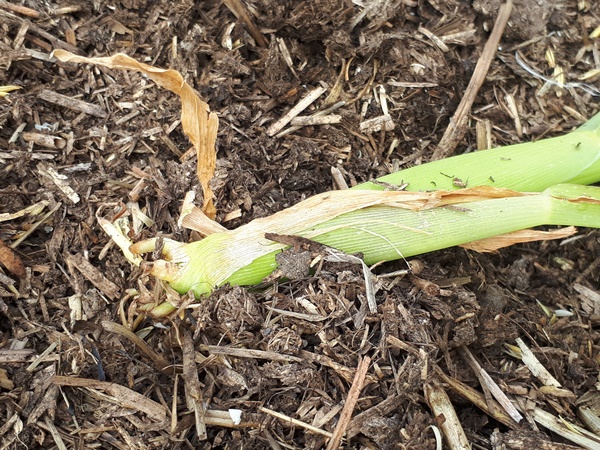
There where several plants that lived and grew. We also gave these some chicken manure to ad nutrients to the plants. After a few weeks some of the corn plants fell over. I did not get a decent picture, but there where just no roots left any more.

Fallen over corn plant with no roots on a compost bed
Fallen over corn plant with no roots

All in all we managed to harvest a few corn cobs and they where delicious.

Flowers

We had a flower mix we started from seed in the greenhouse and planted them spread out over the compost beds. Strangely enough they seemed to thrive and gave the very sad looking compost beds some splashes of colour.

Yellow and pink flowers in a compost bed
Flowers

Tomato

This we did not plant our selves (another thank you to the birds). This tomato plant grew in the protection of the mustard plants and did well for a long time, but right before we could start harvesting unfortunately the blight came.

Tomato plant with ripening tomatoes amongst a lot of green against a blue sky
Tomatoes

Caterpillars

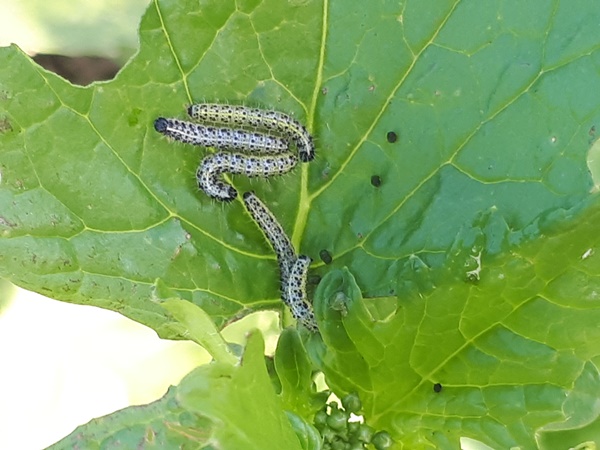
At the end of the season we found caterpillars on the volunteer mustard plants. When I am not mistaken these are the caterpillars of the “large cabbage white butterfly” (Pieris brassicae).

5 caterpillars of the “large cabbage white butterfly” (Pieris brassicae) on a mustard leaf
Caterpillars of the “large cabbage white butterfly” (Pieris brassicae)

Obviously this was no problem for us, since the mustard is only a cover crop and will die off in winter anyhow. (Unfortunately they also where on the cabbages in a different garden, but that is for another time)

Resuming

All in all, we where not very happy with the results for this garden, but we have learned a lot.

Some plants can thrive with little, others can not.

Food we want to grow usually need nutrients and nitrogen and the “soil” we created lacked nitrogen. Only straw, hay and some sawdust do not give a useful soil. In straw and hay is no energy left, since the plants had redirected it to the seeds they produced. Straw and hay needs to have been in a stable or coop and have been pooped on in order to be of value for a starting the garden (except if you just use it as mulch). Good thing we have some animals now and we have a friend with cows. We have been getting manure spreaders full of cow manure and spreading them directly onto the compost beds and expanding the compost beds to the maximum width which the garden area gives. This will be rotary tilled to mix the manure with the existing soil and will be repeated after a certain time to bring some air in the material to help it break down. I do hope these composting beds will be finished composting once the season begins, but I am not sure. We will check the temperature before we plant anything and will concentrate on the very “hungry” plants to start with. With time we will learn…