
With the sheep and hare came the need for hay as winter feed. We have had sheep and hare before and made hay before, so we already have a baler. As a new addition, to make life a lot easier for us, we have a bale collecting trailer now and we are so happy we got this. It made collecting the hay bales from the field from something physical demanding to an easy one-man job.
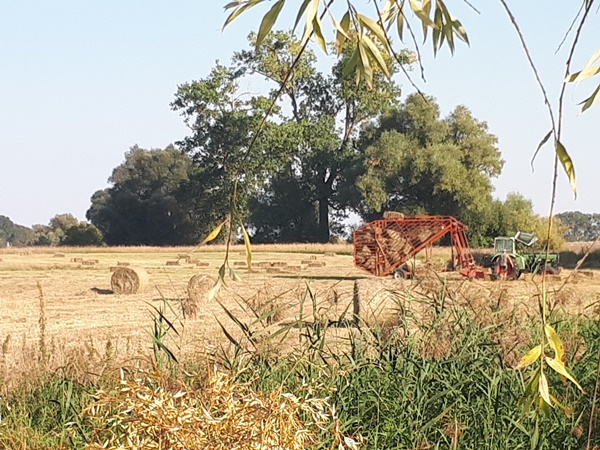
We are lucky to be able to use a pasture nearby. This pasture is too small for the farmer to use with his big machines, so we can use it for free. We do need to bring it back into shape again, though. There has nothing been done this season and partly the reed grass and thistles had grown higher as the tractor is. The advantage is that everything has sown itself and there are no seeds left on the stalk. This makes it very interesting as biomass for the garden.
Normally the first half of September is a little late for making hay, but (in this case) we are lucky with another heat wave and where able to make good hay on some parts of this pasture and on other parts we made biomass for the garden.
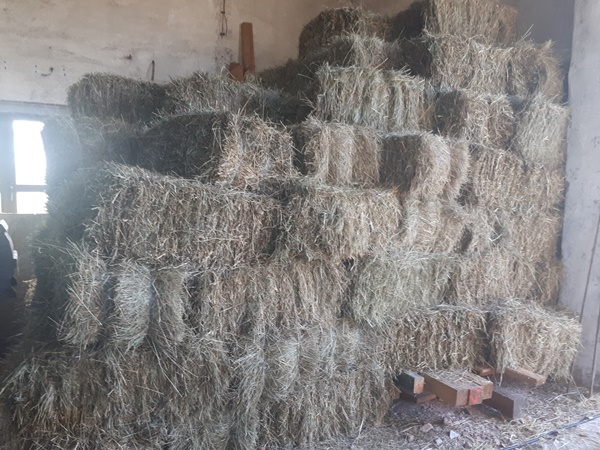
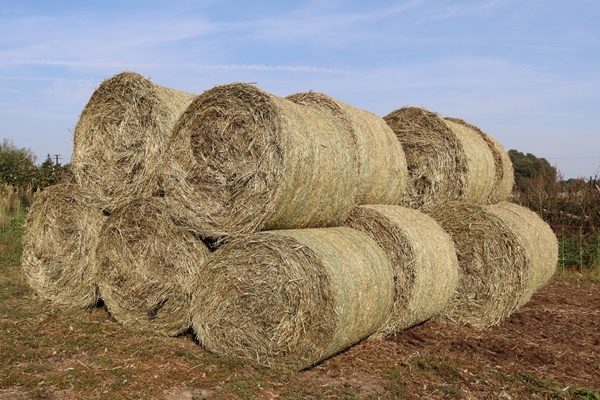
The good hay was pressed in small square bales for easy handling as animal feed and the biomass was pressed into round bales using the blades in the baler to cut the material smaller for easier use in the garden. Mainly the biomass is meant for mulching the garden beds. Without any seed pressure this is ideal. The straw I was using until now is still full of grain seed and I have grain growing everywhere, which is a bit annoying.
We did also have the change to make straw again early August, since that is needed as stable filling. The straw wasn’t very nice this year due to the strange and wet wetter this summer, but we are happy we where able to make any at all.

On the pasture where we made hay, there is a small water stream running trough the pasture with some big willow trees. We found massive damage from the beaver nagging on a big tree.
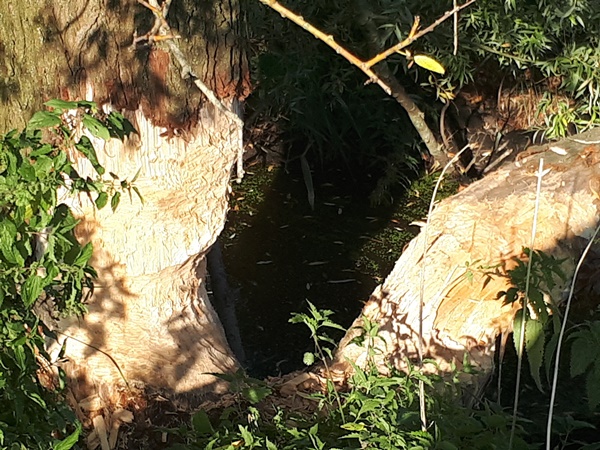
It is impressive to see how big the woodchips are this beaver produces.


 Beautiful Chaos