I ended my last post about building these compost beds (link) with sowing some green manure (mustard and lupines, since they sprout at low temperatures).
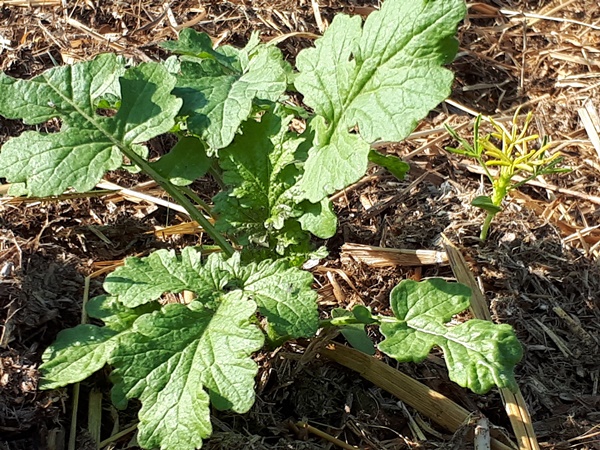
Well, the mustard did very well. It grew very big, bloomed beautifully and gave us a lot of new mustard seed. We actually managed to harvest a lot of the seed and sowed it on empty beds later in the season. The fall-out seed sprouted again and grew and bloomed again before winter came.

The lupine did not do so well. All of them stayed very small and partially turned brown. Some of them actually managed to bloom a little and gave us some new seed we also harvested.

Since last spring was so cold for so very long we only started planting beginning of June. We raised a lot of seedlings in our new greenhouse, corn, pumpkin, sunflowers and other flowers.
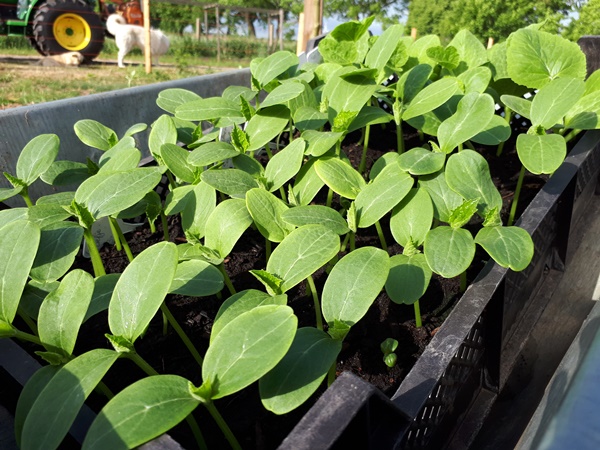
We planted them and where already doubtful if anything would really grow, since the material we had brought out did not seem broken down enough. We planted the seedlings anyhow, since we did not really have other garden space available and wanted to give the beds a change. The mustard seemed to do well, so why not something else.
A few days after we planted there was damage to a part of the seedlings which had nothing to do with the soil. On about 2 meter of the compost bed almost all seedlings where bent over close to the ground as if an animal rolled over them. This was such a sad sight.

To keep things short a summary of the different plants we had planted here and how they did.
Sunflowers
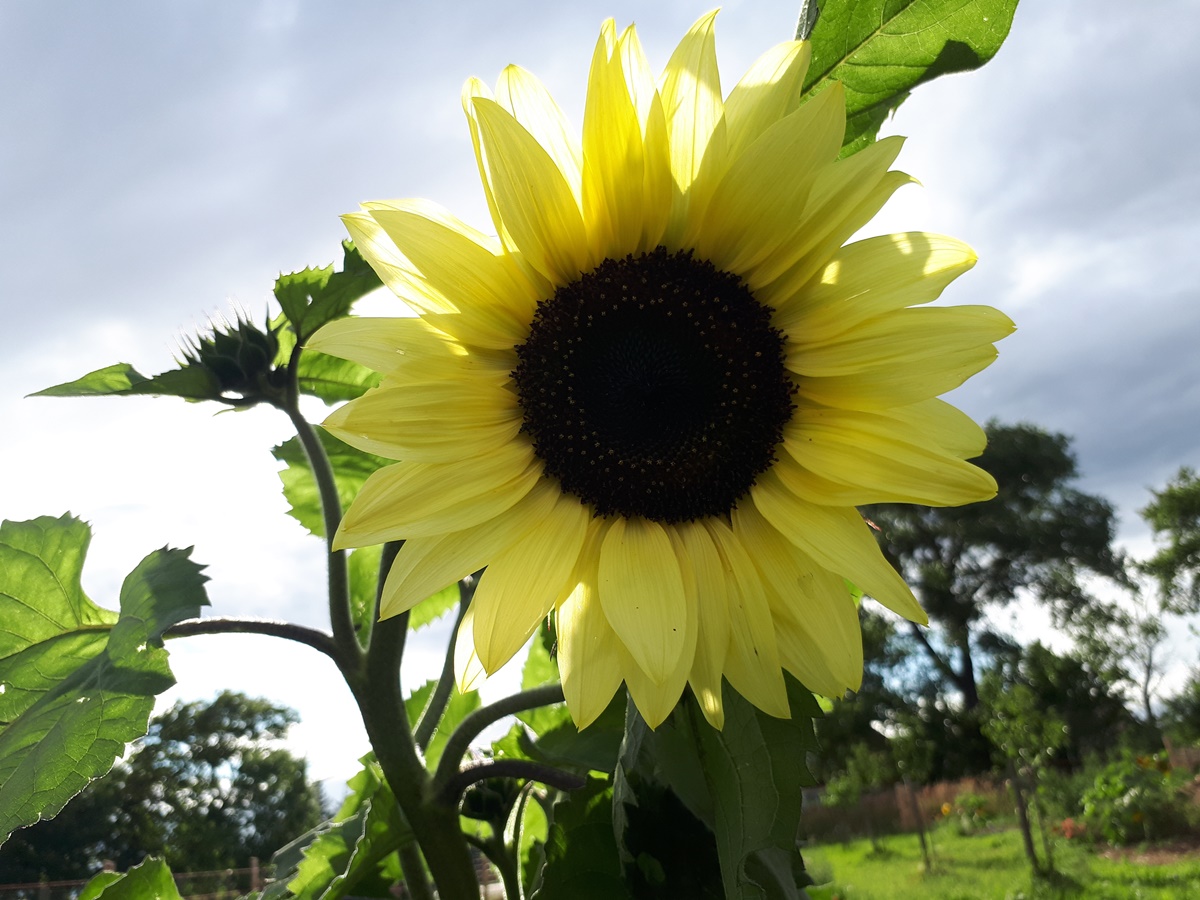
The sunflowers did not thrive, but they did not die either. They stayed very small and made a very small flower head. On the other hand there was a very beautiful pastel colour sunflower we did not plant our selves (a thank you to the birds) which did wonderful.

The sunflowers did make new seed, which where a feast for the chickens and the wild birds.
Pumpkin
Only one of the more then 30 pumpkin plants we planted survived. The compost bed is on a slight slope and this pumpkin plant is right on the bottom, so maybe over the years more soil has been washed down here by the rain on top of which we put our compost material and this pumpkin plant had better conditions as the others. Soon we realized that the compost beds lack nutrients and we started dividing the chicken manure from the coop around the pumpkin hoping that this pumpkin plant would survive and fruit.

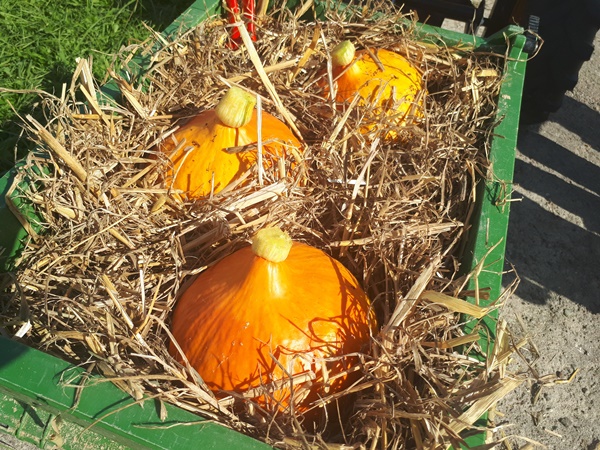
I am glad to say that it worked and this one pumpkin plant gave us a lot of delicious pumpkins for soup and puree.
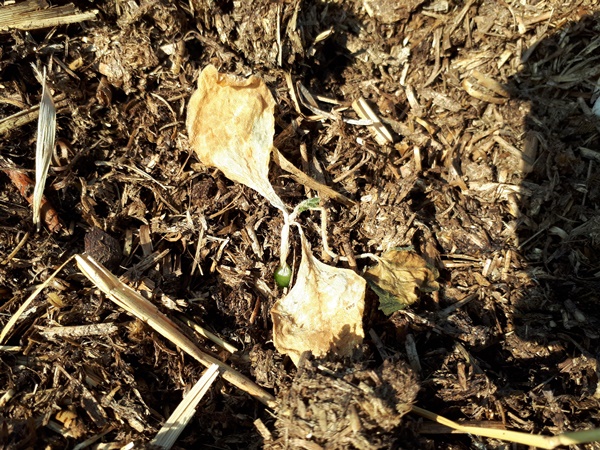
All of the other pumpkin plants we planted looked like this. If this is sunburn or they just dried out, I am not sure.
Corn
With the corn it was the same story. Most of them looked like this after a few days.

There where several plants that lived and grew. We also gave these some chicken manure to ad nutrients to the plants. After a few weeks some of the corn plants fell over. I did not get a decent picture, but there where just no roots left any more.
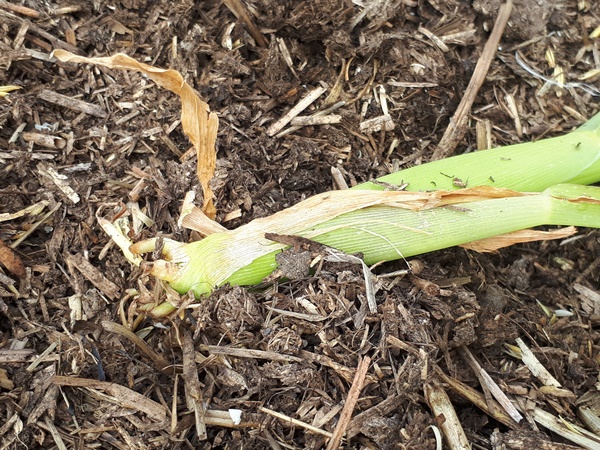
All in all we managed to harvest a few corn cobs and they where delicious.
Flowers
We had a flower mix we started from seed in the greenhouse and planted them spread out over the compost beds. Strangely enough they seemed to thrive and gave the very sad looking compost beds some splashes of colour.

Tomato
This we did not plant our selves (another thank you to the birds). This tomato plant grew in the protection of the mustard plants and did well for a long time, but right before we could start harvesting unfortunately the blight came.

Caterpillars
At the end of the season we found caterpillars on the volunteer mustard plants. When I am not mistaken these are the caterpillars of the “large cabbage white butterfly” (Pieris brassicae).
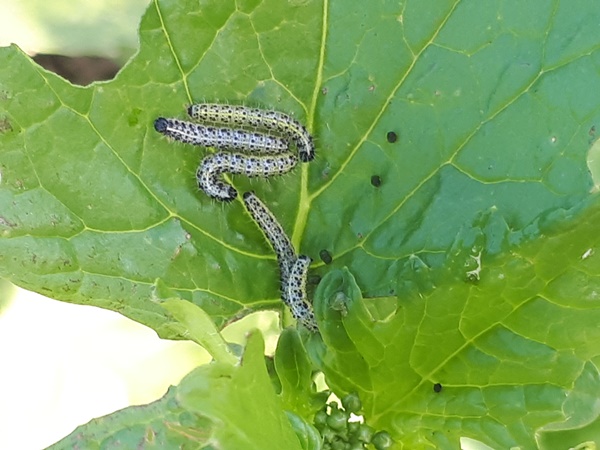
Obviously this was no problem for us, since the mustard is only a cover crop and will die off in winter anyhow. (Unfortunately they also where on the cabbages in a different garden, but that is for another time)
Resuming
All in all, we where not very happy with the results for this garden, but we have learned a lot.
Some plants can thrive with little, others can not.
Food we want to grow usually need nutrients and nitrogen and the “soil” we created lacked nitrogen. Only straw, hay and some sawdust do not give a useful soil. In straw and hay is no energy left, since the plants had redirected it to the seeds they produced. Straw and hay needs to have been in a stable or coop and have been pooped on in order to be of value for a starting the garden (except if you just use it as mulch). Good thing we have some animals now and we have a friend with cows. We have been getting manure spreaders full of cow manure and spreading them directly onto the compost beds and expanding the compost beds to the maximum width which the garden area gives. This will be rotary tilled to mix the manure with the existing soil and will be repeated after a certain time to bring some air in the material to help it break down. I do hope these composting beds will be finished composting once the season begins, but I am not sure. We will check the temperature before we plant anything and will concentrate on the very “hungry” plants to start with. With time we will learn…

 Beautiful Chaos