What did my raised garden beds do last garden season?

The raised garden beds where not very successful, but they did have some fun things

The raised bed garden is our garden 2 on the garden plan.

The garden season 2023 started dry and hot, which was not very useful for gardening. As mentioned in a previous post the carrots did not want to sprout. We found only 5 carrots in our raised beds and the onions we harvested where ratter small.
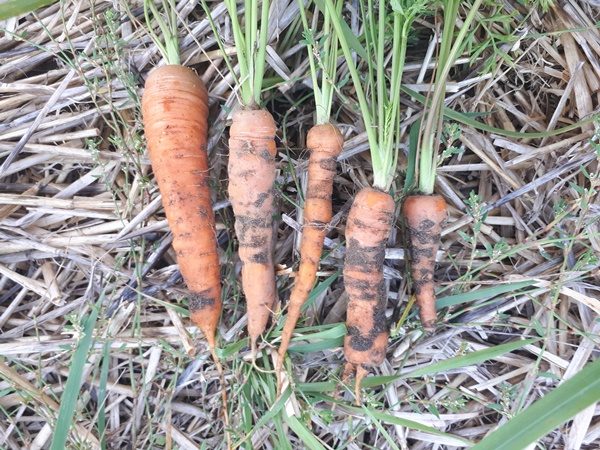
Freshly harvested carrots on straw mulch
Freshly harvested carrots
Freshly harvested onions on straw mulch
Freshly harvested onions

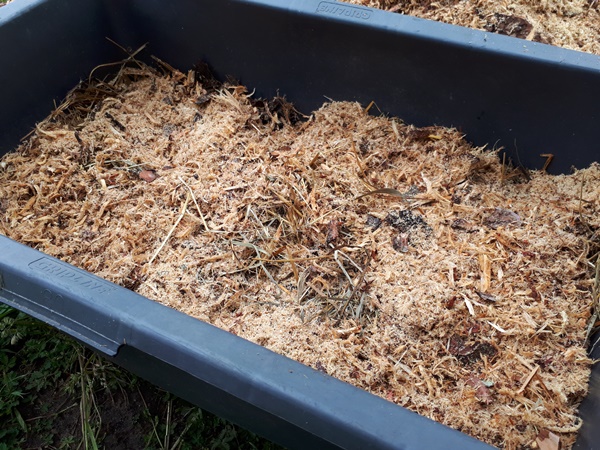
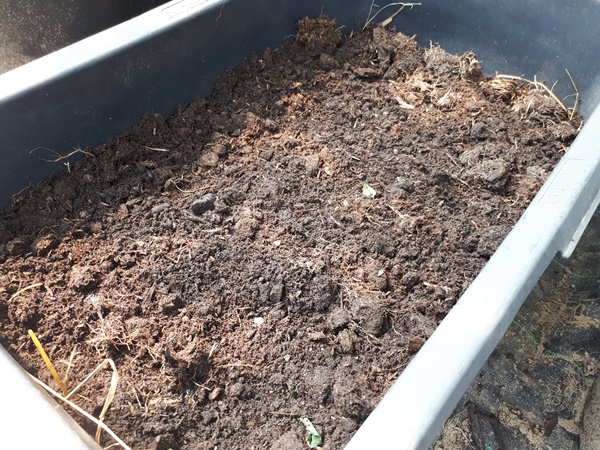
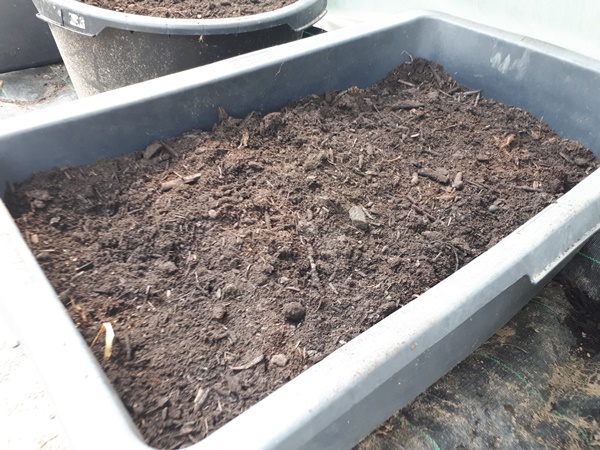
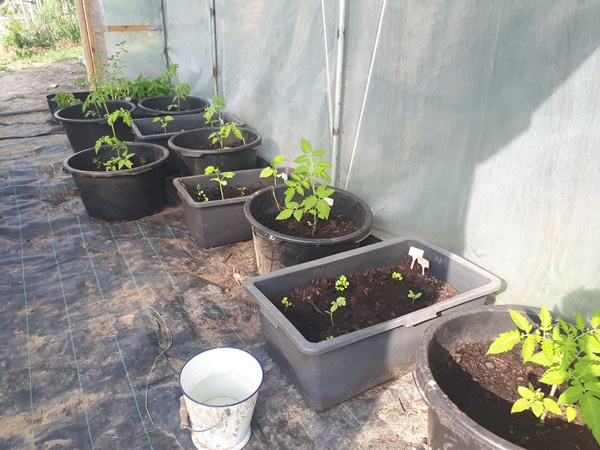
Where the carrots did not sprout, we planted tomatoes and peppers. I had pre-cultivated way too many to grow only in the greenhouse. We improved the soil a little with some manure and sawdust before planting. With the hot and dry wetter and us not watering much the tomatoes and peppers obvious did not do well. The tomatoes where only small brown sticks standing in the ground, but in August the wetter changed. We got rain on a regular base and the tomato plants started growing a little from the roots again. We even where able to harvest a few tomatoes before the blight came.

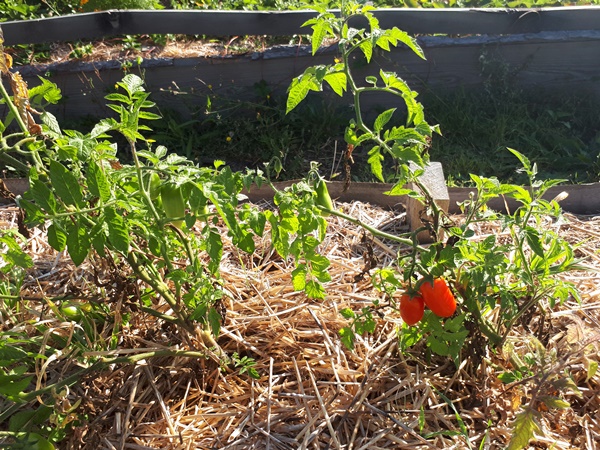
A small tomato plant with some green tomatoes starting to turn red, in a raised garden bed with straw mulch
Tomato plant in September
A small tomato plant with some red tomatoes, in a raised garden bed with straw mulch
Tomato plant in September

My daughter did a better job. She had this beautiful healthy looking tomato plant with some bright green tomatoes. When the tomatoes where ripe, she was quicker with harvesting then I was with taking a picture, but the taste was wonderful. The kid’s generally are very serious about there own gardens and love to water, so the tomato plants in there gardens obviously did better.

Healthy looking tomato plant with bright green tomatoes in a raised garden bed with straw mulch
Tomato plant

In the growing season 2022 I had left some leeks in the ground and they flowered beautifully. The only thing is that I missed out on the right point to harvest the seed. When the wetter changed and we had more rain some of the seed started to sprout right where it was. The seed head of the leeks looked very interesting, as if it has hair. I still was able to save some seed from the seed head, because not all seed had sprouted. We will use some of it in the coming growing season.
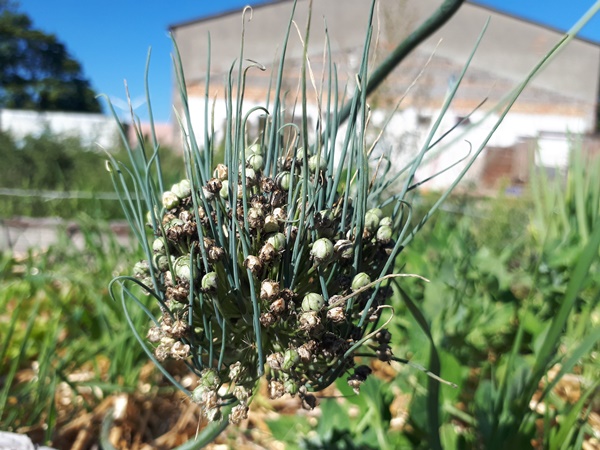
Leek seed head with leek seedlings growing directly out of the seed head
Hairy leek seed head

What I am definitely not liking is using straw as mulch in the garden. There are still so many seeds in there, which sprout, that I always have so much grain growing in the gardens. In this raised bed the leeks are partially hidden from all of the grain growing there.
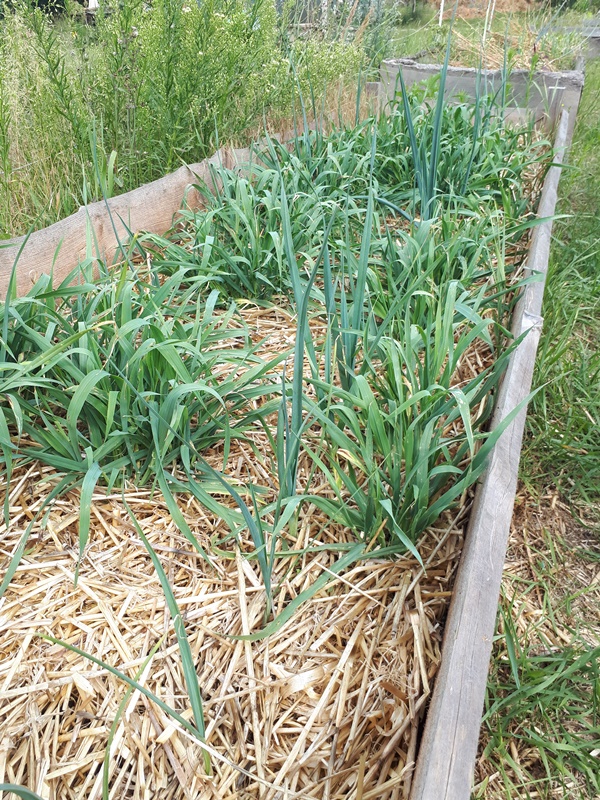
Raised garden bed with 2 rows of leeks, partially hidden by grain plants
Weedy leek patch

I took out all of the grain (and also a lot of couch grass) to give the leeks some space.

Raised garden bed with 2 rows of, still small, leeks, mulched with straw
Weeded leek patch

Last fall we made a lot of biomass on a hay field. With this stuff the seed had long fallen out before we mowed it, so that should be much more to my liking as the straw. This biomass will serve as mulch for the gardens in the coming growing season, so we will see if the seed really has all fallen out before we pressed it to bales. Or maybe we will have gardens filled with plants from the hay field.

After the wetter turned in August we did some new sowing. We sowed dill, different varieties of lettuce and some sugar peas, which sprouted well and we even could harvest from, before the first frost came. I was positively surprised about that with the late sowing in August, but we had a long and mild fall, so sowing this late in the season will probably not work every year.
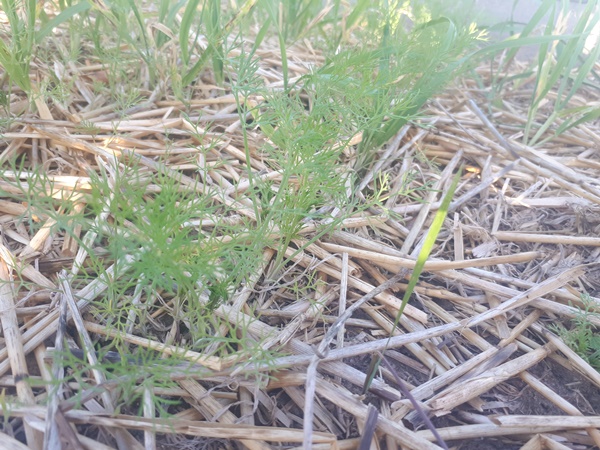
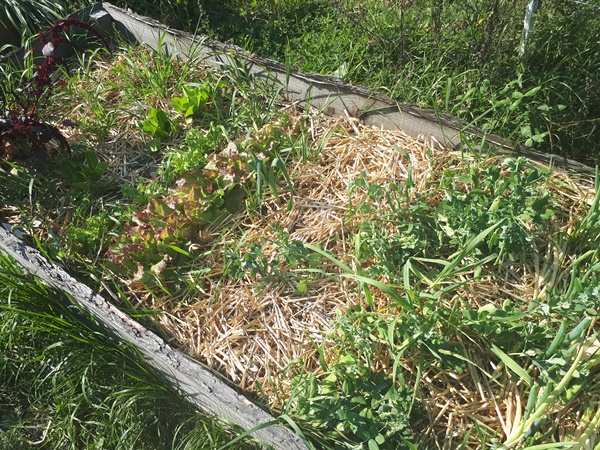
A row of small dill plants in a raised garden bed with straw mulch
Small dill
Raised garden bed with some lettuce and peas and straw mulch
Lettuce and peas

In one garden bed I planted a few potatoes, but we have a big problem with the couch grass coming trough every where. The roots of the grass actually just grow right trough the potatoes and I could put a big part of the harvest into the compost. Such a shame.
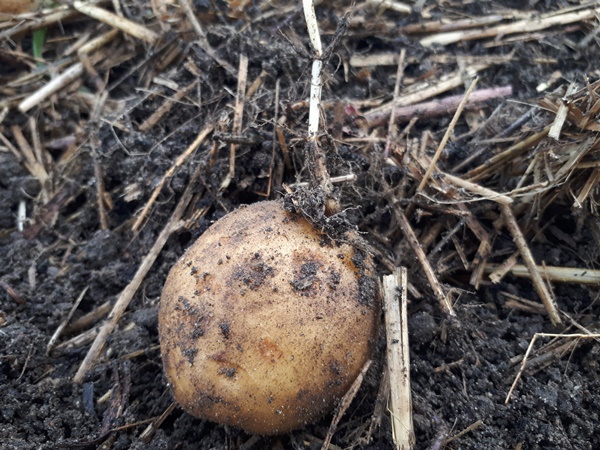
A Potato lying on the ground with a grown in couch grass root
Potato with couch grass root grown in

We also planted some flowers, but we should do a lot more to attract predator insects.
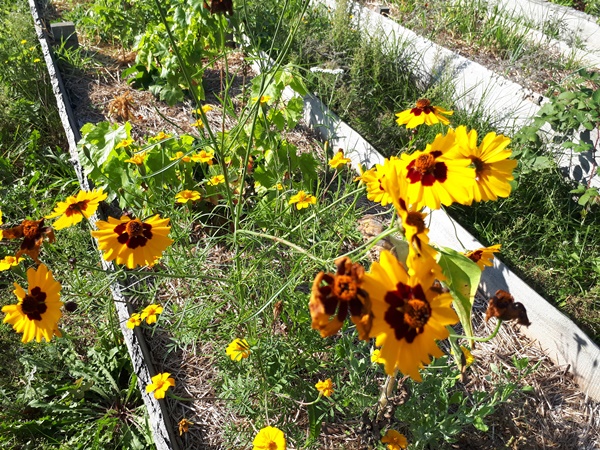
Yellow flowers with a red inner ring in a raised garden bed
Flowers

Last but not least our garden 2 also has a normal garden patch which was rotary tilled last spring (because of the couch grass). We planted red and white cabbages there, with celeriac in between. We planted a lot, counting in losses to pests, for instance, the caterpillar of the white cabbage butterfly. As you can see on the picture here we also used straw as mulch and the entire patch was full with grain already turning brown since I took the picture in the fall.
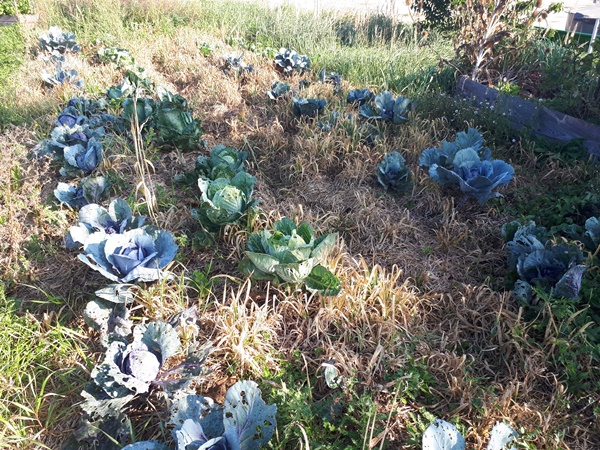
Garden patch filled with cabbages, celeriac and weeds
Cabbage patch

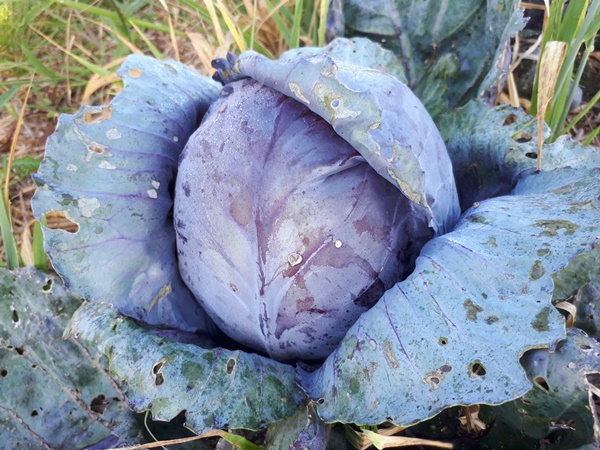
As expected some cabbage plants did better then others and there where more then enough pests. All in all this patch did alright. A part of the cabbages formed nice big heads.
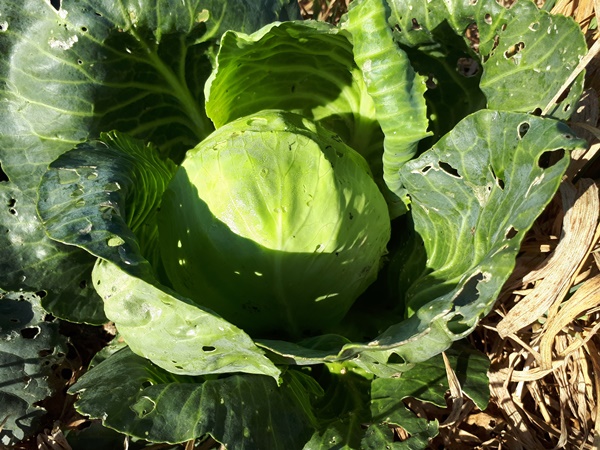
A nice big white cabbage head above straw mulch
White cabbage
A nice big red cabbage head above straw mulch
Red cabbage

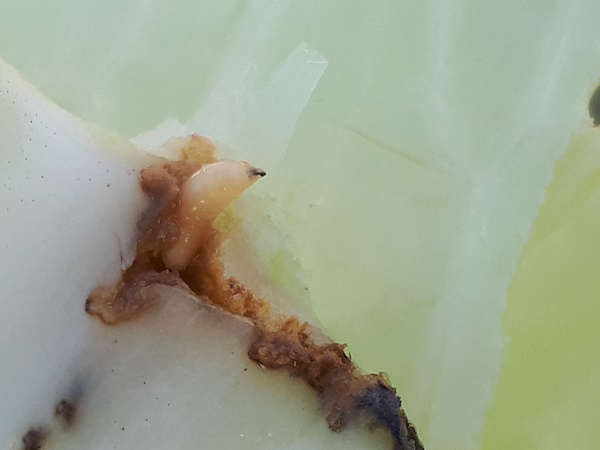
There where a lot of pests like this caterpillar (probably the cabbage moth, Plutella Xylostella) and this maggot (probably a small cabbage fly, Delia Radicum).
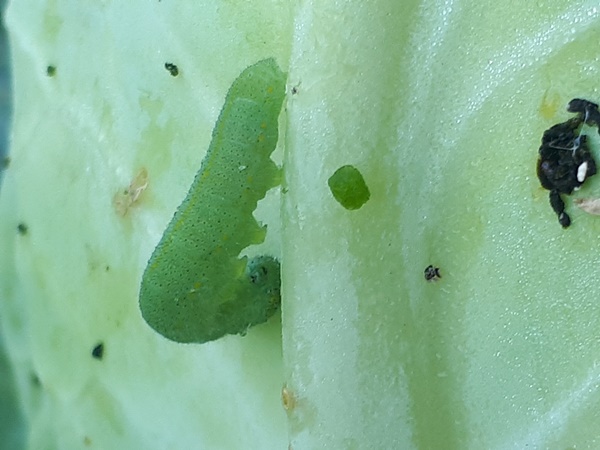
Green caterpillar on a white cabbage
cabbage moth caterpillar
White maggot looking out of a broken of white cabbage leaf
Maggot of a small cabbage fly

I could harvest more then enough cabbage heads to make enough sauerkraut to last us until the next harvest. I bought this slicer especially for making sauerkraut and I must say that the sauerkraut becomes much better as to when I cut it with a knife. Obviously with a knife I can not cut the cabbage as thinly as with the slicer and when I am making this kind of bigger batches I will always use the slicer from now on.
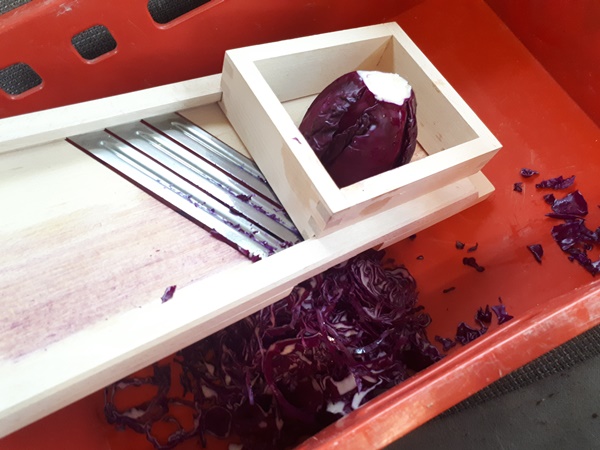
Slicing red cabbage with a sauerkraut slicer in a red create
Slicing cabbage
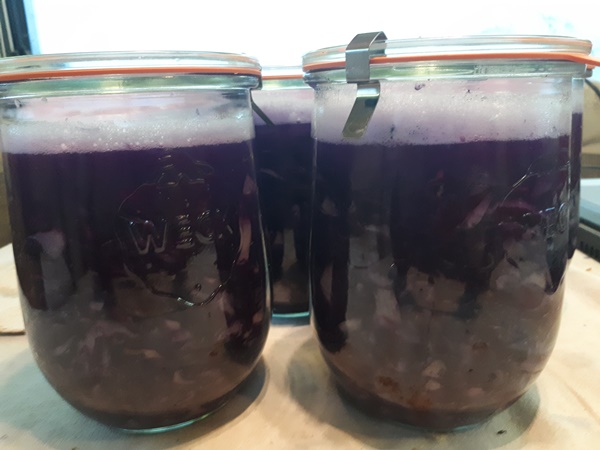
Weck jars filled with sliced red cabbages prepared to turn into sauerkraut
Sauerkraut in the making

Unlike the cabbages the celeriac did not do to well. Most of the plants did survive the dry and hot spring and summer start, but they stayed small and did not make any tuber. As I understand celeriac needs a lot of water to make a tuber, so I think this is not really the right crop for us to grow.

A little celeriac in front of a red cabbage in a garden patch mulched with straw
Celeriac
A little celeriac pulled out of the ground with no tuber formed lying on a garden patch mulched with straw
Celeriac

Luckily I had a celery variety for the stalks for the first time this year, which thrived very well in the greenhouse. We liked this celery for our soups very much, so we did not have to go without. We will grow this variety on a bigger scale this year.

After harvesting was done we let the chickens into the garden to help on pest reduction.
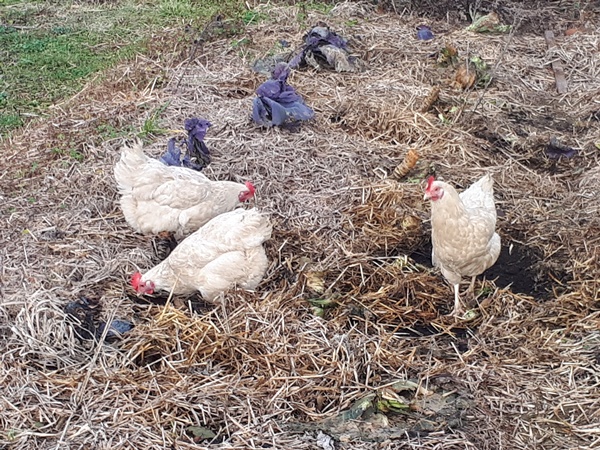
3 white Sussex chickens free range in a cabbage garden patch which was harvested
3 white Sussex chickens free ranging

Concluding I have to say that the garden soil is slowly improving, but it still has a long way to go. Having a drought spell is terrible, because the soil dries out so quickly and becomes so hard (like concrete) that if we water, the water just flows of to the side and waters the walking paths in stead of the garden soil.

The couch grass also is a big problem. It is all over in the original ground and on the walking paths. We can not dig it all out, that is just too much and we would have to empty out all of the raised beds again and dig out all of the fruit trees in order to do so.

Well, we are going to have to think of a new approach for these raised beds for the new garden season. We are having some thoughts there, but that is for a different time.

1st Growing season on our newly build composting beds

What did we sow/ plant and what did we harvest?
The new composting beds in garden 4

I ended my last post about building these compost beds (link) with sowing some green manure (mustard and lupines, since they sprout at low temperatures).

Small mustard plant and a very small lupine plant growing in a compost bed
A mustard plant & a lupine plant

Well, the mustard did very well. It grew very big, bloomed beautifully and gave us a lot of new mustard seed. We actually managed to harvest a lot of the seed and sowed it on empty beds later in the season. The fall-out seed sprouted again and grew and bloomed again before winter came.

Mustard seed and there shells against a red background
Mustard seed

The lupine did not do so well. All of them stayed very small and partially turned brown. Some of them actually managed to bloom a little and gave us some new seed we also harvested.

Lupine seed and there shells against a green background
Lupine seed

Since last spring was so cold for so very long we only started planting beginning of June. We raised a lot of seedlings in our new greenhouse, corn, pumpkin, sunflowers and other flowers.
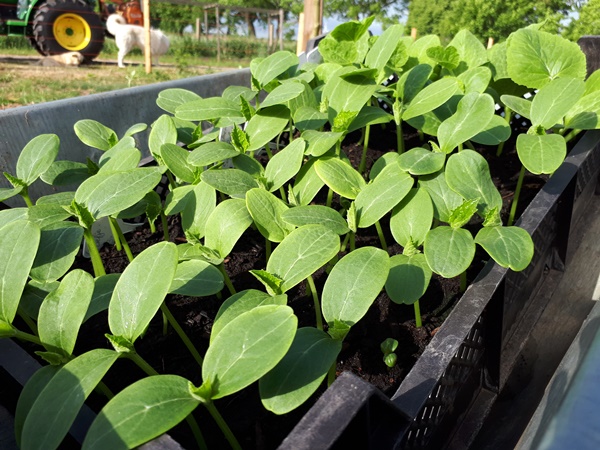
Pumpkin seedlings in a create in a wheel barrow with two dogs in the background
Pumpkin seedlings

We planted them and where already doubtful if anything would really grow, since the material we had brought out did not seem broken down enough. We planted the seedlings anyhow, since we did not really have other garden space available and wanted to give the beds a change. The mustard seemed to do well, so why not something else.

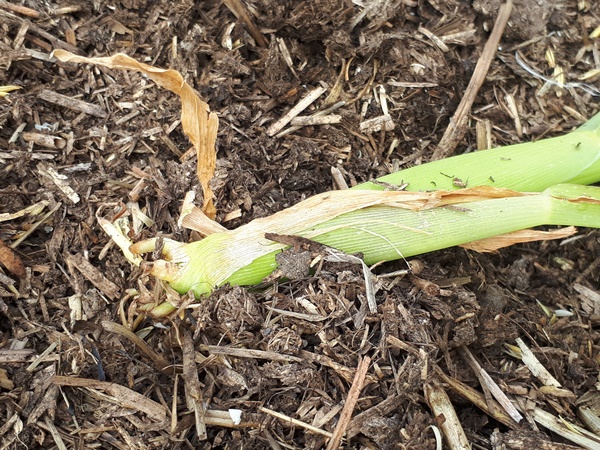
A few days after we planted there was damage to a part of the seedlings which had nothing to do with the soil. On about 2 meter of the compost bed almost all seedlings where bent over close to the ground as if an animal rolled over them. This was such a sad sight.

A bent over corn seedling on a compost bed
A bent over corn seedling

To keep things short a summary of the different plants we had planted here and how they did.

Sunflowers

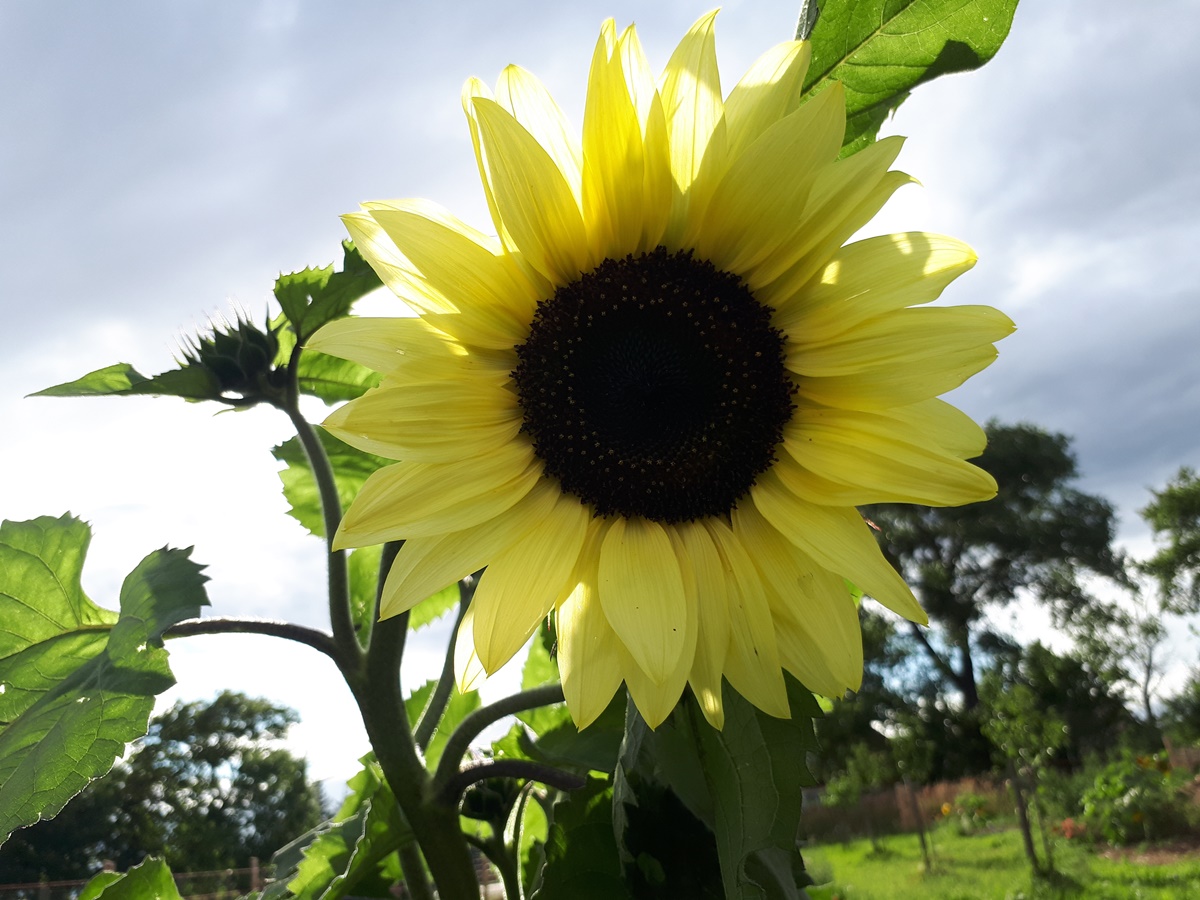
The sunflowers did not thrive, but they did not die either. They stayed very small and made a very small flower head. On the other hand there was a very beautiful pastel colour sunflower we did not plant our selves (a thank you to the birds) which did wonderful.

Beautiful pastel coloured sunflower in the sun against a garden background in the sun against a garden background
Beautiful pastel coloured sunflower

The sunflowers did make new seed, which where a feast for the chickens and the wild birds.

Pumpkin

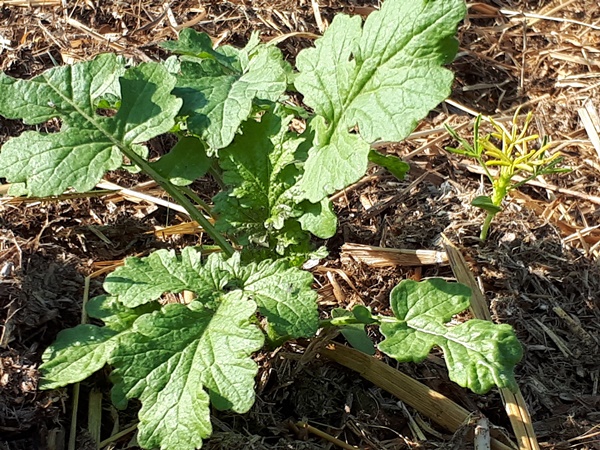
Only one of the more then 30 pumpkin plants we planted survived. The compost bed is on a slight slope and this pumpkin plant is right on the bottom, so maybe over the years more soil has been washed down here by the rain on top of which we put our compost material and this pumpkin plant had better conditions as the others. Soon we realized that the compost beds lack nutrients and we started dividing the chicken manure from the coop around the pumpkin hoping that this pumpkin plant would survive and fruit.

Healthy looking pumpkin plant with a flower, the start of a pumpkin with the faded flower still on there and a yellow unripe small pumpkin in the sunshine
Pumpkin plant with pumpkins in different stages

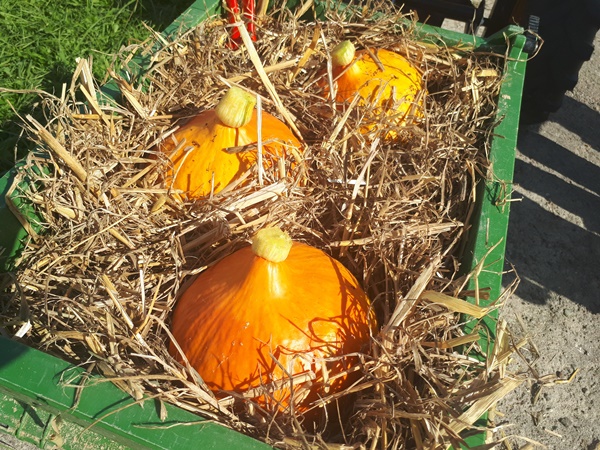
I am glad to say that it worked and this one pumpkin plant gave us a lot of delicious pumpkins for soup and puree.

3 beautiful orange shiny ripe Hokkaido pumpkins in straw in a child’s toy trailer
beautiful orange shiny ripe Hokkaido pumpkins

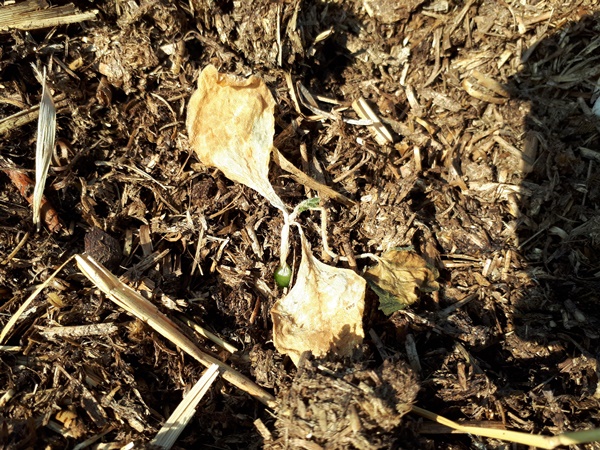
All of the other pumpkin plants we planted looked like this. If this is sunburn or they just dried out, I am not sure.

Dried out pumpkin seedling in a compost bed
Dried out pumpkin seedling

Corn

With the corn it was the same story. Most of them looked like this after a few days.

Dried out corn seedling in a compost bed
Dried out corn seedling

There where several plants that lived and grew. We also gave these some chicken manure to ad nutrients to the plants. After a few weeks some of the corn plants fell over. I did not get a decent picture, but there where just no roots left any more.

Fallen over corn plant with no roots on a compost bed
Fallen over corn plant with no roots

All in all we managed to harvest a few corn cobs and they where delicious.

Flowers

We had a flower mix we started from seed in the greenhouse and planted them spread out over the compost beds. Strangely enough they seemed to thrive and gave the very sad looking compost beds some splashes of colour.

Yellow and pink flowers in a compost bed
Flowers

Tomato

This we did not plant our selves (another thank you to the birds). This tomato plant grew in the protection of the mustard plants and did well for a long time, but right before we could start harvesting unfortunately the blight came.

Tomato plant with ripening tomatoes amongst a lot of green against a blue sky
Tomatoes

Caterpillars

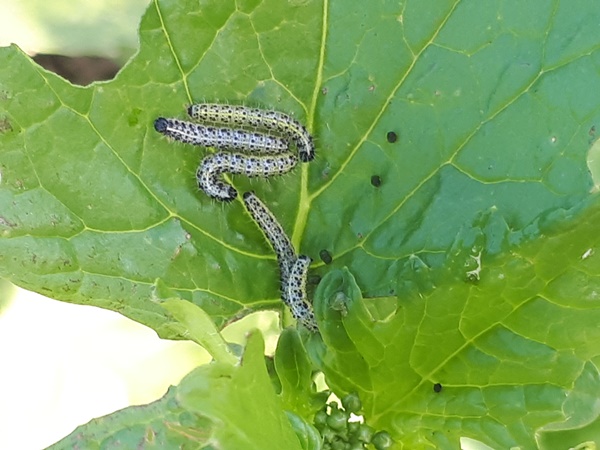
At the end of the season we found caterpillars on the volunteer mustard plants. When I am not mistaken these are the caterpillars of the “large cabbage white butterfly” (Pieris brassicae).

5 caterpillars of the “large cabbage white butterfly” (Pieris brassicae) on a mustard leaf
Caterpillars of the “large cabbage white butterfly” (Pieris brassicae)

Obviously this was no problem for us, since the mustard is only a cover crop and will die off in winter anyhow. (Unfortunately they also where on the cabbages in a different garden, but that is for another time)

Resuming

All in all, we where not very happy with the results for this garden, but we have learned a lot.

Some plants can thrive with little, others can not.

Food we want to grow usually need nutrients and nitrogen and the “soil” we created lacked nitrogen. Only straw, hay and some sawdust do not give a useful soil. In straw and hay is no energy left, since the plants had redirected it to the seeds they produced. Straw and hay needs to have been in a stable or coop and have been pooped on in order to be of value for a starting the garden (except if you just use it as mulch). Good thing we have some animals now and we have a friend with cows. We have been getting manure spreaders full of cow manure and spreading them directly onto the compost beds and expanding the compost beds to the maximum width which the garden area gives. This will be rotary tilled to mix the manure with the existing soil and will be repeated after a certain time to bring some air in the material to help it break down. I do hope these composting beds will be finished composting once the season begins, but I am not sure. We will check the temperature before we plant anything and will concentrate on the very “hungry” plants to start with. With time we will learn…

My first growing season with greenhouse

Nursery in the spring and filled up with tomato plants, pepper plants and some more over the growing season

We build this greenhouse in the spring on the base of the broken play tent of our children. If you are interested here is the link to that.

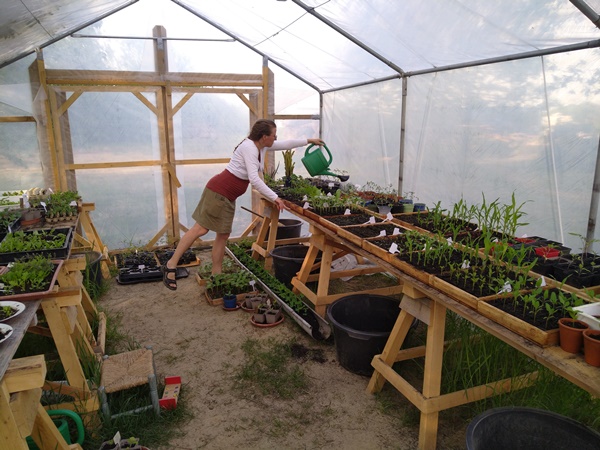
We first put up some make shift tables in the greenhouse and used the greenhouse as a nursery. I unfortunately do not have usable compost for starting seed, so I had the children sift out the bigger parts of potting soil I had purchased. My husband had made each of them there own sieves and they had a lot of fun. With the sifted soil we made soil blocks to sow in. We already had some crates, but my husband also made us a bunch of wooden trays exactly fitted for the soil blocks.

A nursery in a greenhouse filled with seedlings and a pregnant woman watering the seedlings

I had seen this in a video where one side of the tray is open. The idea is to put the soil blocks on a piece of cloth which hangs out of the open side. The over hanging cloth then needs to hang in a water reservoir of some sort. This way the cloth transports the water to the soil blocks and keeps them moist. Since I was not prepared with cloth and reservoirs, I will have to try this coming growing season. (A little reminder to myself to prepare!) This year I just used some water sprayers and a big tub we already had. The trays took turns soaking in the tub and in between soakings we would spray water over the soil blocks. Obviously this also functioned fine. It is just a little more labor intense.

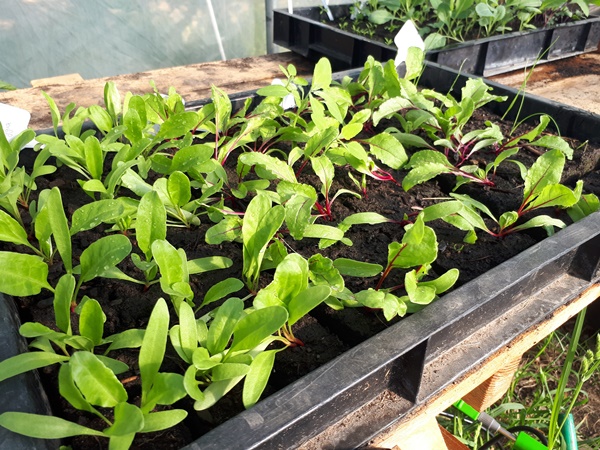
Red beet seedlings in soil blocks in a plastic tray

We sowed a lot of different things like red beets, peas, cabbages, leeks, celeriac, different types of corn, lettuce, basil, amaranth, quinoa, sunflowers and different other types of flowers and everything else I am forgetting. This was a great joy. Everything sprouted quickly and the little seedlings did very well in the protection of the greenhouse.

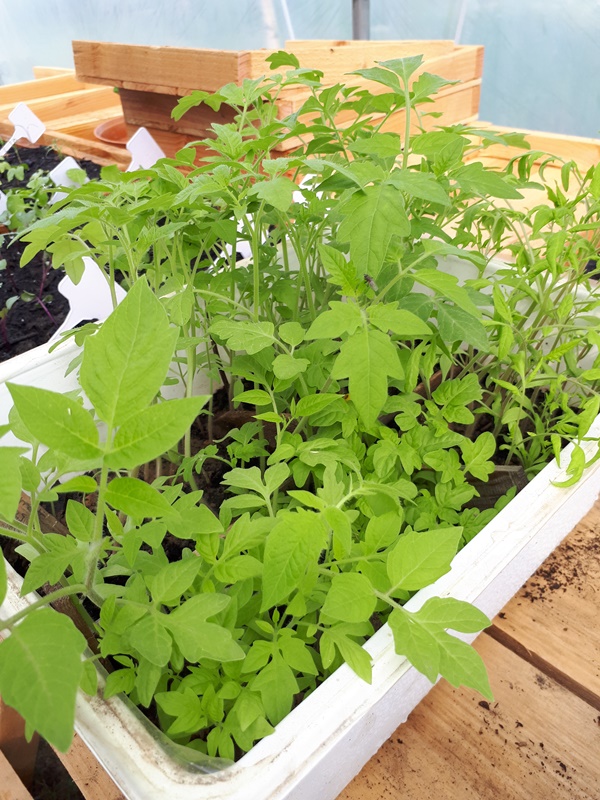
Also the peppers and tomato plants, I had sown indoors, transferred to the greenhouse as soon as the temperature did not drop too much anymore at night. The little seedlings where already getting to big for the sowing tray and we potted them op each in there own little pot. Since the kid’s filled the pots for me, this went very quickly. I went a little over board while sowing the tomatoes and peppers. I had way too many plants and did not know where to plant all of these, but as you could have read in a previous post we found places for them other than the greenhouse.

Tomato and pepper seedlings in there seed tray

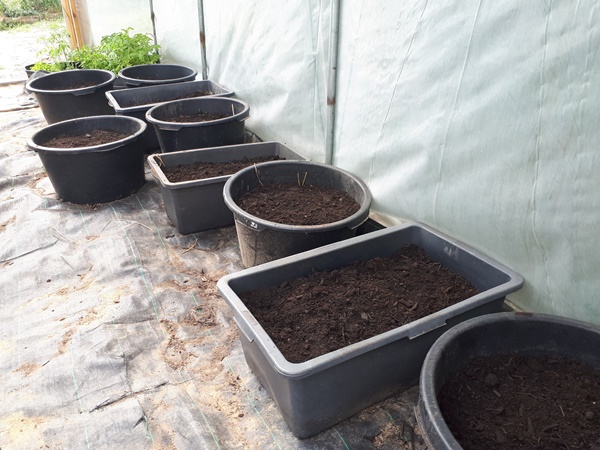
Well, after spring finally arrived (it stayed cold for very long this season) and we where able to plant a lot of the seedlings, one side of the greenhouse became empty and we started preparing for planting. We rowed up some mortar buckets and started filling them.

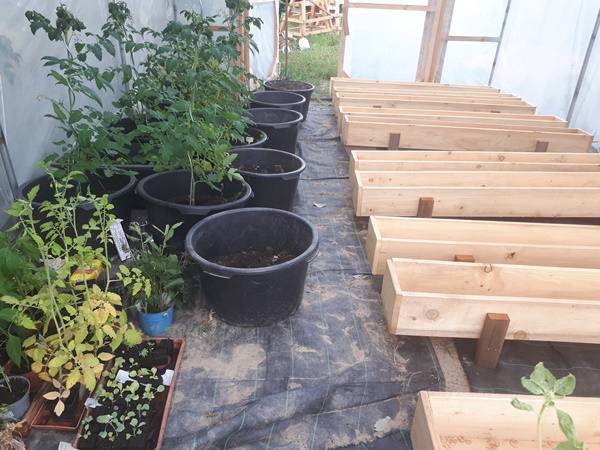
Mortar buckets rowed up in a greenhouse ready for planting

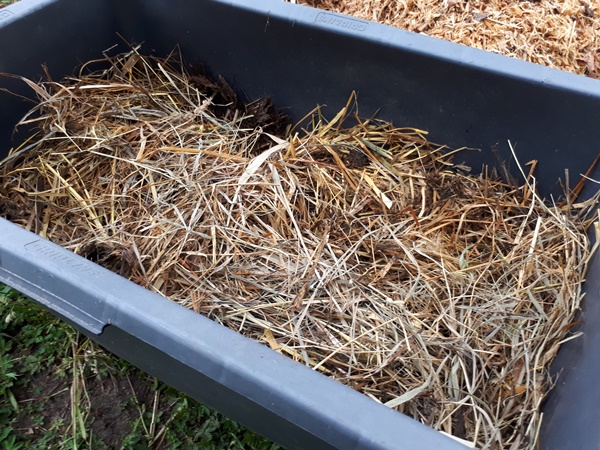
We started with a big layer of old straw and hay, then a layer of sawdust from our sawmill, then a layer of horse manure finishing with a good layer of potting soil to plant the seedlings in.

Mortar bucket filled half way with old straw and hay
Mortar bucket with a thin top layer of sawdust
Mortar bucket with a thin top layer of horse manure
Mortar bucket with a top layer of potting soil

We planted these mortar buckets with tomato plants, cucumber plants, some water melon and celery.

Planted mortar buckets with tomato plants, cucumber plants, water melon and celery rowed up in a greenhouse

Beside the water melon, these plants where thriving and the soil kept its moisture even during the heat of summer. Obviously I would water almost every day. Only the cucumbers, I had planted 2 in one bucket, would suffer when I would skip a day of watering. I should have planted only 1 in a bucket.

It took us until middle of July to get to plant the rest of the plants in the greenhouse. For that my husband builds me these planters out of wood (about 20 x 20 cm, 2 meters long). I decided to work with planters, because there is only compacted sand, tree roots and couch grass in the ground.

Greenhouse filled with empty wooden planters and mortar buckets filled with plants

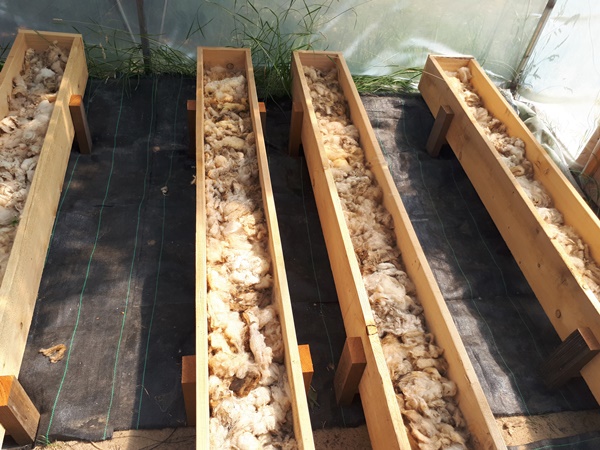
Since the planters aren’t very big, I started filling the planters with a nice layer of sheep wool to store moisture in the planters.

Wooden planters with a good layer of sheep wool on the bottom

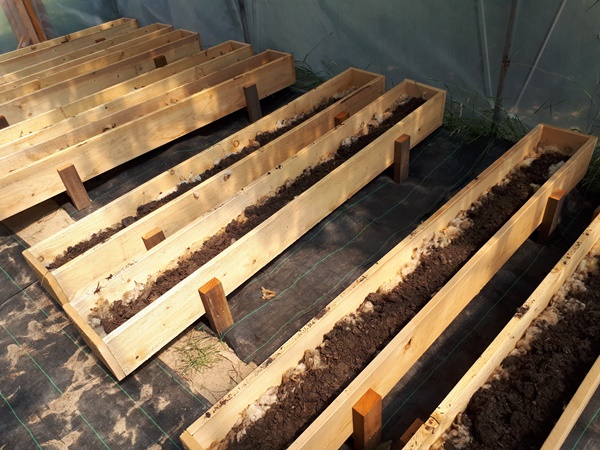
On top came a layer of horse manure for some extra nutrients, topping of with potting soil to plant in.

Wooden planters with a layer of horse manure on a good layer of sheep wool

I planted 5 tomato plants in one planter. I always under estimate how big plants get and looking back, I would say 4 tomato plants in one planter are more then enough.

The peppers I planted 7 in one planter, but I think 5 would have been better. I have to trellis the peppers next year since there is too little soil for them to get hold in and the bigger plants fell over.

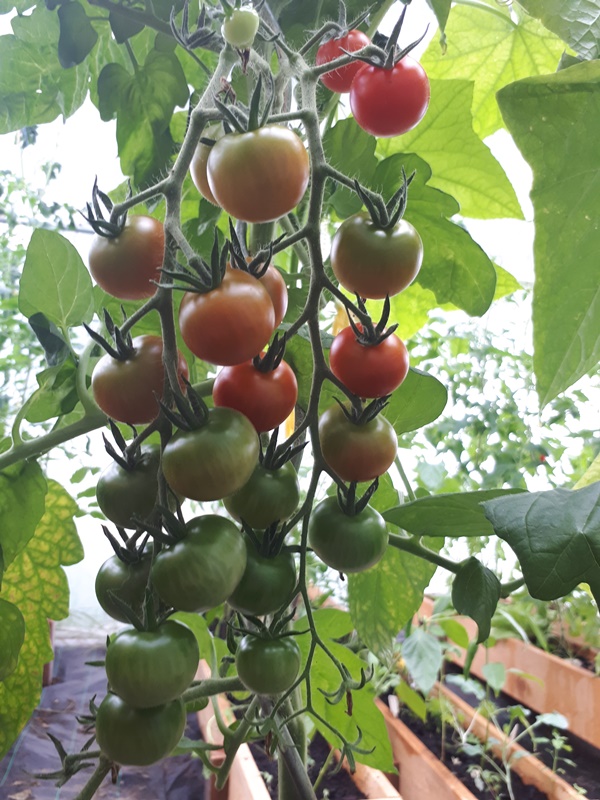
All in all we had a nice harvest from the greenhouse. We where able to snack on a lot of small delicious tomatoes right in the greenhouse. The kids loved that.

Large tomato bunch from snack tomatoes with tomatoes in different stages of ripeness

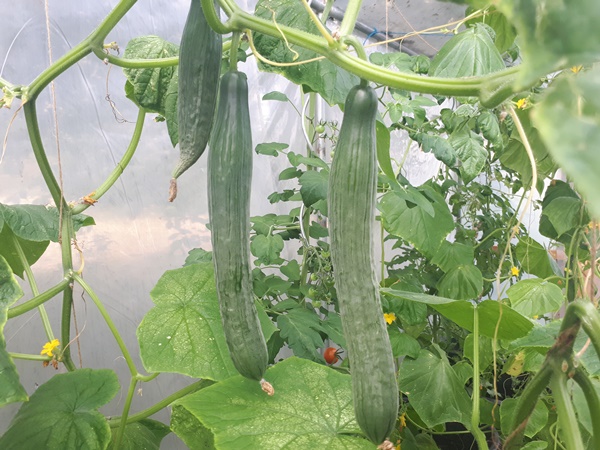
Once it became warm enough the cucumbers developed and we could eat cucumbers on a regular basis.

Cucumber plants in a greenhouse with 3 large cucumbers

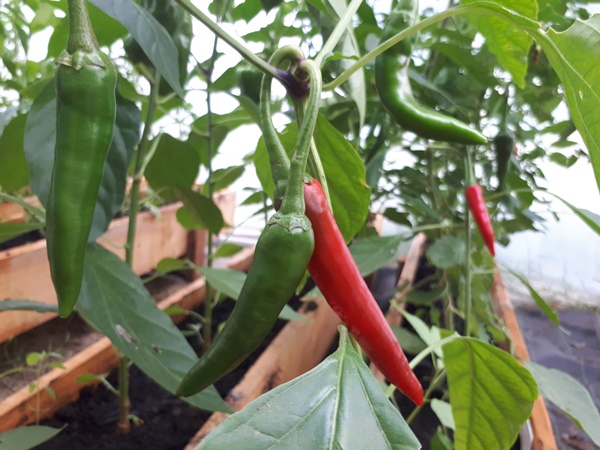
We had a good harvest of cayenne peppers for hot sauce which my husband loves.

Cayenne peppers in wooden planters in a greenhouse with green and red peppers

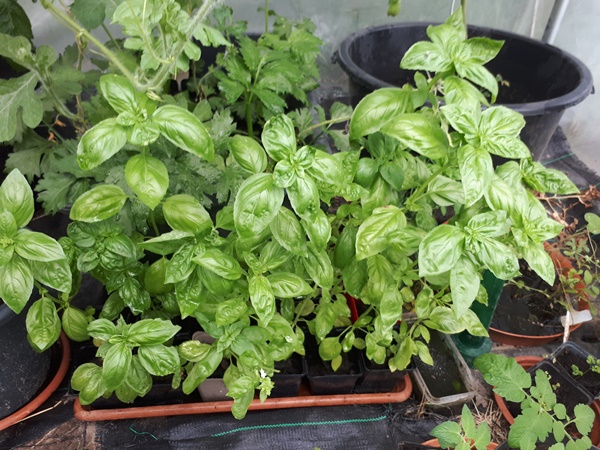
I had also sown some basil, potted them up in some small planters, but never came to planting them. Luckily they did very well in the small planters and I made some pesto with them. I definitely should grow a lot more basil next year, but it needs to grow in the greenhouse. I don’t know why, but the basil grown outside does not taste good. Maybe it is to cold here to grow good basil outside, I do not know.

Good looking basil in small pots in a greenhouse

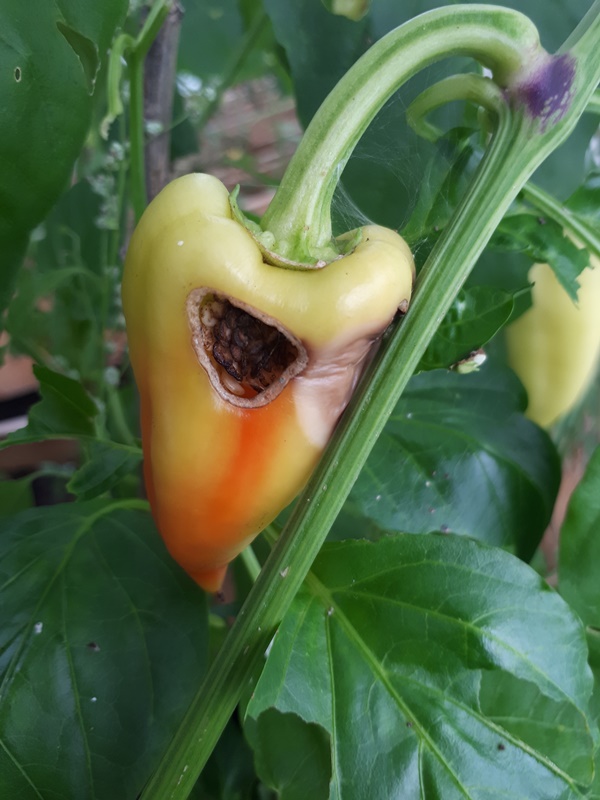
I was a little late with planting peppers, so we where lucky to be able to harvest some peppers at all. I tried to let some peppers ripen indoors, but they did not taste so good. I think we are to far north to grow peppers in a cold greenhouse and we will only grow a few pepper plants next season to see if they turn out better if planted earlier. Furthermore we had some bug problems. They eat the peppers we would have been able to harvest first.

Bug eaten pepper

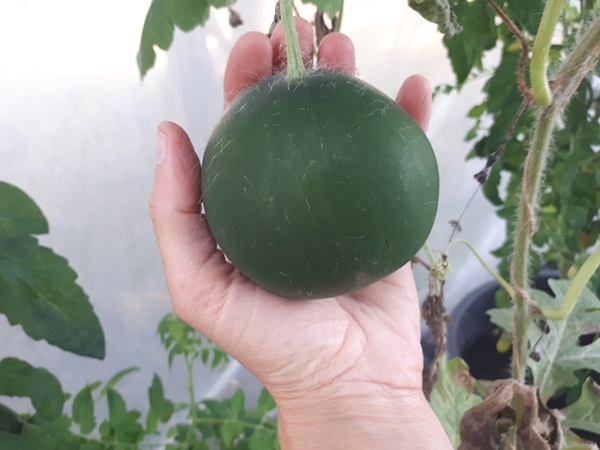
We actually where able to harvest a very small watermelon we let ripen some more indoors (frost was coming). It was small, but tasted very well. We where well into the season before a watermelon started to form. A lot of flowers started small watermelons, but they turned brown quickly. It would be nice to know why. 

Small watermelon still attached to the plant in a hand in a greenhouse

The celery I planted was a variety for the stalks. I planted this type of celery for the first time, because I have little luck with growing celeriac. The celery thrived and we love the stalks in our soups, so it is a good substitute for the celeriac. I will have to grow a lot more of the celery next season and I will try to grow it outside as well. The celery is in the picture with the basil just peeking up from behind the basil.

Beginning of October the blight also struck inside the greenhouse. Most of the snack tomatoes where done and eaten, but the bigger tomatoes still had a lot of nice green tomatoes hanging on the plants. We harvested the good green tomatoes and the last cayenne peppers and I made them to hot sauce, so they would not go to waste.

After that we cleared the greenhouse. I wanted to try to use the greenhouse over winter for some lettuce, welsh onions and some dill. Then, one night, our runner ducks where taken by a wild animal and we started locking our geese in the greenhouse at night for protection. So that experiment is done with. A priority now is to build a decent coup with a door for the geese, before I need the greenhouse for starting seedlings in the spring.

Some Notes for the next growing season

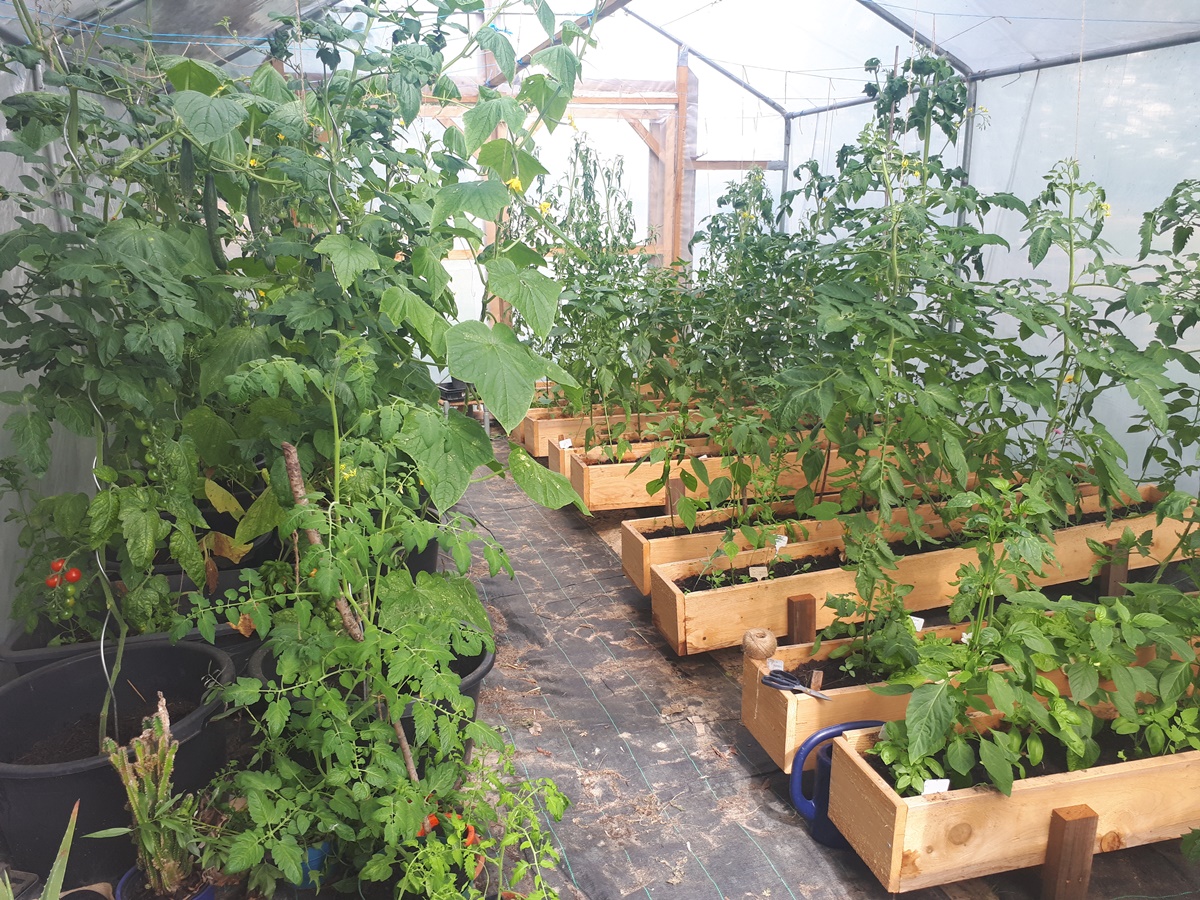
In August the greenhouse was like a little jungle and I do not really like diving underneath the plants to look for eatables. Furthermore the wooden planters where to close to each other and I was damaging plants trying to get through for watering, so I am going to make some changes in the greenhouse.

I am taking out 2 wooden planters and space out the other 8 planters, so I will have more space for the 4 walkways in between them, starting with one planter at the wall and putting 2 planters together between walkways. Furthermore the height of the planters will be increased to give the plants more soil to root in and have more material (soil) to store moisture.

The 2 extra wooden planters will find there place next to each other at the wall where the mortar buckets are now. These will be for the cucumbers, so I can trellis them parallel to the wall, instead of having to trellis them to the middle of the greenhouse. This way I can reach the plants better. To utilise as much space as possible I will keep some mortar buckets in front of these wooden planters with enough space in between so I can reach the plants in the wooden planters behind them comfortably.

This way there will be space for 4 cucumber plants, 5 pepper plants, 10 cayenne pepper plants and 20 tomato plants. Basil and celery will be interplant in between those plants and the mortar buckets will be for the kid’s to use. They love to help with growing food and had been cramping every space in the greenhouse I had allowed them last growing season.

Visitors in the greenhouse

A beautiful spider in its web
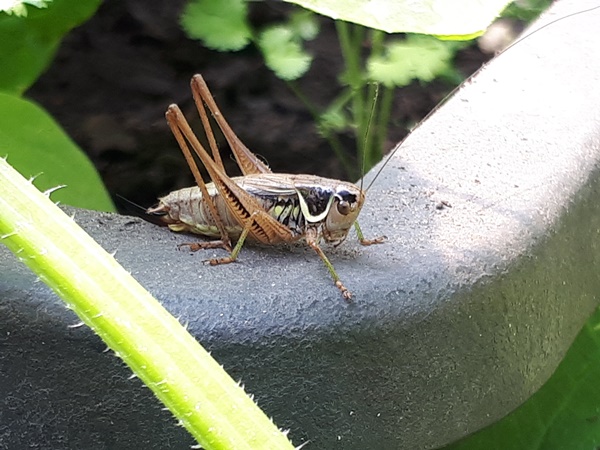
A beautiful grasshopper

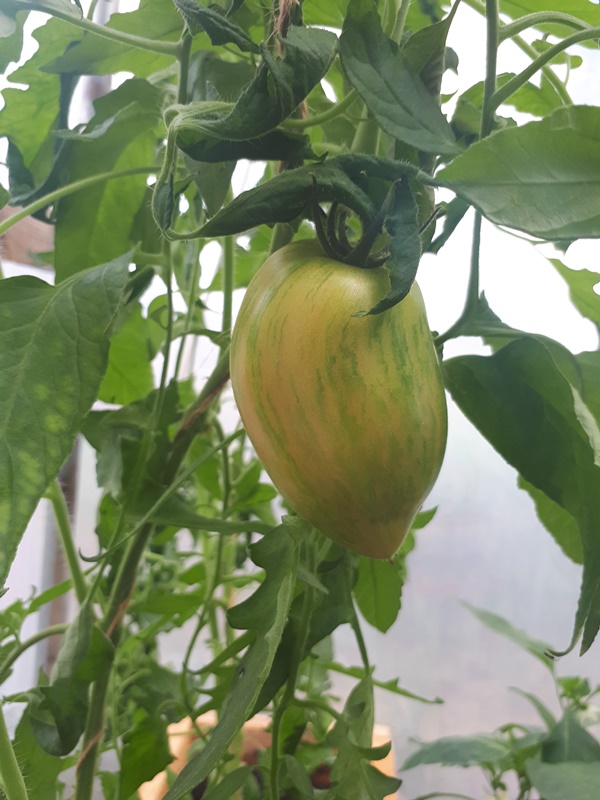
Tomato Marmorossa

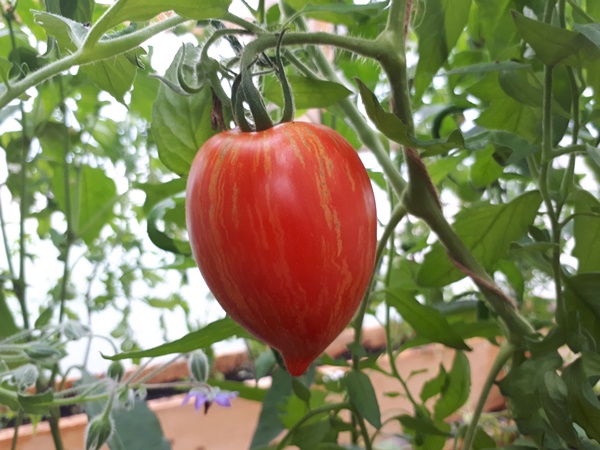
We grew this tomato variety for the first time last season and loved it. It looks beautiful and tasted amazing. We saved seed from this variety for next season.

Green tomato marmorossa
Ripe tomato marmorossa