Growing potatoes under mulch

How did we grow potatoes under mulch and how did the potatoes do?

Since I had way too little dedicated growing space to grow potatoes, I had this vision of mulching a larger, still unused, patch beside one of the compost beds to grow potatoes. On this spot there used to be a very large bush of brambles, which my husband took down with a flail mower about 2 years ago. Left is a ratter bare patch with brambles growing back, little grass and mostly other weeds with a slight slope going down towards the compost bed. We have been simply mowing this patch every few weeks.
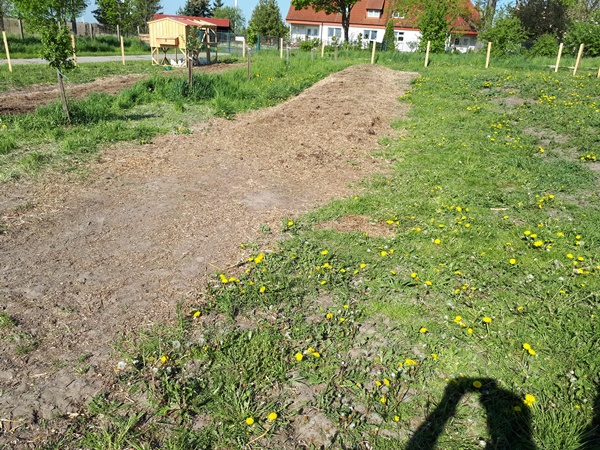
Small field with a compost bed and some fruit trees
Compost bed beside the empty patch where the potatoes are meant to be planted under a thick layer of mulch

Now that we have the manure spreader we have the possibility to “easily” cover the entire area with mulch. We got 2 trailers full of the content of a horse stable, so mainly hay, straw and some horse pop. As good as it went; my husband divided it over the entire patch with some handwork to make it more evenly.

Mulched garden patch
Mulched garden patch beside the compost bed

By the time we got this done the seed potatoes in our storage looked like this.

Lots of potatoes with long sprouts in a wooden storage crate
Sprouted potatoes long overdue for planting

A tangled mess I would not know how to get undone without breaking all of the sprouts, after which the seed potatoes would not grow anymore. What amazes me is that the seed potatoes where already growing new potatoes.

New small potatoes on potato sprouts in storage
New potatoes on potato sprouts in storage

Since we needed to dump these seed potatoes some where, we just moved some mulch aside, put the seed potatoes in there and put the mulch back.
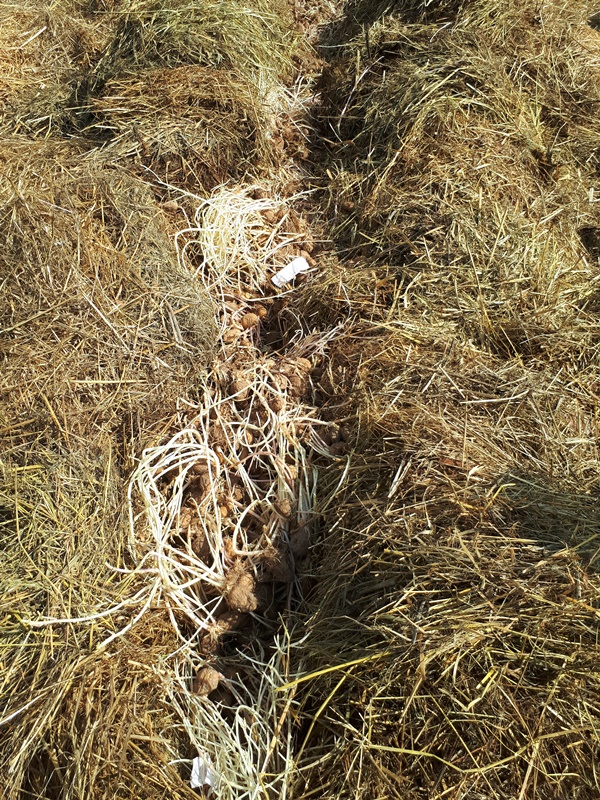
Ditch in mulch filled with over sprouted seed potatoes
Ditch with lots of sprouted seed potatoes

As expected this did not do anything, but last spring I had bought some potatoes in the supermarket and did not use all on time. Some of them looked like useful seed potatoes. I also planted these seed potatoes underneath the mulch, but correctly with some space in between, setting the potato on the soil underneath the mulch. This was the beginning of July, which I normally would think as pretty late to plant potatoes, but I wanted to try it anyway.
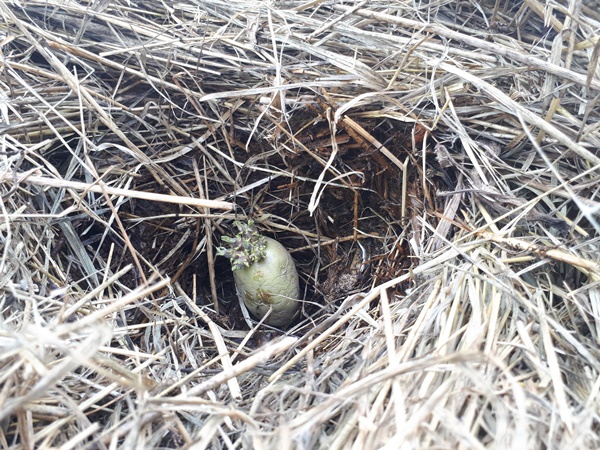
Sprouted seed potato set in mulch for planting

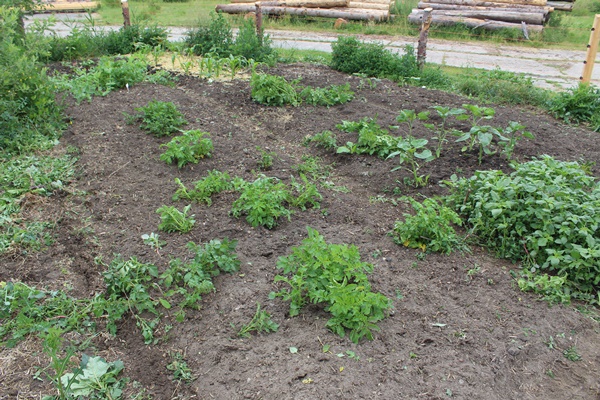
Most of these seed potatoes grew well over summer. This picture and the picture at the beginning of the post are from the beginning of September. Good and healthy looking potato plants.

Healthy looking potato plants
Healthy looking potato plants beginning of September

Unfortunately it took me until the second half of November to find the time to harvest these potatoes. It was hard to find where I should dig, since the potatoes had already died back completely. The potatoes on the top of the slope did very well and I actually found a few very large potatoes among more normal size once.
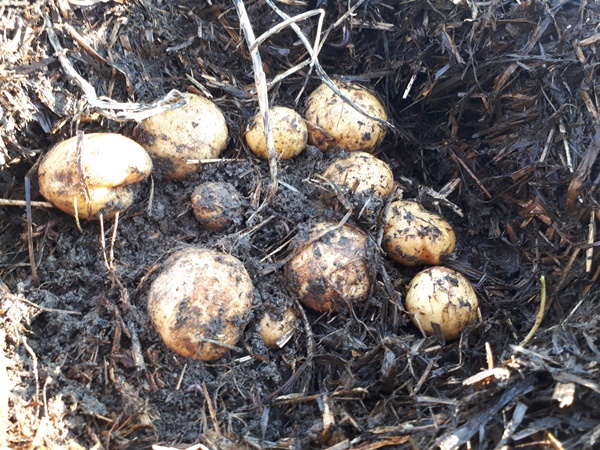
Potatoes in soil cleared from mulch
Cleared potatoes while harvesting

The potatoes at the bottom of the slope where all rotten and mush, since the rainwater has collected there and kept everything to wet. Other than that I found some seed potatoes with a bunch of fingertip size potatoes attached to them. I have no clue why they grew this way.

Mushy seed potato with lots of baby potatoes

The worst part of being so late with digging these potatoes up is that the mice beat me to most of them. I found a whole labyrinth of mouse tunnels and some bits and pieces of left over potatoes.
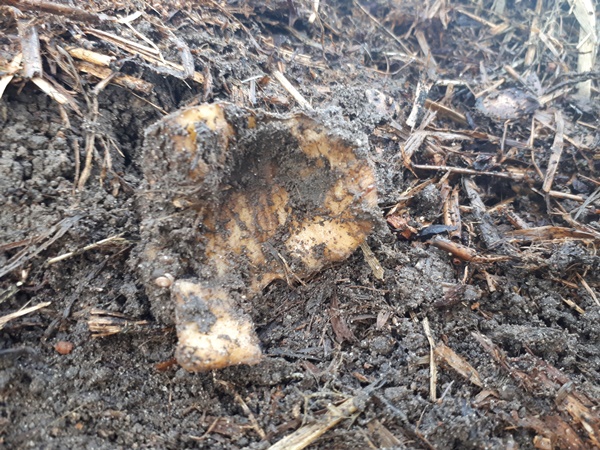
Potato rest after mice banquet

I did not plant many decent seed potatoes, so I am very happy with the potatoes I was able to harvest of these few potato plants. While harvesting our geese kept me company.
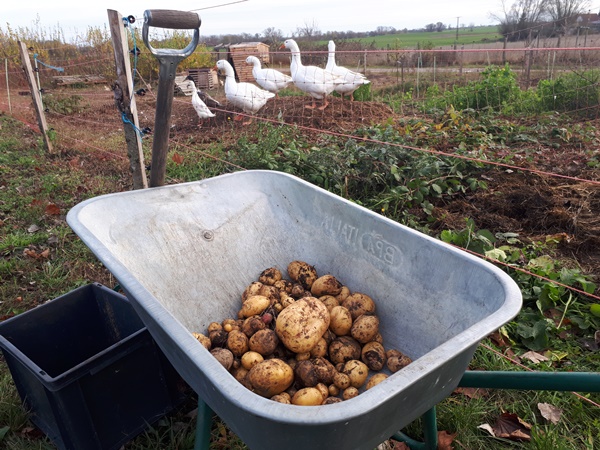
Potatoes in a wheel barrow with geese and runner ducks in the background
All done, so nothing to watch anymore

These potatoes are about 4 meals worth for my family and the other potatoes we grew are already used up, so I won’t come around to buying potatoes this winter. Next year we really have to prioritize planting potatoes. We love eating them and would need a whole lot to get trough the winter without buying any.

O and I also found lots and lots of earthworms, even very large once.
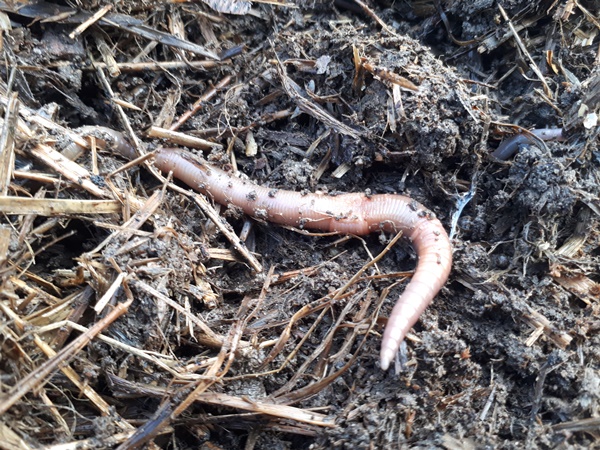
A large earthworm
A large earthworm

To conclude I would say growing potatoes under mulch is a success and makes it a lot easier to harvest, but the excess water needs to be able to flow away. The mulch layer should be fairly thick, so the potatoes will not be exposed to the sunlight, and the seed potatoes should be put down on the soil underneath the mulch. The roots need soil to grow into. They do not do well in only mulch. Also planting potatoes in July was a great success, so I do not need to worry about planting the potatoes early in the season. I can divide planting the potatoes over a longer time frame, which is very nice. This way I can divide the work and have fresh potatoes from the garden over a very long time. Mainly I will have to prioritize harvesting the potatoes after they are done. It is easier to find the plants and know where to dig and the mice will not have eaten all of the potatoes yet.

How did that beautiful rotary-tilled black soil garden bed do?

Did we have any carrots and onions? Planting corn and other crops.

Continuing on this post about my neglected garden bed we prepped with our rotary tiller.

I was so happy with the nice black soil, thinking black soil means good soil with much organic matter. I have no clue from what this soil originally was made from (we bought it as compost soil), but it definitely is no useful soil. This black soil is very fine and so very dry. It does not really take on water. The top 5 to 10 cm are always dry, so there is no wonder no carrots and onions sprouted. In the fall we harvested one handful of carrots and no onions at all. From the flowers only the sunflowers sprouted, since I had sown these deep enough. Same with the peas, although not all came up.

Black soil garden bed with some young pea plants
Young pea plants

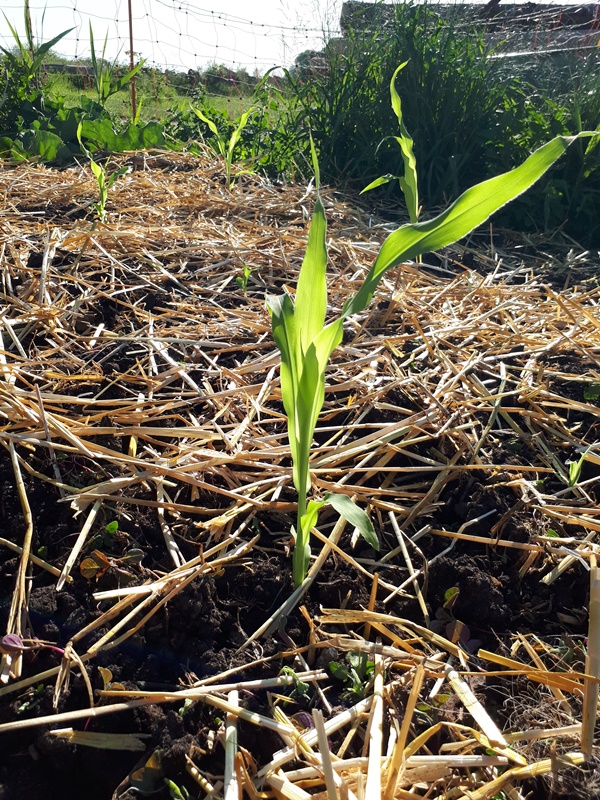
I had raised some corn seedlings in the greenhouse, which I planted as a block in one corner and mulched with chicken manure from the coop.

Corner of a garden bed with freshly planted corn seedlings, mulched with straw and chicken manure
Corn seedlings

This corn grew big and did very well, but somehow the pollination wasn’t very good. The corn on the cobs is beautiful and colourful though and tasted amazing. The partly empty ones I am saving for seed to re-sow next year.

Fresh colourful corn cobs in a basket
Colourful corn cobs

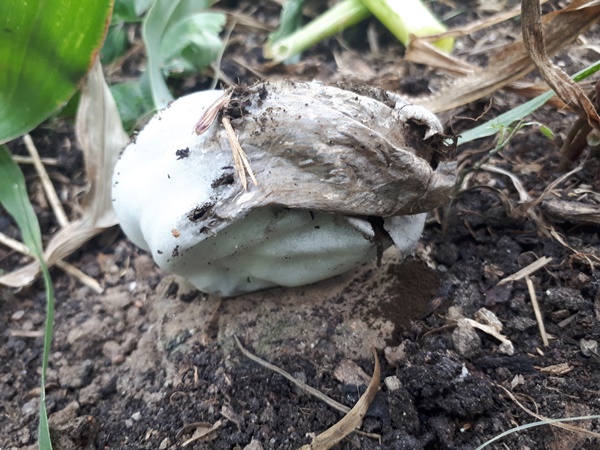
At the foot of the corn plants we found this fungus. I have no clue what it is. It is as big as a fist with a thin white skin and filled with a black powder.

Big white fungus ball at the foot of a corn plant, with black powdery spores coming out
Fungus in corn field

Now back to the sprouting theme. What were sprouting plenty are the weeds. After a few weeks the garden bed looked like this.

A weedy garden bed
A weedy garden bed

We had to look very carefully to find some carrots.

A carrot seedling hiding among the weeds
A hidden carrot

The sunflowers are looking good.

A small sunflower towering over weeds
A small sunflower

Same with the volunteer potatoes. These are looking splendid.

Big potato plant in the middle of a weedy garden bed
Big healthy looking volunteer potato

In other garden beds I had been pulling out the volunteer potatoes, since I had read this would be better because of disease and pest. Well, since I was not able to plant enough potatoes I left every volunteer potato that pops up its head and hope for the best. I must say that I am glad I did. We were able to harvest a lot of potatoes from the volunteer plants and I did not notice more problems with disease and pest than I had with the freshly planted potatoes.

Because of the drought and heat, we suffered from in the spring and early summer, the weeds where suffering very much, on the other hand the crops we actually wanted there did not really suffer, so that is good.

A weed suffering from pests

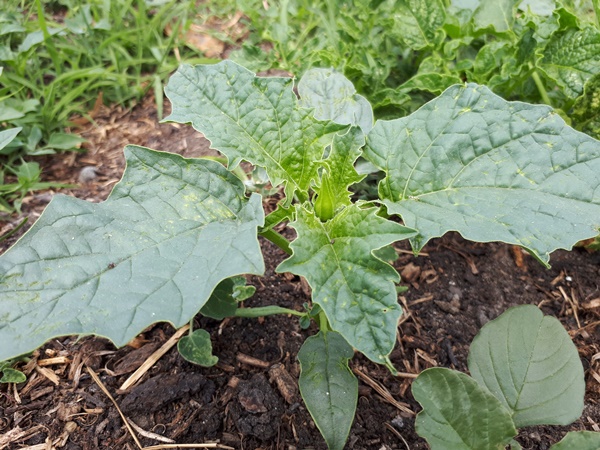
Since I had forgotten to reserve some space for beans and I had too much tomato plants, we started to clear this garden bed from all of the weeds. We found the highly toxic Datura and of course removed these.

A Datura with a flower bud
A Datura

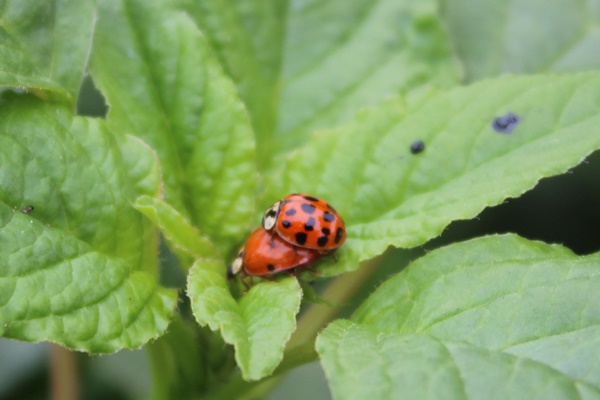
We also found a lot of ladybugs, even some working on the future generation.

Ladybugs working on the future generation

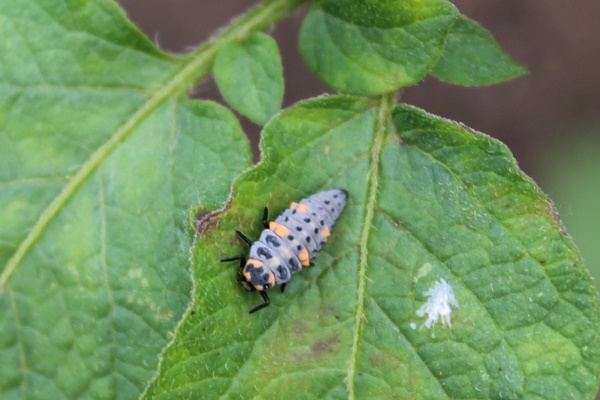
And we also found some of the future generation

A Ladybug larva on a green leaf
Ladybug larva

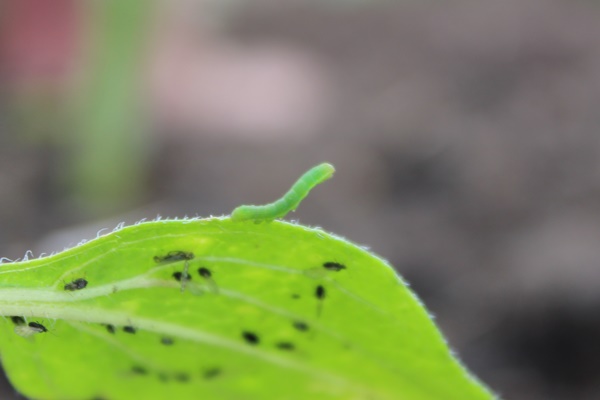
And this cute little bright green caterpillar.

A little green caterpillar checking its surroundings from a green leaf
A little green caterpillar

This is what was left after all of the weeding. There is not much left.

Almost empty garden bed with corn in the back and some small sunflowers in the front
Garden bed after weeding

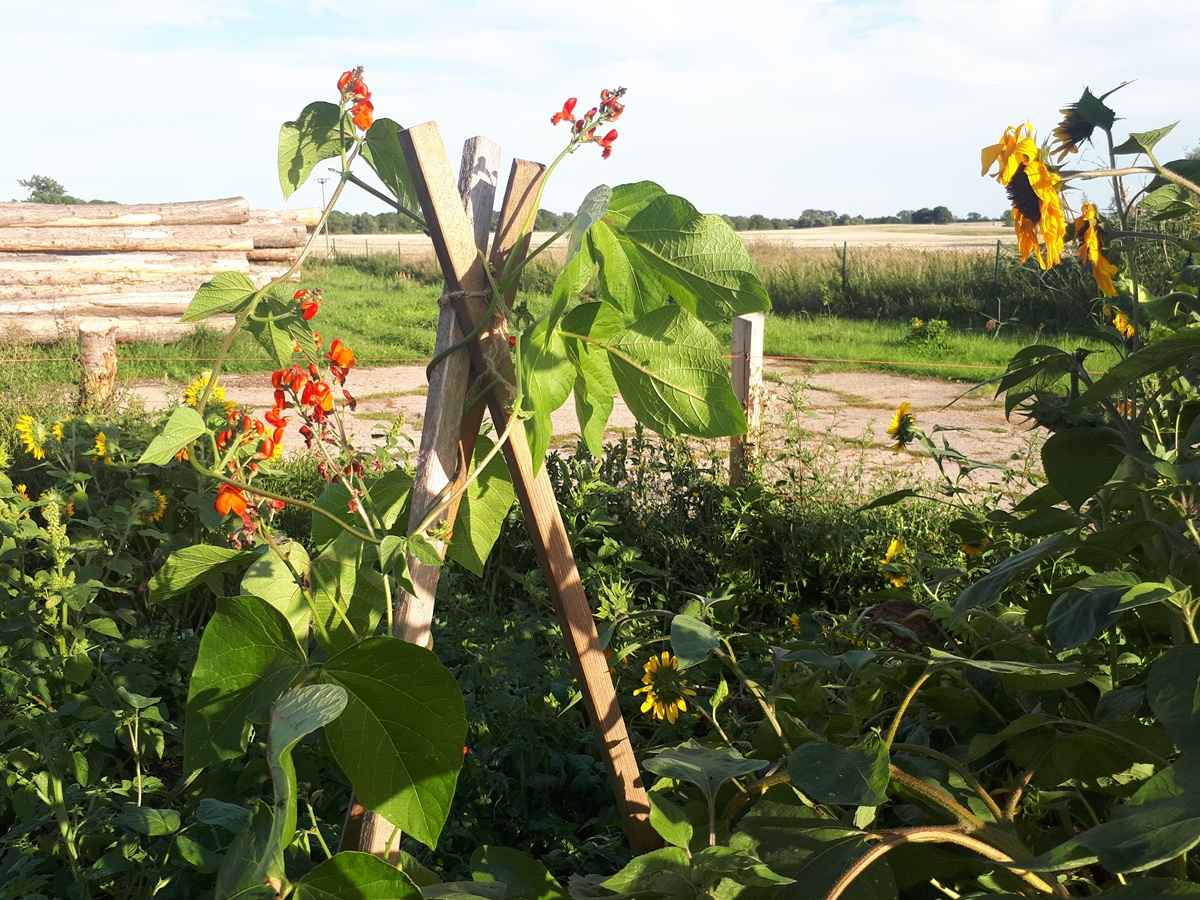
Then we planted runner beans, green beans, different varieties of tomatoes, cucumbers and basil.

Garden bed freshly planted with runner beans, green beans, tomatoes, basil and cucumbers
Freshly planted garden bed

As you can see in the back, the corn has already grown well by this time. The tomato plants where already so big some of them where already flowering.

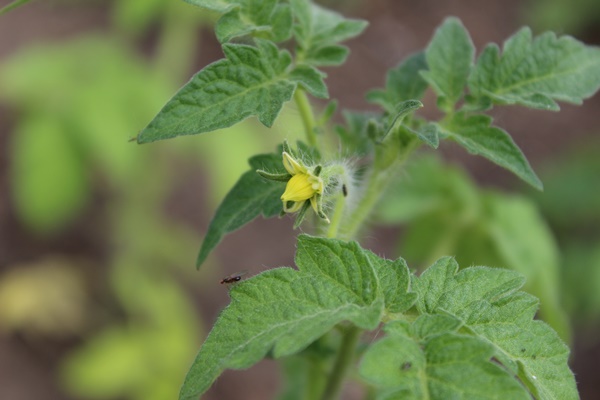
Tomato plant right about to fully flower
Tomato flower

Beginning of June came the time to start harvesting the red beets. They where the best and we enjoyed them very much.

Red beet ready to be harvested
Red beet

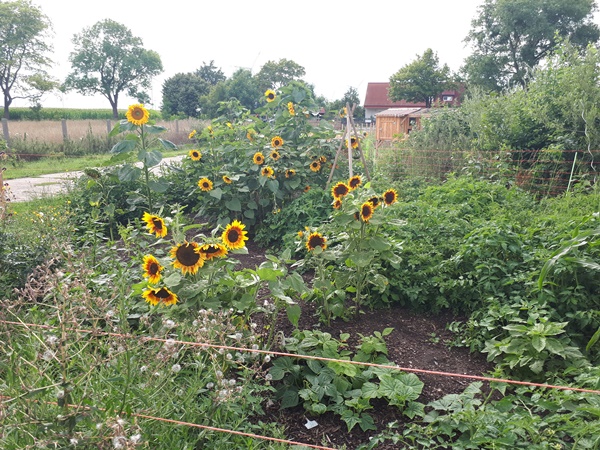
Beginning of August the garden bed was a beautiful mess and the kids where always crawling through looking for something eatable.

A messy garden bed with beautiful flowering sunflowers
Messy garden bed

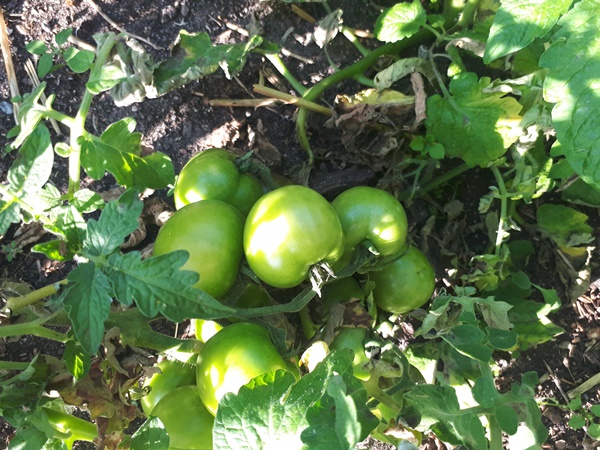
The tomatoes did surprisingly well without being cared for, unfortunately before we could really harvest any ripe tomatoes the blight struck here.

A bunch of beautiful green tomatoes on a tomato plant
Beautiful green tomatoes

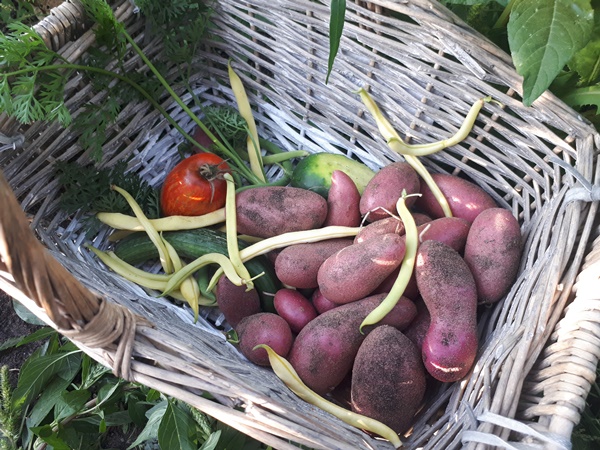
A small harvest from this garden bed with one of the few ripe tomatoes we got here, a few beans, some volunteer potatoes a few cucumbers and a rare carrot.

A small harvest basket with potatoes, green beans, a red tomato, a carrot and some cucumbers
Harvest basket

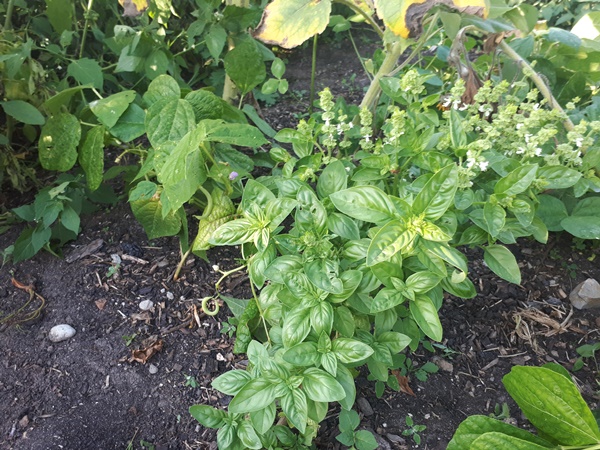
The basil did well here, nicely protected between all of the bigger plants. Unfortunately somehow I find the taste of the basil grown outside not very pleasant, but the bees and all of the other insects loved them.

A beautiful basil plant growing beside green beans
Basil

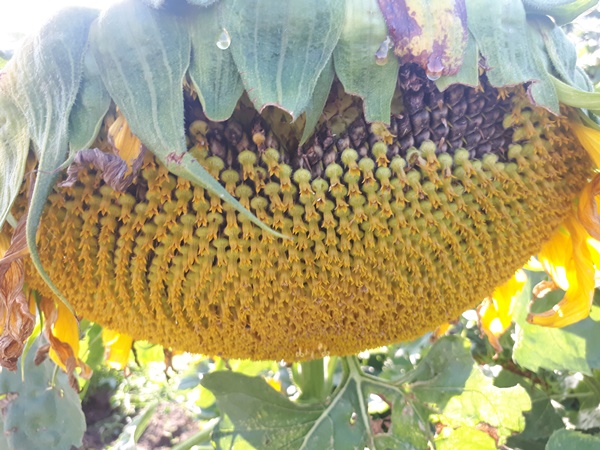
The birds love the sunflowers. They are eating away the sunflower seeds as they ripen.

A big sunflower head forming seed which already get eaten away by birds as they ripen
Big sunflower head forming seed

Resuming about this garden bed for this season, I must say that we did not tent much to this garden bed. We watered a few times, but not enough. It was a beautiful mess of green with some colour and we where able to harvest a few things as well.

We got a nice amount of potatoes from the volunteer plants and we had some beans and cucumbers. The red beets where amazing and the few corn cobs we ate where very good and gave the urge to grow more corn next year. We missed out on the time to harvest the peas, but we did harvest the seed for next year.

We need to do something to improve the soil, so it will not be so dry and dusty anymore, but I am not sure what we can do. We will tent to this problem in the spring. For now the chickens, geese and runner dugs are allowed in over winter to eat all of the bugs and slugs they can find and pick at the amaranth and sunflower seeds.

4 Geese in a garden bed after the harvesting was done
Geese in the garden bed

What happened with my green beans experiment?

I sowed green beans in weeds. Did I have anything to harvest?

Well yes, I was able to pick a few green beans here and there, but the green beans generally weren’t much of a success this year. Here is the link to my first post.

I can not really draw any conclusions out of my experiment, since the weeds did not do well either. The green beans I had sown in the greenhouse and later planted in the garden did a little better, but we did not harvest many green beans at all this year, which is a shame, since the kids love them.

Very late to sow, but in August I had sown some more green beans in another weedy bed and these did very well. I have to say, that the wetter worked in my advantage here, since we had plenty of rain and warmth. Of course I sowed them much too late in the season, but these green beans thrived and we actually where able to harvest a meal of these before the first night frost came.

Green bean plants in a weedy garden bed with a basket with harvested green beans

Well, I guess I have learned not to start in the season to early and I should dedicate enough garden space for the green beans. I tent to start in the spring as soon as the soil starts to warm up a little and I just pack every garden space I have not thinking about the crops that come at a later point. Green beans will definitely be one of my main crops for next year, since green beans coming out of our own garden do taste much better then the ones store bought and we miss them very much as a vegetable for over winter.