In this category you will find everything that is growing and living outside in the garden, like growing vegetables and fruit and raising animals for there meat and chickens for eggs
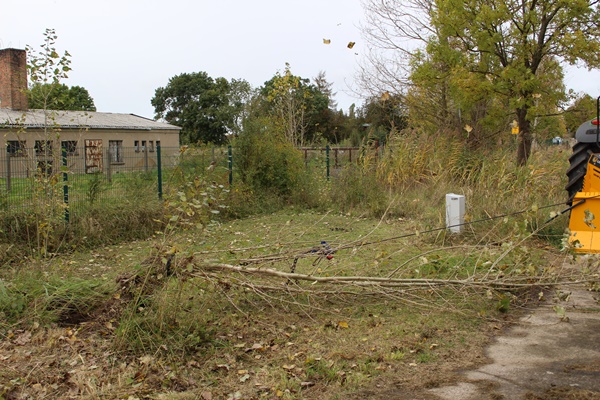
In part 1 in starting our food forest we cleared a part of our property from some smaller poplers. Now it is time to take out a bigger tree standing within our fencing. Luckily this tree was in a position where we could just cut it down. No danger for the underground main gas pipeline and space for falling over and putting the tractor with our winch in position to secure the tree.
We expect the tree to be rotten in its core, so we attached the line of the winch high in the tree and put the line on tension. After that I cut the tree for ¾ and pulled over the tree to snap of the last bit with the winch. This made the falling very controllable.
All that is left to do, some cleaning up.
First we start by removing the branches, which will be chopped. The trunk is cut into manageable peace’s, of which the bigger one will be put on our sawmill. Popler wood is used for bee hives. The smaller trunk parts are going into our dead wood hedge.
The next thing to do is cutting down the last 2 bigger poples beside the road, but this is for a next time.
After dividing our compost soil for hill beds and high beds there was a little left on the ground where we stored it. The ground was very uneven and had lots of debris in it. So what to do if we don’t want to leave the rest of the compost soil unused? Of course we just straitened out the compost soil and divided straw as mulch on top. And all of a sudden I had another nice sized plant bed to fill.
Covered with straw plant bed
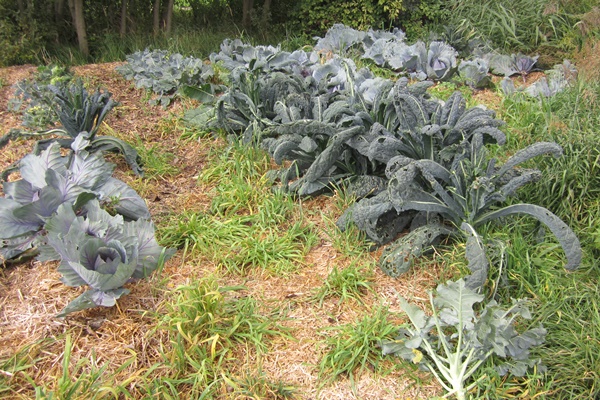
Luckily this solved another problem I had. Since I had sown too much seed early spring I had a lot of small plants I did not know where to plant. The straw mulched bed is now dedicated for the red cabbage, kale, broccoli and celery root. To keep de dogs from ripping out the plants and protecting the plants against the cabbage white butterfly, we put a cover over them.
Red cabbage and kale under cover
The cover we had unfortunately was a bit small and not very sturdy. So over time there were some holes and also late summer the kale became too big for the size cover we had. We decided to remove the covers, check for caterpillars on a regular basis and just hope for the best, so the kale could grow on without being pressed down by the cover.
Red cabbage, kale and broccoli in the backA row of celery roots
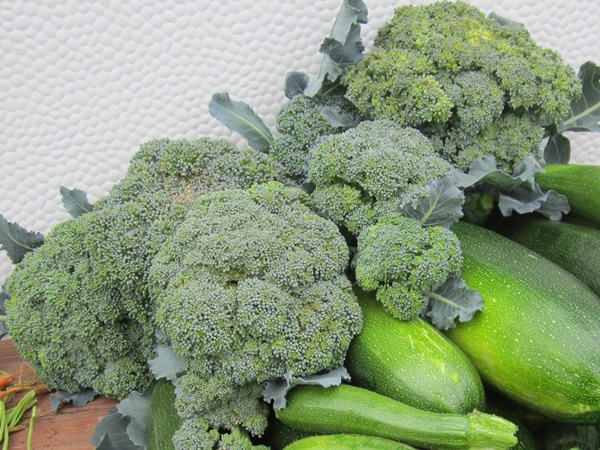
By this time the broccoli was ready to be harvested and provided us with some nice broccoli heads.
Broccoli
With some broccoli I missed out on the right harvest time, so these went to bloom. The broccoli flowers are nice yellow and attracted lots of butterflies. Of course mainly the cabbage white butterflies came. Not very good for the other crops standing beside the broccoli. But we love nature with all its aspects and are a strong believer in live and let live, so we collect all of the caterpillars from the crops we want to eat and put them on the blooming broccoli.
Blooming broccoli with caterpillars
A number of the red cabbages were getting to a nice size as well.
A nice size red cabbage head
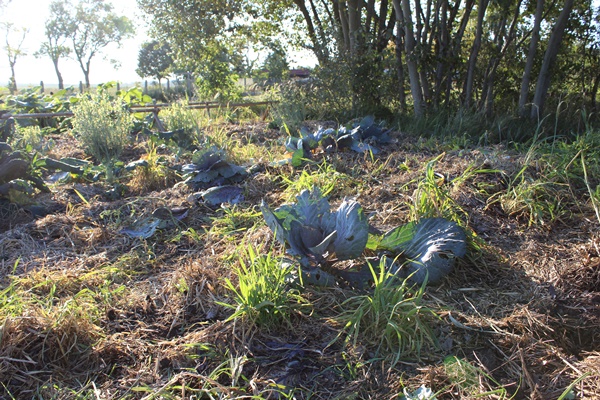
After the first night frost we took out all of the red cabbage that had a decent size. All of the smaller ones we left for the caterpillars to eat.
Before harvesting the red cabbage
We had a wheelbarrow full of red cabbages.
Red cabbage harvestAfter harvesting the red cabbageA sacrificed red cabbage with caterpillars
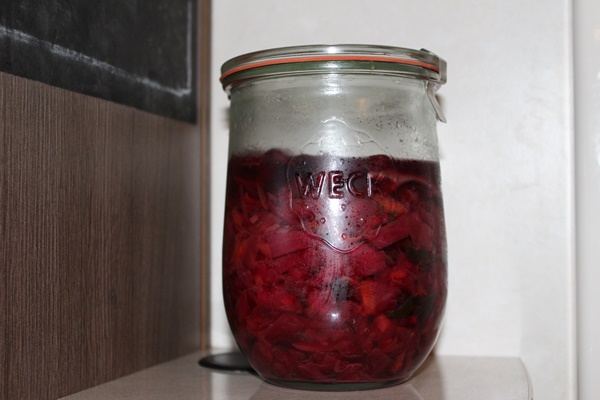
Some went into a kimchi I have made. This is something new for me and I hope it will turn out to our taste. The rest of the red cabbage will be turned into sauerkraut, which we love.
Kimchi
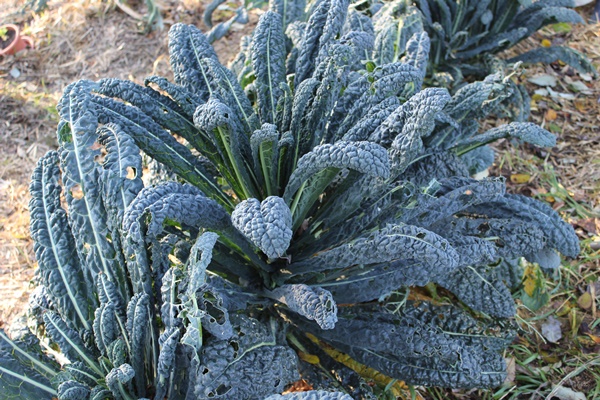
The kale has grown well after we took of the cover and we harvest as needed. Since we have a nice autumn with some sunny, even warm, days the kale still grows.
Nice harvest ripe kale
The straw mulched bed wasn’t even full after planting the mentioned crops, so there was place for zucchini plants as well. But that is for another time.
Removing poplers to make place for fruit bearing trees
At the roadside of our property we have 3 big poplers which gave us concerns. After talking to our environmental agency we agreed upon taking these poplers down including the numerous smaller ones.
In our very windy, often stormy, location this type of tree is very dangerous, because poplers tend to fall over or snap of by storm. These poplers are only a few meters from the road and also our buildings. There is also the danger if these trees fall over there branches penetrate the ground deeply, which could cause damage to the main underground gas pipeline running through our property. The same danger occurs while cutting down the trees as well, so we have to do some things different. But more about that in a different blog post.
Putting the choker chain around the base of the tree
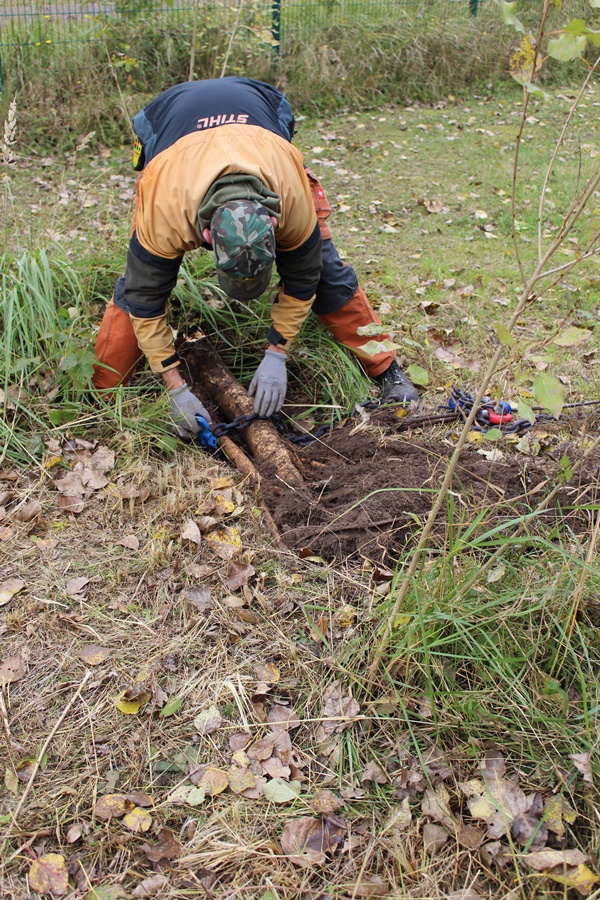
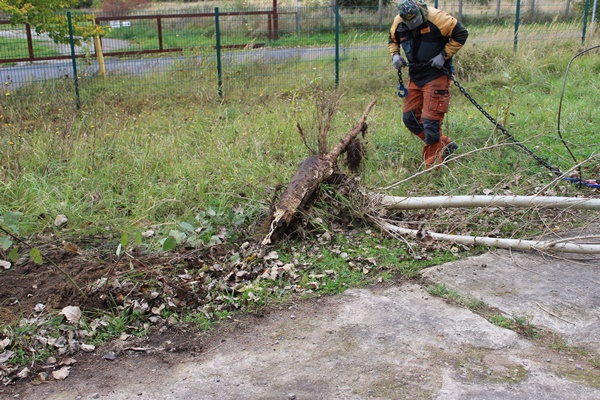
But first things first. We start by removing all the smaller trees by pulling them out of the ground with our winch. This way we hope to get as much as we can of the roots out of the ground. Due to the gas pipeline we are not allowed to dig the roots up.
Remotely operating the winch
Fortunate we have a 6,5 Ton winch which is remote controlled. The winch makes easy work removing those smaller trees.
Pulling out a tree
Sometimes the roots snap of and we had to pull them out separate.
Root on the chainRoot pulled out of the ground
Here are a few more impressions.
Tree on its way downThe root system is very shallowTime to clean up
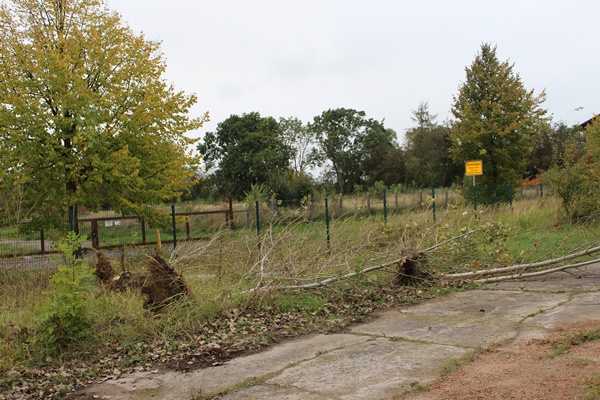
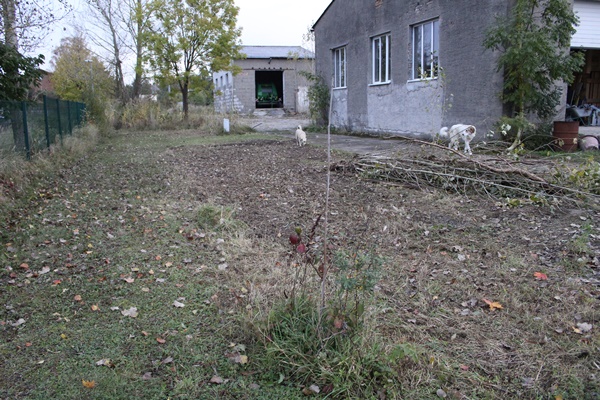
The final result. This small peace of our property has been cleared and mulched to prepare for the new fruit bearing trees.











 Beautiful Chaos