When the wetter is so unpleasant, gray and dark I like to think back to the summer with all its brightness and colour and living creatures. This is the start of a small series of all of the small creatures I photographed last summer.
Last summer I had made a lot of pictures of all of the small creatures I found in my new raised beds and elsewhere on the property. I do not know all of the names, but I will try to find that out. I am starting easy with a baby snail we had found.
Experiment developed due to the heat and drought of last summer
The fact that I constantly had to water the garden last summer gave me an idea for an experiment. Although it was already mid summer and for most things to late in the season to sow, I just wanted to try to see what it does.
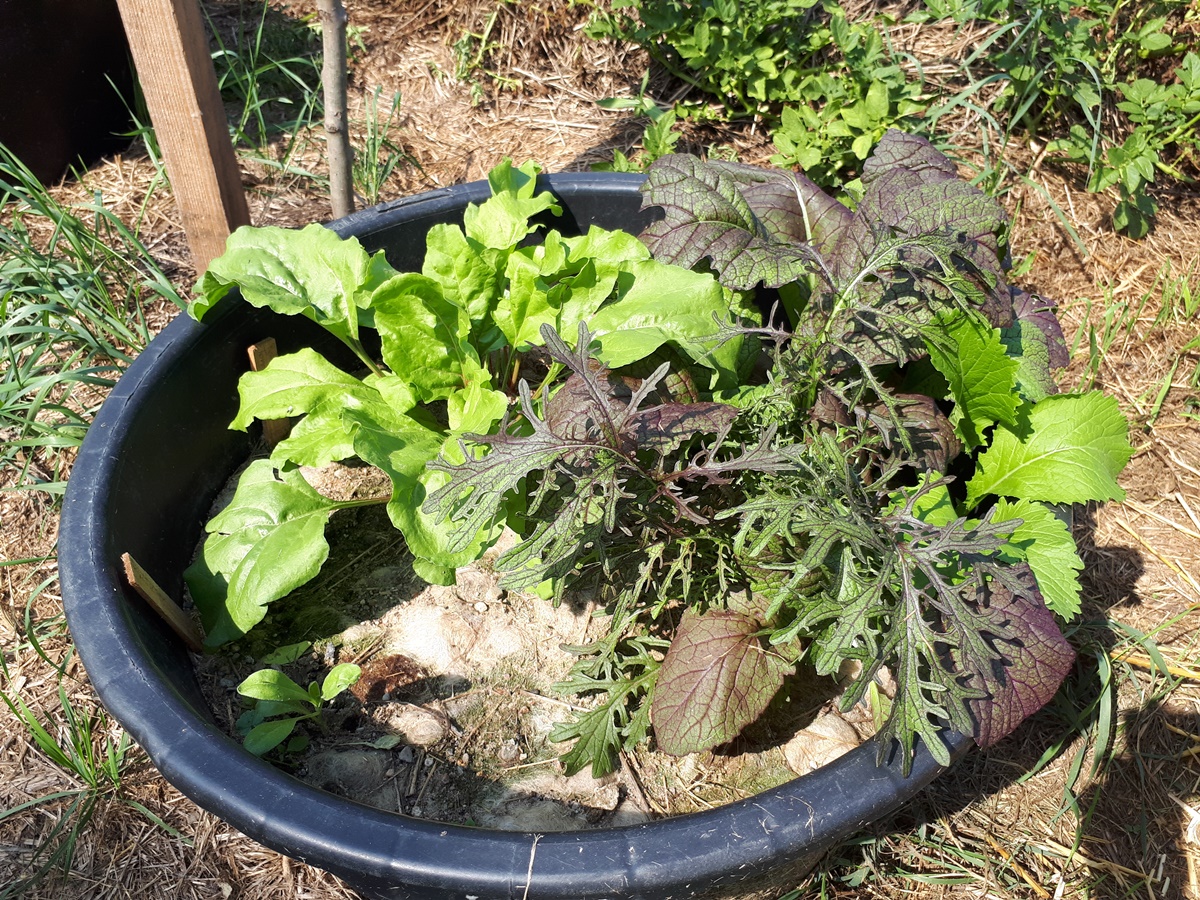
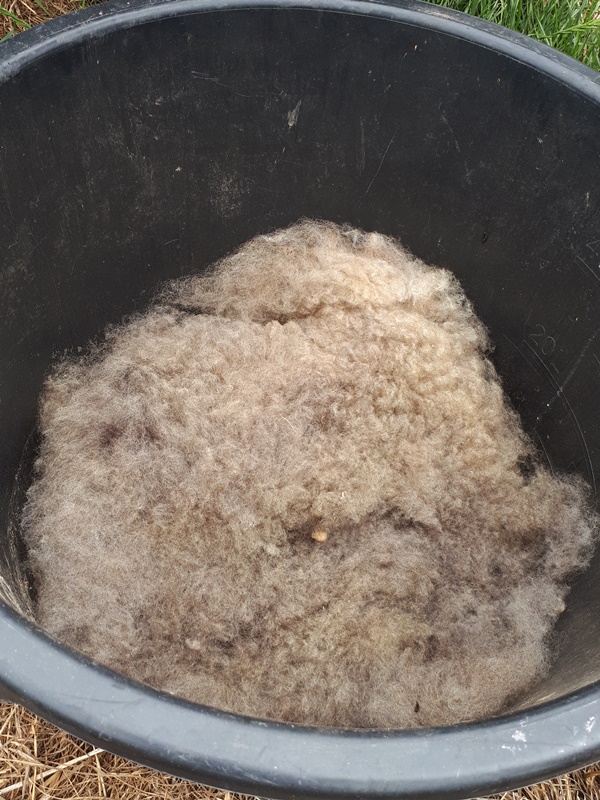
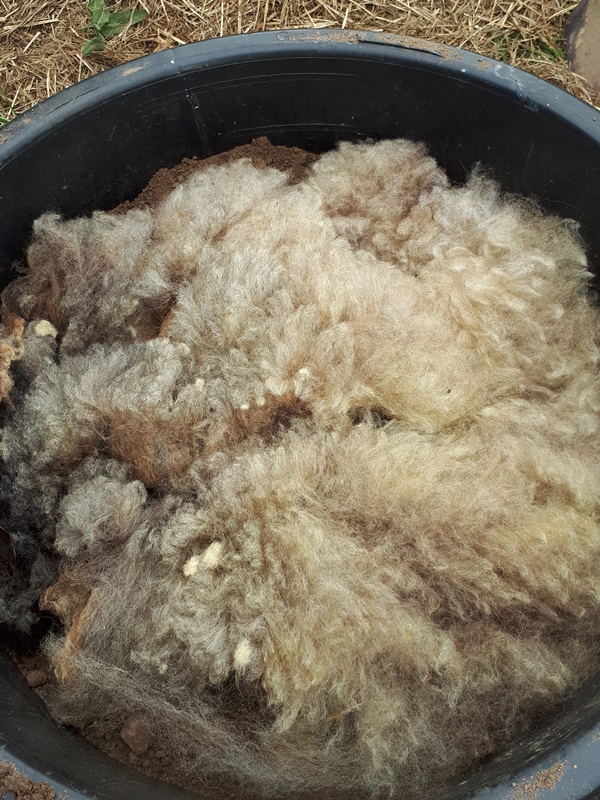
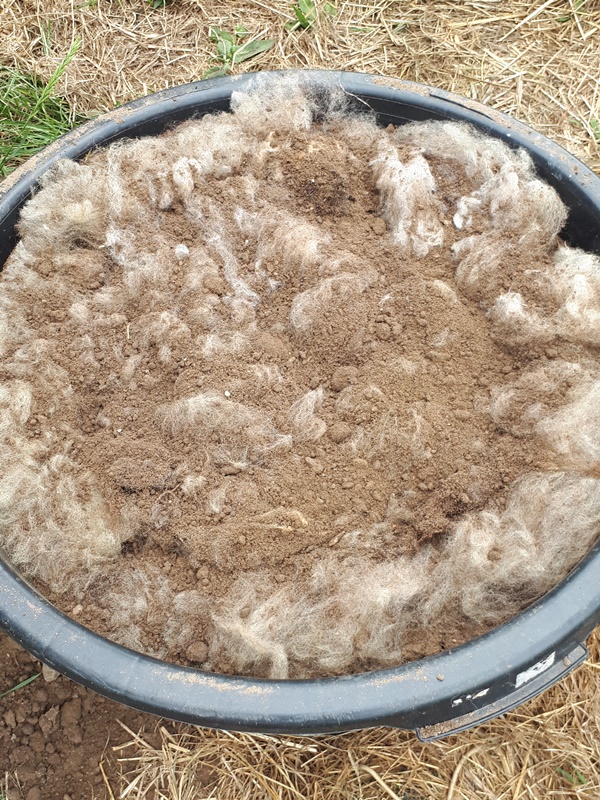
I prepared 2 mortar buckets, starting with a layer of wool, soil and wool and soil and wool. I finished with just a bit of soil spread over the last layer of wool, so the wind won’t blow the wool and seed away. This was watered thoroughly. In this I sowed some green mustard, carrots, beets and some flowers.
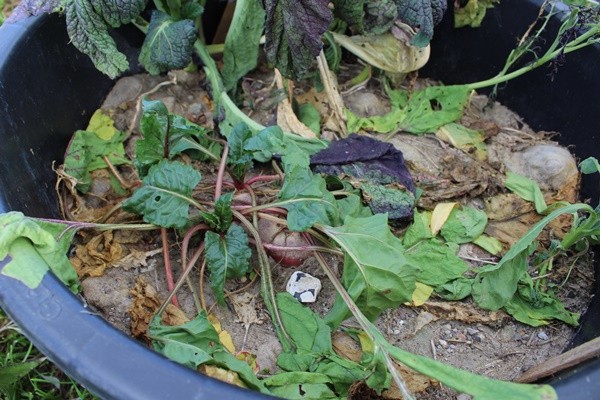
The idea is that this does not need watering, because the wool can store a lot of water and gives it to the plants as they need it. There fore I will not water these buckets at all, but they only get some water when it rains. Of course I did not make a science of this experiment and I forgot to keep track of how long it went without rain, but some seed sprouted and some plants grew.
The first few weeks there was no rain, but we had damp nights which obviously brings moisture to the plants as well. By the time the plants became bigger the rainy time started, so I am not sure how much the wool brings over a longer dry period, but I am sure I will find that out next summer. What I did find is that the bit of soil I spread on top of the last layer of wool became a very hardy crust which is not ideal if you want to grow anything in there. I will loosen that up and maybe put a thicker layer of wool on top when the new season starts in spring.
I am also planning to experiment some more with wool and maybe mulch an entire raised bed with it. The birds will probably also love that.
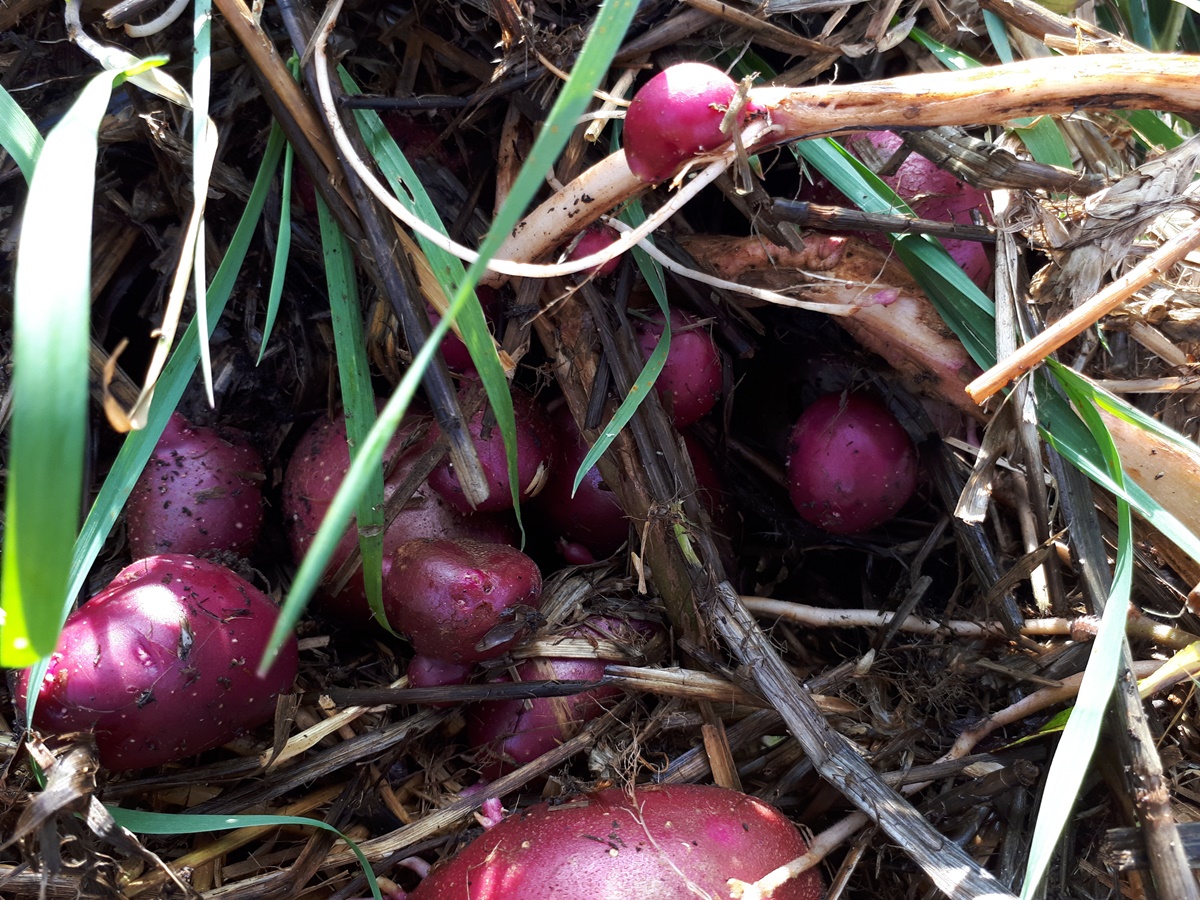
It is the second year of potato plants coming up without me planting them. Everything else I tried to grow here did not last.
In the spring I gave these hill beds a new layer of hay to keep the weed pressure down and hopefully the moisture in. Potato plants where sprouting everywhere again and I planted some squash as soon as it was warm enough. I also sowed some carrots and red beets. The squash was immediately eaten by snails and what I had sown never sprouted. I concentrated on my raised beds, so the hill beds where neglected mostly.
In the heat of summer we mainly watered the raised beds, only now and then the hill beds got a bit of water. We just did not have enough time to also water the hill beds. Then fall came and I asked my husband to mow around the hill beds, so harvesting would be easier.
I started with the hill bed that had the least plants, since I would be able to go trough that quick. Time is always short with 3 kids, garden and household. That will prove to be a mistake, but more to that later.
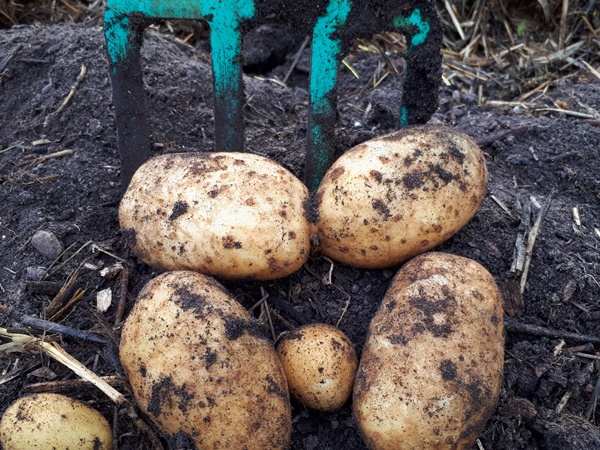
I scraped of the mulch material to the side and laid most of the potatoes free this way, so we collected what we found. After that we dough to find even more potatoes and destroy the mice holes. For the fact that there where so little potato plants here we found quite some potatoes. I got about 13 kg of potatoes out of this bed. There where some nice big once, but also lots of potatoes where also eaten a bit.
Many potatoes had also started to sprout again, some so early that they had already grown to plants again with very small new potatoes, others sprouted only shortly and where still usable.
A lot of potatoes have these small holes, as if worms have eaten trough them.
Also a snail laid eggs in a hollowed potato. I found a lot of eggs and a lot of small life in the hill bed.
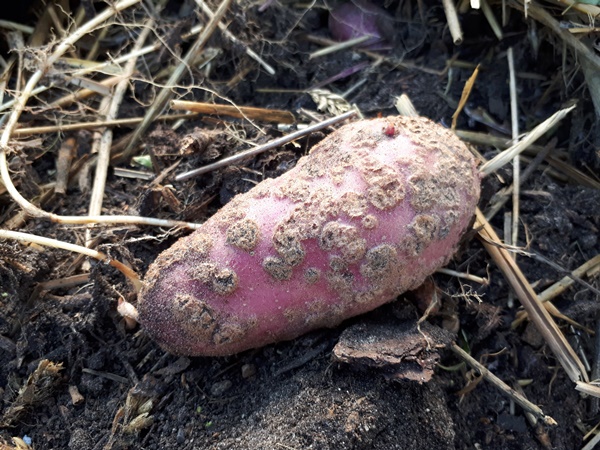
I also found a lot of potatoes with these spots on them.
The second hill bed gave about 15 kg of potatoes, but I had sorted out the small potatoes right away. I pick up all of the potatoes, even the smallest once, since I do not want to have potatoes in these beds next year.
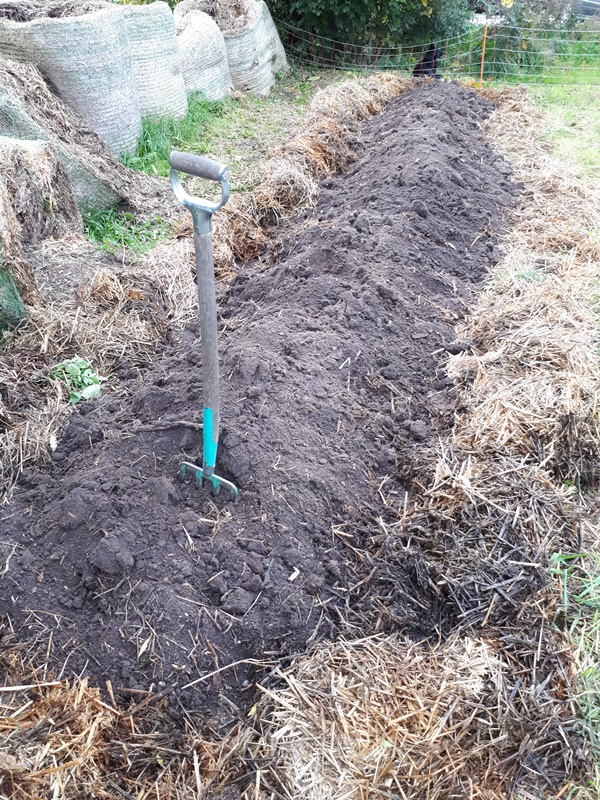
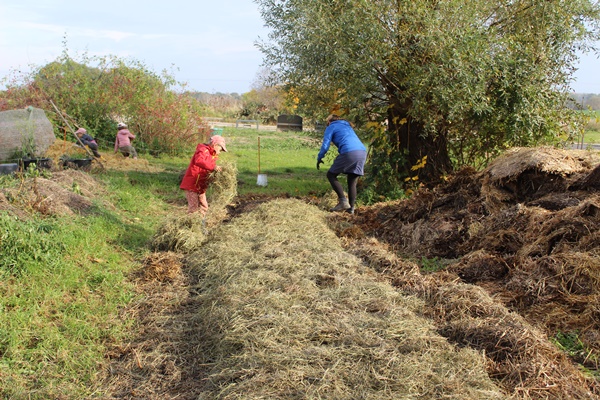
What I have noticed is that the soil in the hill beds is very dry, despite the fact that we had a lot of rain after the heat of summer. The soil does not take the moisture very well and because it is a hill the moisture just runs down. Also it looks like the straw becomes a little roof over the bed, so instead of keeping the moisture in the water is kept out. Therefore I am making these hill beds to no dig beds by using the mulch material as boarding material. I, or rather my son, eased out the soil to make a flat bed in stead of a hill. A thin layer of hay and the bed is prepared for next year.
The third bed had the most potato plants. Unfortunately I did not start with this bed and it had a good amount of frost before we came to harvesting. We ended up throwing a lot of potatoes away, because they had frozen and where no good anymore. This would have been the best bed and had the best and also bigger potatoes. After digging deeper we actually found a big bucket of usable potatoes. We generally do have enough potatoes this year, so it is not a problem. I just find it a shame to see so much food go to waste. Although it is not really waste, because these potatoes get composted of course. So these potatoes get recycled.
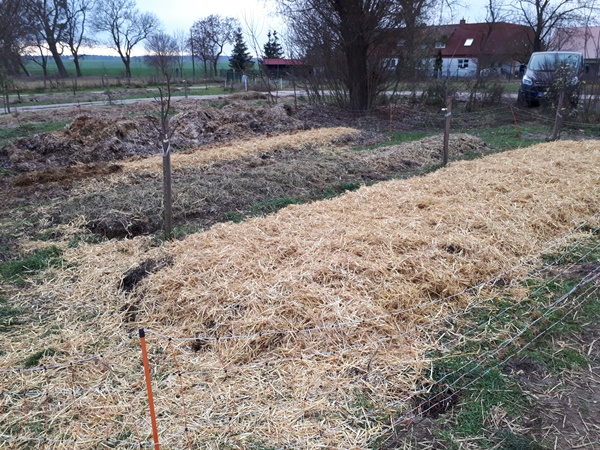
This last bed is also flattened out and got a layer of straw, since this is what I had to hand. These beds are ready for use in the spring.













 Beautiful Chaos