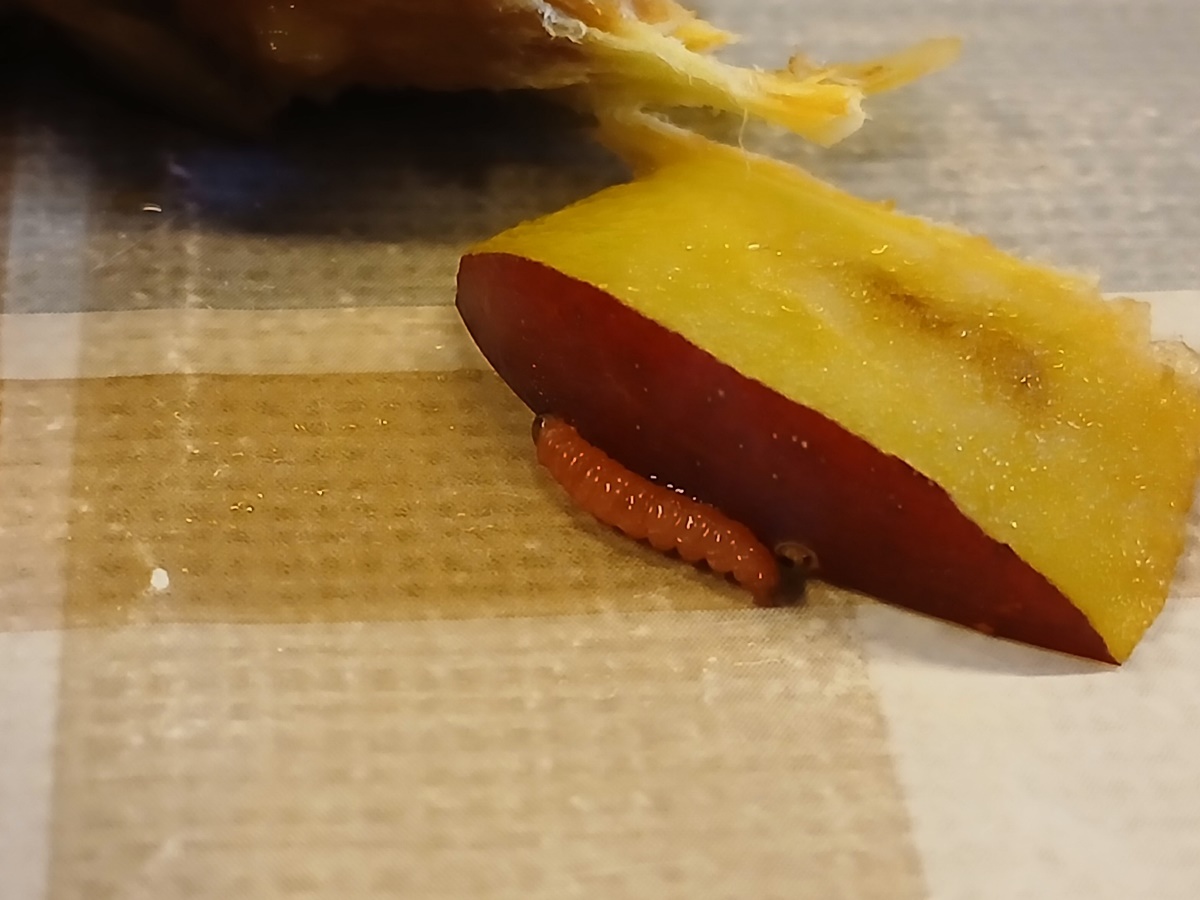
Plum moth maggots (Grapholita funebrana) in almost all of our plum fruit

2 years after planting our plum trees, they are carrying fruit nicely, but they are full with maggots of the plum moth

2 years ago we planted a lot of fruit trees (different varieties of apple, pear and plum). Some of them already carried some fruit last year, but a lot more trees where carrying fruit this year. Most trees actually blossomed this spring, but due to the wetter conditions not all where pollinated. This spring was cold, wet and windy, which is not ideal for bees to fly around, collect nectar and pollinate along the way. That’s why we where so happy to see different trees building fruit, the greater the disappointment seeing fruit starting to fall.
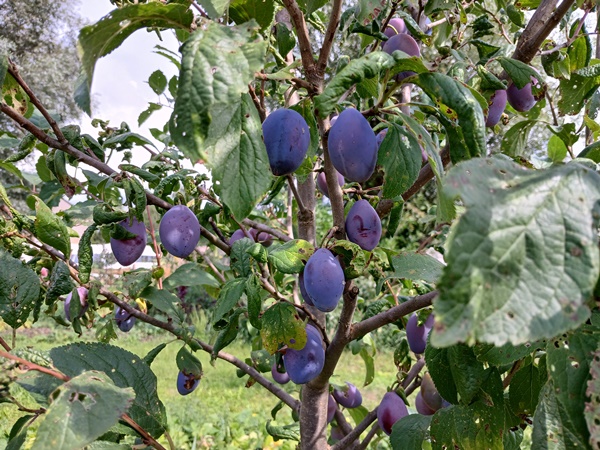
A plum tree packed with plums

When the fruit was still small I know fruit trees tent to drop some of there fruit, so I did not think much about that. By the time August came more and more fruit started to fall and we found all of the fruit having a maggot inside. Especially striking where all of the plum variety trees. Some of the trees where packed with fruit, but a lot of fruit started falling to the ground.

From the early varieties we where able to eat some of the fruit directly from the tree, but I checked all for maggots before eating. More and more fruit started to fall and at one point we just harvested all of the fruit of the trees, even if it was not ripe yet.

A bowl and a bucket filled with plums

While cleaning them I found a few that where kind off ripe enough for fresh eating, about half of the plums I trough away because they had maggots in them. With the other half I made plum sauce, where I did at a little sugar, since most of the fruit was still a bit sour.

2 Weck-jars with plum sauce on a table

Because of the maggot problem I had actually purchased plums to can for winter. If we did not had this much maggots, we would have had enough fruit from our own trees.

After researching in the internet I learned that the fruit falling in the spring is already due to maggots and we need to collect all of the fruit that falls to the ground to lower the maggot pressure. The plum moth produces at least 2 generations in our region, so if we can reduce the maggots by removing the first fruit that is dropped, we should clearly have fewer maggots by the time the fruit ripens.

Another help against the maggots in our fruit are bats, since they eat the moth’s. In the past years we had seen only 2, but recently we have noticed 6 bats flying around. Hopefully they will help reducing the general moth pressure around our trees. I do not mind losing some of the fruit, to keep the predators’ around, but almost all is a bit hard.

Our task for winter and next season to reduce the maggot problem is checking if we can find any cocoons underneath the plum trees (winter job) and picking up and removing any fruit that falls to the ground in the new season. Hopefully next year we can actually use the fruit from our trees instead of purchasing fruit.

Garden thoughts from 2024 for the new garden season 2025

Notes and change ideas for the next garden season

This post will be amended and expanded as the ongoing garden season progresses

Tomatoes

After this year is turning out to be a disaster when it comes to tomato plants, I am probably not going to do any tomatoes next year, or maybe a few placed on a very windy and some what shady spot. The tomato plants should hardly make any work, since it is so questionable if we could harvest any tomatoes at all.

Garden 2

In our garden 2 we are somewhat giving up due to the so invasive and all overtaking couch grass, that we are going to remove almost all of the garden beds where there are no fruit trees in. The garden beds with fruit trees are going to be filled with perennial plants, so there would be little to no space for the couch grass, suffocating it this way.

We will be filling the space with a lot of strawberry plants, other berry plants and flower bushes and plants.

We will be keeping a garden bed with no fruit trees to fill with raspberries, because, I think, these are to overtaking to be planted with fruit trees. I am afraid they would suffocate the trees after a few years. And another garden bed with no fruit trees will be kept, because there are perennial plants in there already. And my daughter’s garden bed without fruit trees will be kept since that is already very full with raspberries and there is a currant plant in there as well.

This way there will be less garden beds we need to tent to, in terms of pulling out the grass, and we will be able to mow most of the garden with the lawn mower tractor, which saves a lot of time.

Taking out those mentioned garden beds will also give room to extent the small garden patch we have in this garden. This small garden patch is being taken over by some type of rhizome grass, which we will be rotary tilling after harvesting. We will have to watch this field closely and after the grass starts growing again we will be pulling it out (which should be easy after the rotary tilling) and probably rotary till a few more times with some time in between to get a usable garden patch again. We will also add some compost in the spring.

Notes, not related to a specific garden

I watched a garden tour video from someone who had started dahlia’s from seed. She hat so many different and so beautiful dahlia’s that I would like to try that next year.

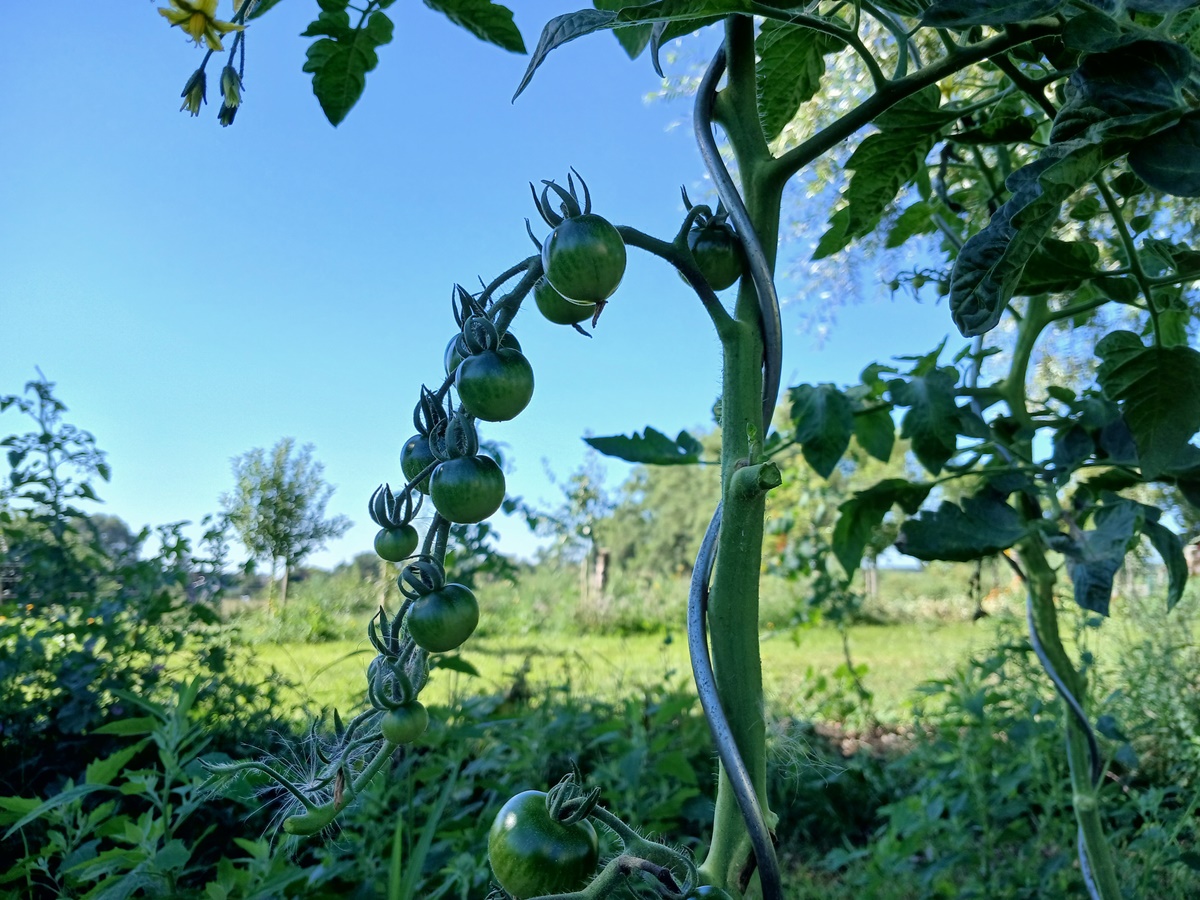
Will I have any tomatoes to harvest at all?

Blight has struck already. Pruning hard and hoping for the best.

Compared to the last 4 seasons we have a ratter wet season this year with days of heat and cool nights. Sometimes the temperature at night drops below 10°C. Alongside the hot days there also are cooler days. Of course we are happy with rain on a somewhat regular base. The garden and nature really needs it, but the cooler nights cause morning fog after all that rain.

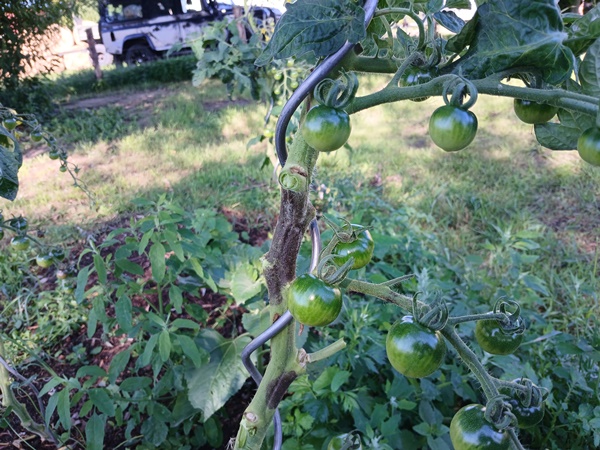
A few days ago I pass by the tomatoes (planning to harvest green beans) and noticed some blight on the first tomato plant. After further inspection all of the tomato plants where suffering from blight and I immediately pruned the tomatoes drastically. All that looked somewhat diseased was taken off, even some of the fruit that also was turning brown. Some tomato plants are even turning brown at the bottom of the stem already.

The stem of a tomato plant partially browned with blight and some green tomatoes still on the plant

This is so sad. The tomato plants outside looked so promising, carrying such beautiful fruit already, but no signs of turning red yet. The tomato plants in the greenhouse have some blight already as well.

I am thinking of not doing any tomatoes next year at all, but instead concentrate more on other crops.