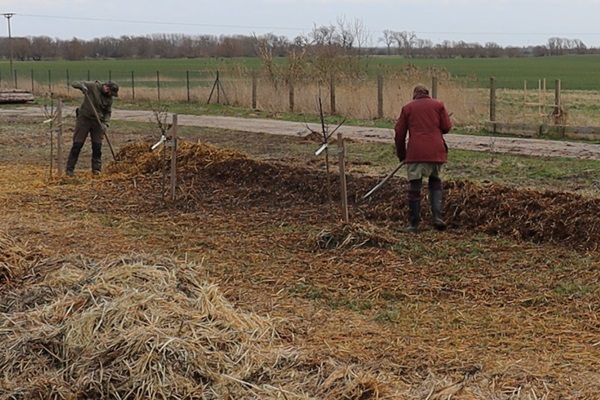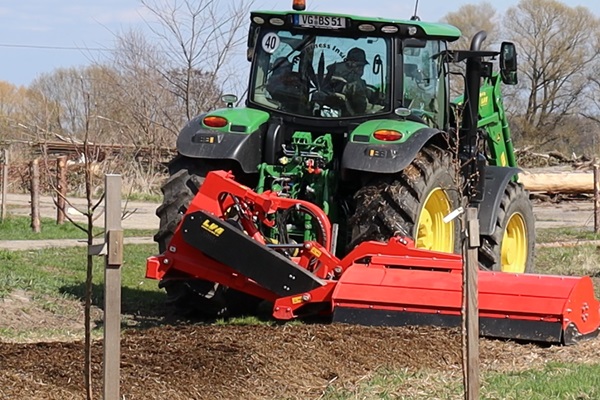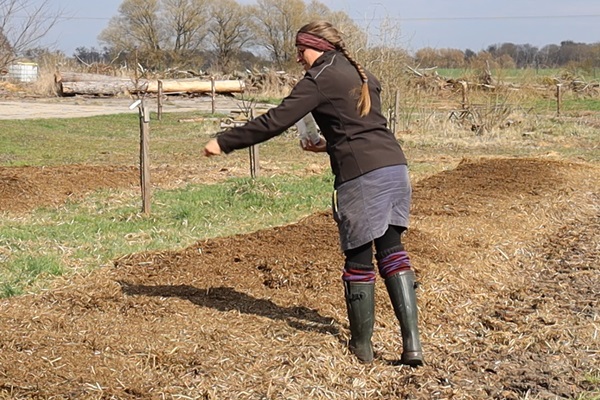
Tilling my experimental compost bed with a rotary tiller to plant potatoes

Tilling half of the compost bed to see if there will be a difference in potato harvest this fall

Finally we have finished the fence around garden 3, so the dogs can’t get in anymore, and it is potato planting time. I have been looking forward to finally starting to plant potatoes.

A little over 2 months ago we flail mowed over this experimental compost bed, hoping to improve the decomposing process. On top the result looked nice, but underneath the straw was untouched. At the time we did not have a rotary tiller, which we would have preferred to use, so we just let the compost bed be and see what happens with time.

Now, 2 months later, after doing some digging we found the compost bed looking quite ok, but obviously the material has not broken down completely. At least the rainwater could soak in and all of the material was wet and the decomposing process has progressed. There are a lot of earthworms in the compost bed, which is a good sign.

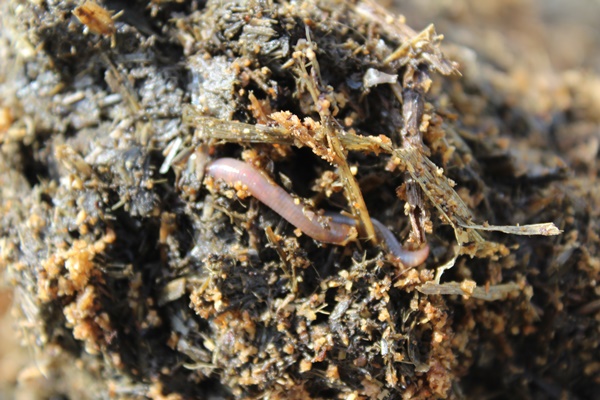
The compost bed is not finished decomposing yet and I hope it will be good enough for the potatoes to start in. Since I have way to little planting space for all of the potatoes it will have to do.

Rotary tilling a part of the compost bed

Recently we found a used rotary tiller for an acceptable price and where able to purchase this. Not quite curtain about the usability of the compost bed and I was worried that the rotary tiller would kill all of the earthworms, we decided to rotary till half of the compost bed and see if it will make a difference in harvest once the potatoes are done.

Tilling a compost bed with a rotary tiller

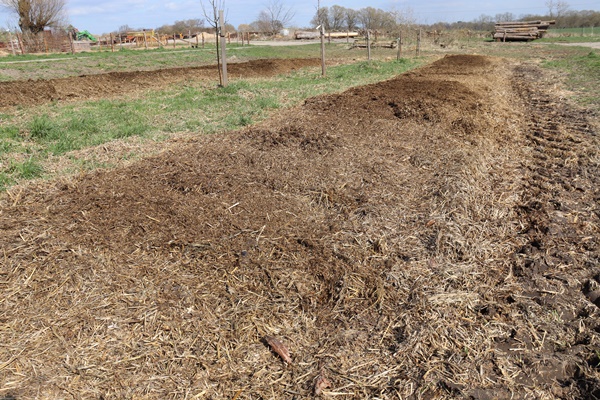
The rotary tiller we have purchased was modified by the previous owner, who had fixed the retaining board in a certain position. Normally the retaining board is hung up with some chains enabling the board to move up and down as needed. Using a rotary tiller for the fist time we just left that how it was. We tilled over half of the experimental compost bed twice and noticed that we need to do something about the rigid retaining board. Since the compost material is very moist the rigid retaining board pulled grooves in the material, which I closed by hand.

Compost bed has grooves after tilling with a rotary tiller

Starting half way the compost bed some material was thrown over back wards on the part of the compost bed we did not till. I shovelled that back and made the tilled part of the compost bed nice and evenly. The tilled part of the compost bed looked nice and fluffy and was much higher as the part we did not till. All of the different material was mixed together well (small parts, bigger parts, already decomposed material).

Now to planting potatoes

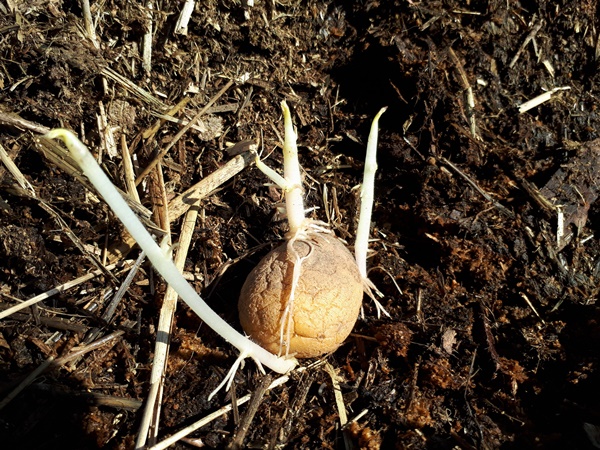
I only have a lot of small potatoes left in my storage and these are al sprouting. (Unfortunately I am buying potatoes for eating at the moment) This means I have more than enough seed potatoes and I did not buy any.
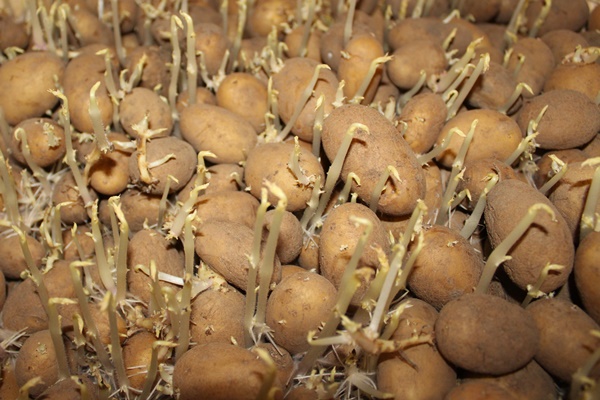
Sprouted potatoes

This does raise the question as to where on earth am I going to plant all of these potatoes? Well, I am starting in this experimental compost bed and just go from there.

In the part of the compost bed that we tilled, it was very easy to make a trench in the loose material.

Woman making a trench for planting seed potatoes with a hoe

On the other hand I very much regretted not to have tilled the entire bed while making a trench in the part that we have not tilled. This material was ratter compact and hard work to make the trench.

I made two trenches about 50-60 cm apart. The distance in the row could have been a bit more, but the compost bed is not wide enough for that.

2 trenches in a compost bed for planting seed potatoes

My son helped me and we planted the potatoes about 25-30 cm apart, paying attention to positioning the potato with the shoots pointing up. These shoots are going to be the leaves once grown out of the ground and need to be handled carefully. Some seed potatoes do not only have the shoots, but even already made some roots.
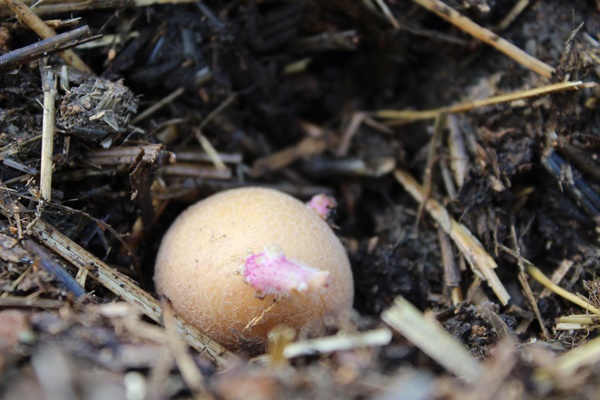
Last thing is closing the trench again. We planted different varieties and marked them with a number pack.

Experimental compost bed planted with seed potatoes and marking the different varieties with number packs

I only planted a fraction of the seed potatoes I have, so I am going to have to find some more solutions for all of these potatoes, but more to that in a different post.

Fixing the compost beds with a manure spreader

The compost beds in Garden 4 are needed this spring, so we need to do something for them to decompose better

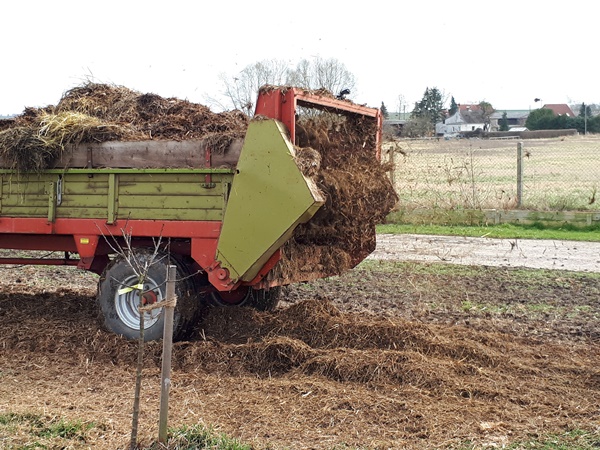
As announced in my previous post about making compost beds, our manure spreader has arrived and we made us up to work on the compost beds that where only air raided.

We want to lay the beds new with the manure spreader to get the long material of hay and straw shortened, to get everything well mixed and loosened and to get the whole compost bed well air raided trough and trough. This way the compost bed should decompose better.

We made a mistake while building up the first compost bed new

Well you would think easy said and done. What’s more to that than loading it up and spreading it out?  Well we did make a mistake with the first bed (Garden 4 compost bed II). We loaded the manure spreader until it was full. Than we pushed aside the rest of the compost bed to make room to lay the compost bed new. So far so good. Then we started laying the compost bed new.

Spreading decomposing straw and hay with a manure spreader

Since I find it very hard to estimate the amount of compost that should be laid down, it turned out to be too thin. And here comes the mistake. We had to drive over the freshly laid compost bed again, partially compacting it again, to build up more compost.

Spreading decomposing straw and hay with a manure spreader, while partially driving over the already freshly laid compost bed

This, obviously, was a little disadvantageously. Since we already partially drove over the compost bed, we decided to add some more material (we found the volume of the bed a bit small). We loaded some more straw bales on the manure spreader. On top we added a shovel of horse poop to give the bacteria, that do the decomposing, some nitrogen to feed on.

We spread a layer of this over the entire compost bed. Afterwards I was not very happy with this last layer, because compared to what was already there, the new added straw was still too gut and was more like a mulch layer over the compost bed. The straw stayed very long, compared to the older material which was nicely shortened by the action of the manure spreader. Therefore we decided to flail mow over the compost beds after we finish setting up the second bed new.

Fixing the other compost bed

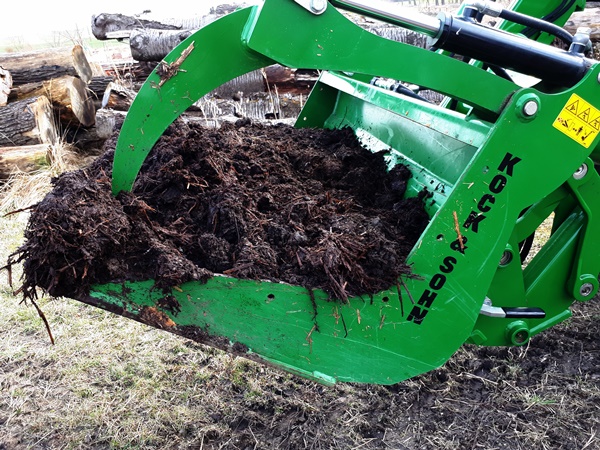
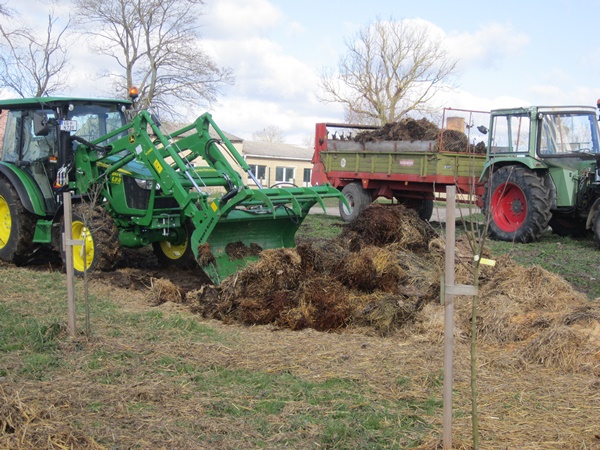
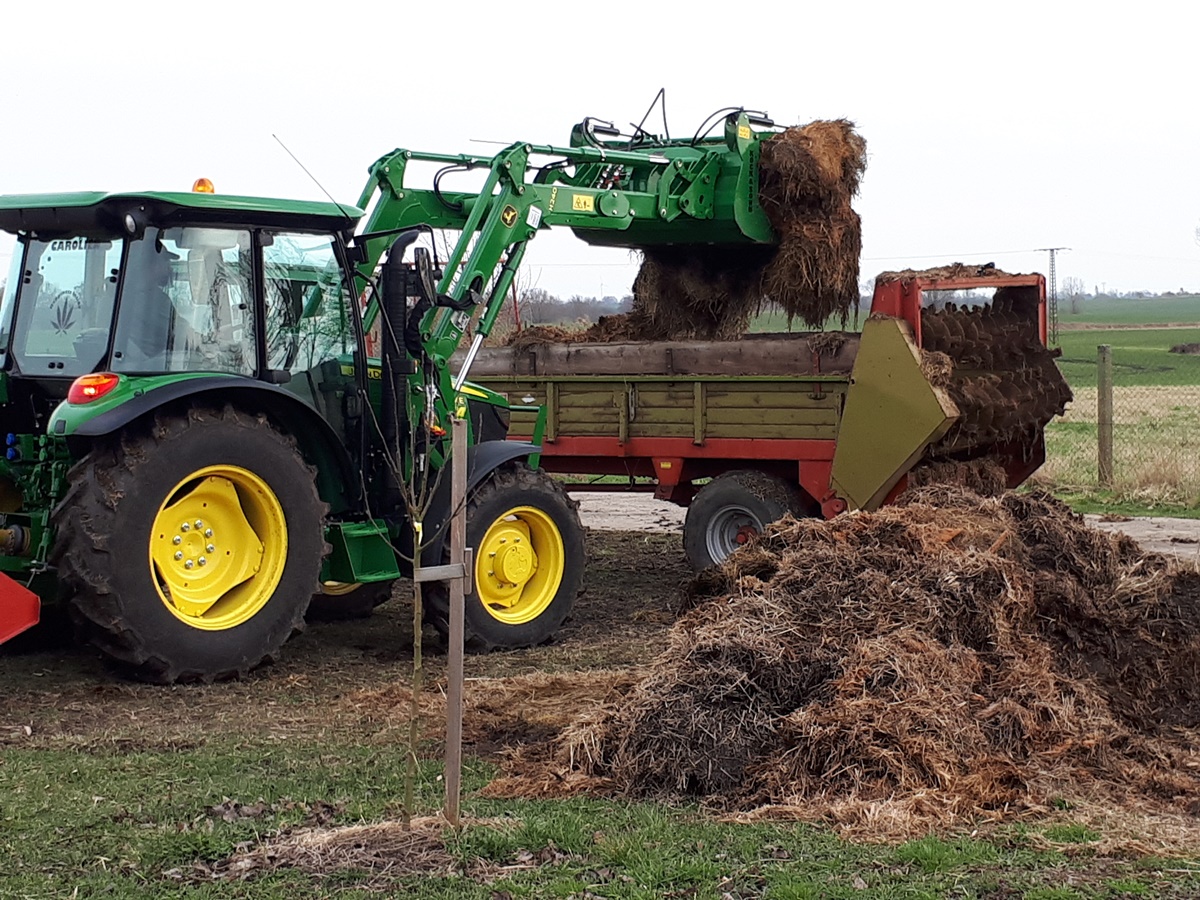
With the second bed (Garden 4 compost bed III) we did a much better job. We started with loading the manure spreader and removing all of the material from the compost bed.

Clearing a compost bed with a tractor with a front end loader with a grapple, with a tractor with a loaded manure spreader in the back

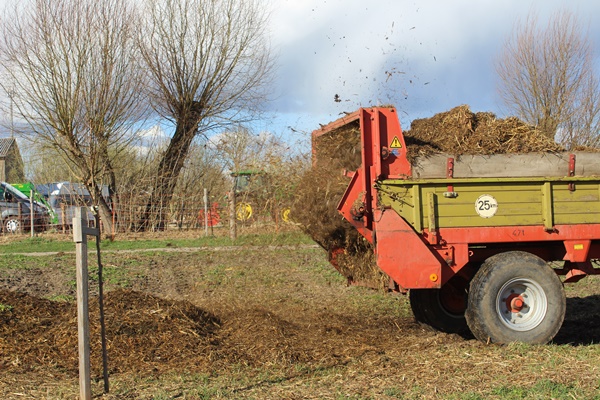
Then we started to build up the compost bed again, building up more material at once so the compost bed would have a nice thickness and we would not have to come back with more.

Spreading decomposing straw and hay with a manure spreader, while building up a compost bed

In between we left the manure spreader where it was and loaded it again where it stood. This way the compost bed was in a line and the material stayed nice and loose as we like to have it. The compost bed ended up shorter as it was, but that is no problem. We will add more length as material comes available next year. Generally we did not add extra material to this bed (no straw and no horse poop). We are curious to see if this makes a difference in the decomposing process.

The wind gave us some problems and we had to ad a bunch of material from the side back on the compost beds by hand.

A man and a woman raking straw, which was divided by the wind, back onto the compost bed

And this is how the compost beds look after laying them new with the manure spreader.

Compost beds after laying them new with a manure spreader

Flail mowing the compost beds

To make sure the top layer will not form into a roof, leading the rainwater away, we flail mowed both compost beds.

Flail mowing a compost bed with a tractor with a off-set flail mower

I am not sure if this would have been necessary, but this gave a nice evenly result.

Compost beds after flail mowing them

Sowing some green manure

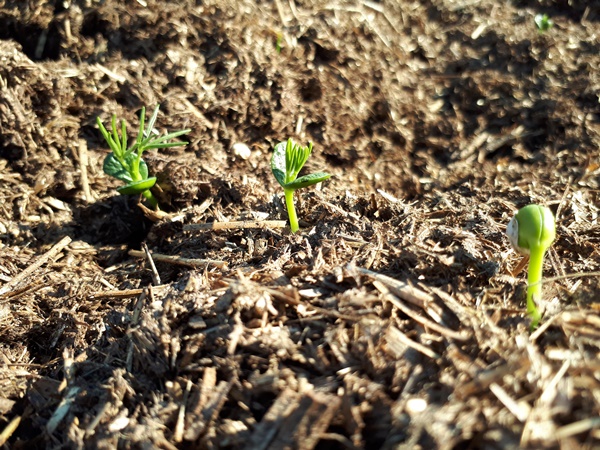
To get some extra nitrogen in the compost beds I decided to sow some green manure. I sowed some mustard and some lupines, since these already sprout at low temperatures and it is still very cold here. These compost beds are for corn, pumpkin and different other things, so there is still some time before I will plant in there. The green manure will be cut of before I start planting and the material will serve as mulch.

Stay tuned for up-dates as the season will progress.

We also made a video of building these compost beds.

Planting onion sets again & sowing carrots

Planting onion sets again? Yes, again but why?
Also finally starting to sow some carrots, but why there?

I had read about planting onion sets in the fall and I though “well that would be nice. I can give my onions a head start, have something growing in the garden bed and save some work in the busy spring time.”

A head start for the onions would be great, since my onions from last year where not very big.

To have something growing in the garden beds is important. I hate to leave a garden bed empty over winter. Nature does not leave the soil empty over winter either. When onions do not have a lot of growth above ground, at least there are roots in the soil. This helps the microbes in the ground and keeps the soil healthy. To compensate the lack of growth above ground I cover the soil with some straw to protect the soil against the harsh winds we have and prevent the soil from drying out. With time the straw breaks down and ads compost to the garden beds as well.

The spring time is a very busy time with pre-cultivating al sorts of vegetables indoors and in the greenhouse, planting and preparing new garden beds, so I am happy to spread out some of the work if I can. Besides, flower bulbs are planted in the fall as well.

So I thought and I thought wrong. After checking my garden beds with the onion sets last week I wondered why I am seeing only a few sat onion leaves. In the fall I hat already seen all of the onions growing, but now there are only a handful of onions growing.

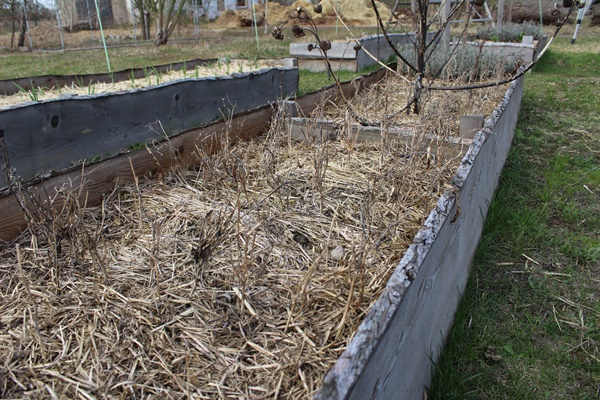
Only little onion sets are still growing in this raised bed

What happened with the onions?

Maybe some where eaten by mice, but after doing some digging I found some leftovers from the onion sets which have simply rotten.

Apparently onion sets are not like flower bulbs and do not act like flower bulbs as well. Of course I had covered the onion sets with a layer of straw and we hat a wet fall and winter, so that could have been the problem. On the other hand, if I don’t cover them with straw, we also get frost down to -20°C in winter without snow covering and protecting the vegetation, so that would also kill the onion sets.

What did we learn?

Where we live we should plant onion sets in the spring. And so we did. Double cost and double work, but I planted new onion sets. Even more than I did last fall, since I use a lot of onions while cooking and I want to make sure I will have enough onions for next season. Last year I did not grow enough and I will run out of onions soon.

Planting onion sets

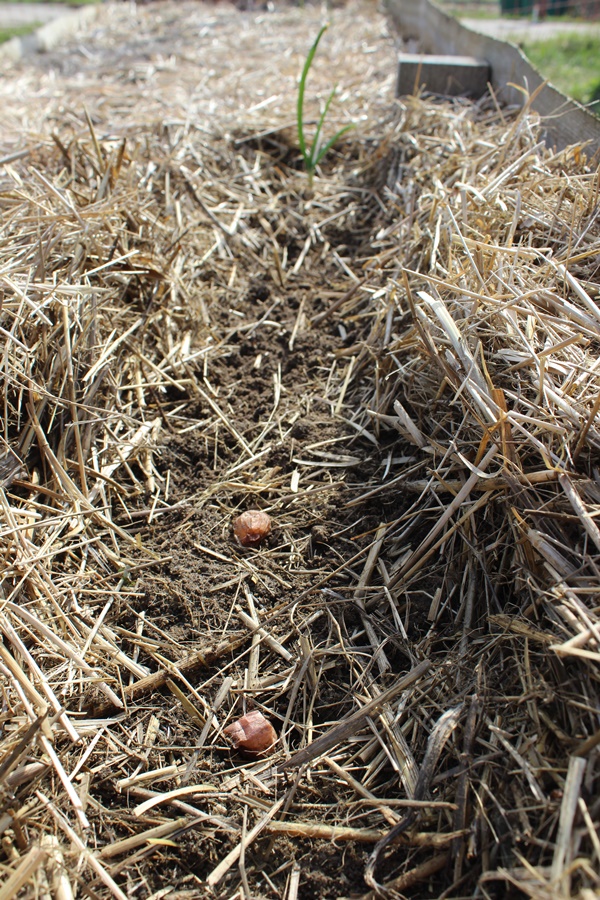
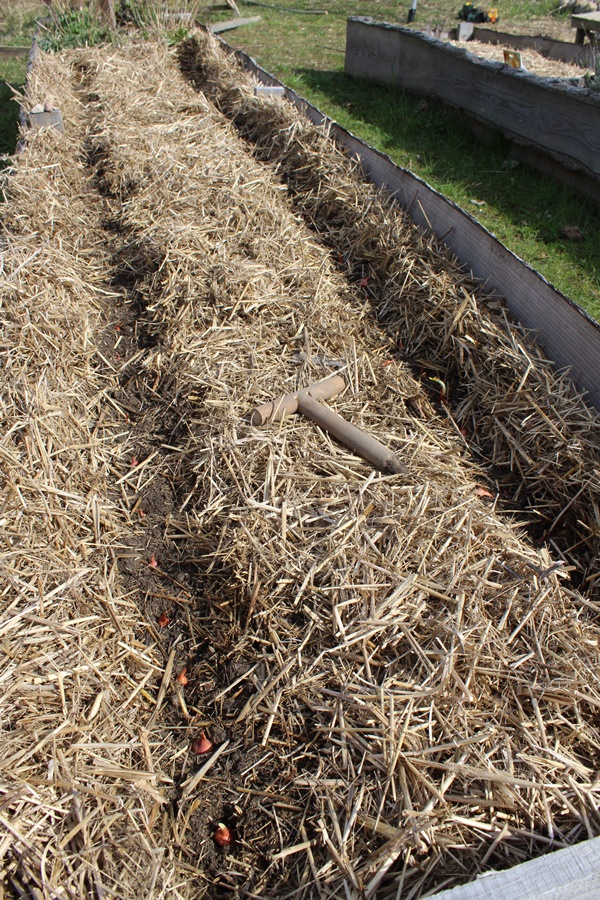
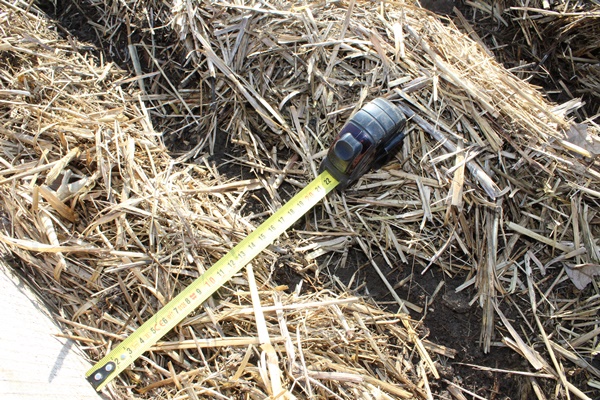
The recommended spacing for onions in the row is about 30cm, but since I want to sow carrots in between I will have more space between the rows. Within the row the onion sets should have a spacing of 5-10cm, which I eyeballed. For the planting depth 4-5cm are recommended. I plant onion sets so that the top side of the bulb is level with the top of the soil and than I put the straw mulch back. There is nothing more to it.

Planting 2 rows of onion sets with space for a row of carrots in between

O, and onions are middle hungry. This means I should have put some compost on the beds last fall, which I did not do. When I find the time I will divide some well composted horse manure between the onions this spring.

Now to the carrots

I mainly pack these together with onions & garlic. Carrots love to be surrounded by onions & garlic, since these give some protection against the carrot fly (Chamaepsila rosae). The carrot fly is a very common pest which I had some problem with last year. The sent of carrots draws them to the carrots from all over the place. By sowing the carrots in between rows of onions & garlic the carrot fly does not find the carrots any more, since the onions & garlic have a much stronger smell. Leeks & chives apparently do the same. Maybe I will try that as well.

I also did an entire raised bed with only carrots. We use a lot of carrots and if I only sow carrots in between onions and garlic I will not have enough. This raised bed is next to a garlic bed and I have some garlic from last years harvest popping up that I missed out on harvesting last year. I will replant these in this carrot bed and hope it will do against the carrot fly. The carrot fly is very, very tiny, so I am not sure if putting a fine mesh over these carrots would help keeping them out.

Another reason why I sowed this entire raised bed with carrots is while there where green beans (and one big sunflower) in here last year. Green beans are a legume, which means they improve the soil. Carrots do not like when the soil is freshly manured, but growing carrots after legumes is ideal. Do not pull out the legumes, but cut them of above ground. They have small nodules on there roots which help to fix nitrogen from the atmosphere into the ground for plants to use. So we want to keep these in the ground.

Sowing carrots

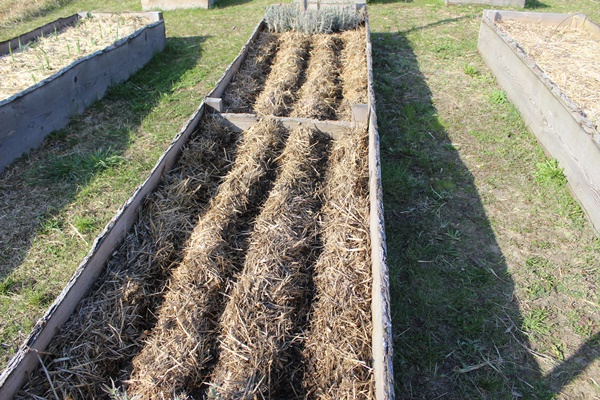
The recommended distances for carrots are 30-50cm for the rows and 2-3cm in the row. My raised beds are only 80 cm wide and only 2 rows in one bed seem a little scant, so I sowed the carrot rows only 20 cm apart to have 3 rows in my raised bed.

To sow the carrots 2-3cm apart is a bit tricky and not bad if it will be less. Once the carrots have grown a bit and need more space it is time to harvest the first young carrots. We will enjoy these and the other carrots have the space they need to grow.

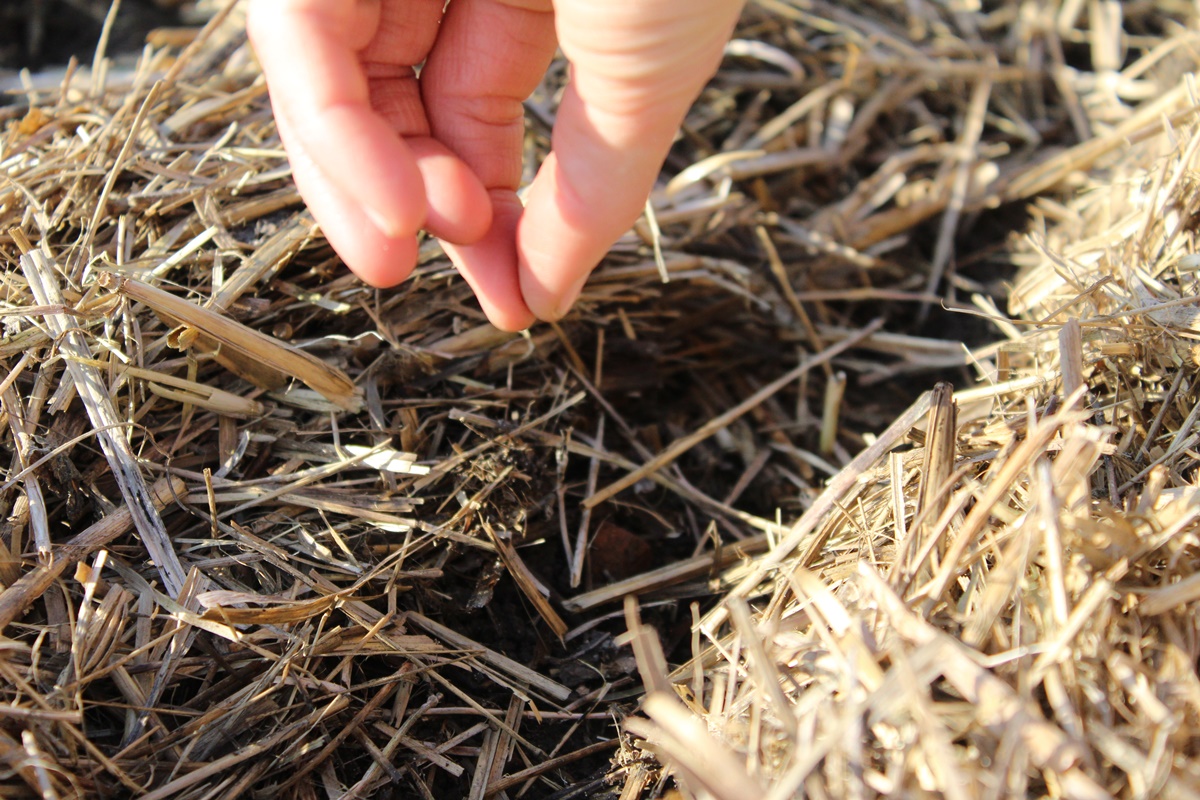
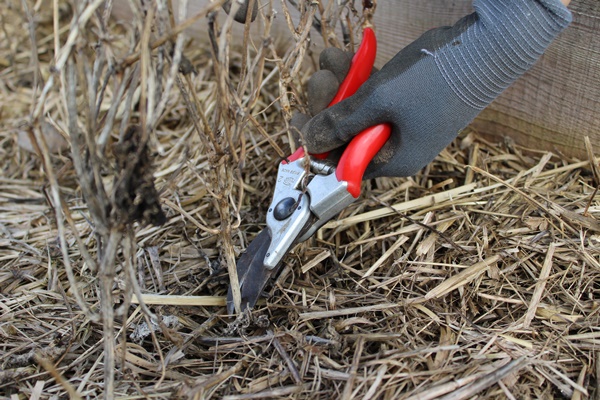
To sow the carrots I first pushed aside the straw to create a furrow. Seeds always need contact with the soil. After sowing I merely move with my fingers trough the soil a bit, not really covering the seed, since carrots need light to properly germinate. After that I lightly cover the rows with some straw, but not too much. I did not bother watering the seeds, since a lot of rain has been predicted.

Raised bed covered with straw where carrots have been sowed

The carrots I sowed here are the once with the shortest vegetation time. We will start picking these for fresh eating long before they are finished growing, merely because the kids love to eat carrots direct from the garden. I have to make sure to sow the storage variety somewhere a bit of to where they usually play, so the storage carrots will not be eaten before fall. And of course I will have to sow more then enough carrots for fresh eating.

Housemother caterpillar (Noctua pronuba)

While sowing carrots I found this Housemother caterpillar (Noctua pronuba). A lovely little creature. This one is light in colour. In the next stage the Housemother caterpillar takes a dark colour before pupating into the Housemother. We have also found some of the dark coloured caterpillars. The Housemother usually flies at night (visiting flowers).

Rolled up Housemother caterpillar (Noctua pronuba)

Time will show if I did things right, so stay tuned for up-dates this season.