Our late potato harvest

Snow on our potato bed and frost. Will the potatoes be OK?

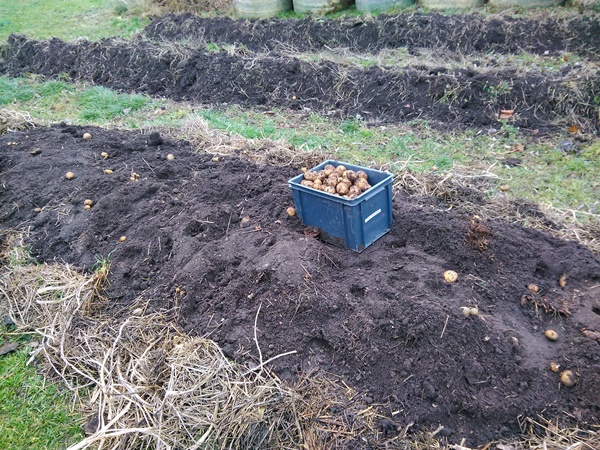
We did not get to harvesting our last potato bed and then we had snow and frost. I was worried the potatoes would get damage from the cold and that the mice would find them and eat them. This is a picture after the snow melted. As you can see there is not much covering the potatoes. The straw mulch has for the bigger part decomposed and left the potatoes partly uncovered. So I had already seen that there are a lot of green potatoes to throw out.

After I started to harvest I found that these potatoes had grown very well. These potatoes gave us the best yield of all the potatoes we had grown this year and I am very happy I got to harvesting them.
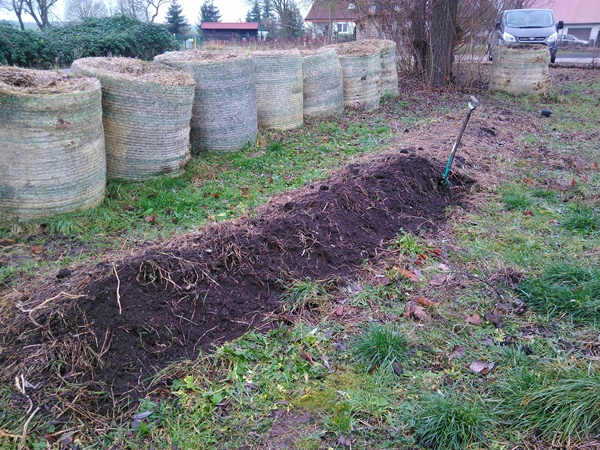
Halfway through the harvest my husband started on the other rows where we had grown potatoes to pile up the beds again, so we can cover them before winter comes.
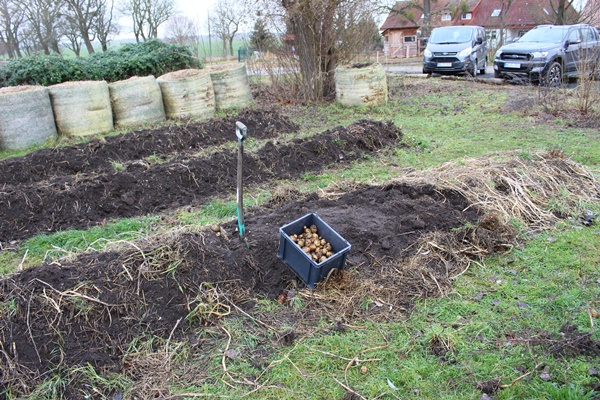
Going on with the harvest I pulled these potatoes out of the ground on only 1 1/2 meters double row potatoes. For the last meter our little one came to help and we found an even greater abundance.

While harvesting I found 2 mice nests in the potato bed and I found only 2 potatoes damaged by the mice. So the mice did not do much damage. But with 5 cats on the property there can not be many mice here. And even our dogs dig for the mice.

To cover the beds we will use hay this time. We have hay that has been rained on several times, because it sits beside the door of our barn. Only recently we got doors for our barn, but this hay has gone bad already. Normally we would not use hay, because that is food for the animals, but this time we can experiment with hay in comparison to straw.
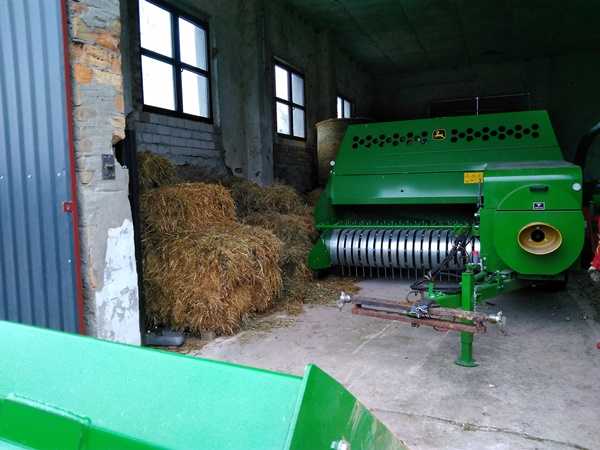
My husband brought the hay with the tractor and finished prepairing the beds.

Meanwhile we collected all of the potatoes out of this one bed in the wheel barrow. We got the wheel barrow almost completely filled out of about 6 meters bed with 2 rows of potatoes.
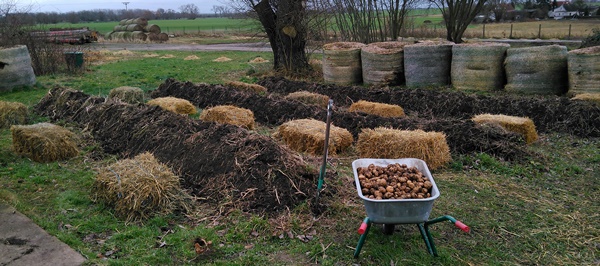
Our children helped me divide the hay over the beds. We had enough to cover 2 beds properly. The 3th bed will be covered with straw, but we did not get to that on this day.

The idea with these 3 beds is to compare if there is a difference in reaction by covering with hay or straw and to see what these beds do next year. We are moving coming spring and will not plant anything in these beds, but by our experience in the last 2 years the very small potatoes that are left in the ground will sprout and give a nice yield. We hope that will happen with these beds also and we can come next fall and harvest some potatoes. We will see what pests will do and if there are many weeds. We will keep you informed.

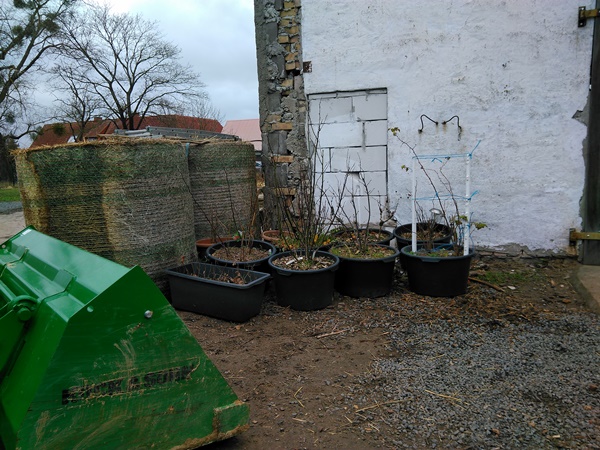
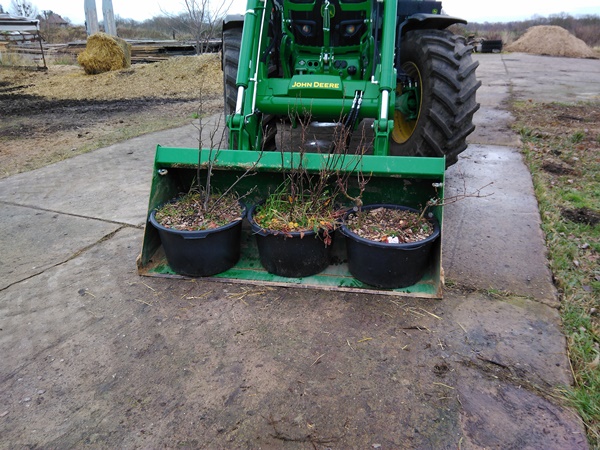
What my husband and son also did on this day was collect all of the plants in containers and put them together on a some what protected spot to hopefully come over the winter good.

Saving my to many seedlings

A last minute extra plant bed

After dividing our compost soil for hill beds and high beds there was a little left on the ground where we stored it. The ground was very uneven and had lots of debris in it. So what to do if we don’t want to leave the rest of the compost soil unused? Of course we just straitened out the compost soil and divided straw as mulch on top. And all of a sudden I had another nice sized plant bed to fill.

Covered with straw plant bed

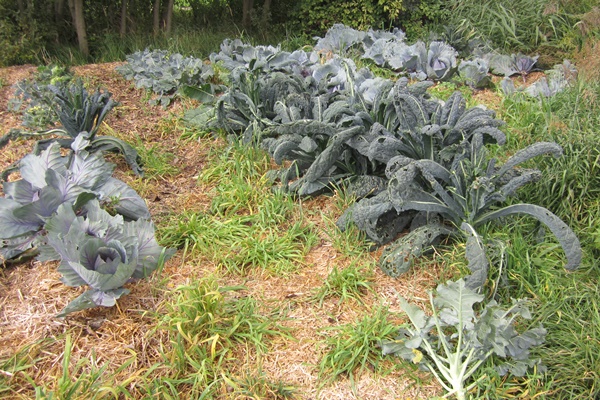
Luckily this solved another problem I had. Since I had sown too much seed early spring I had a lot of small plants I did not know where to plant. The straw mulched bed is now dedicated for the red cabbage, kale, broccoli and celery root. To keep de dogs from ripping out the plants and protecting the plants against the cabbage white butterfly, we put a cover over them.

Red cabbage and kale under cover

The cover we had unfortunately was a bit small and not very sturdy. So over time there were some holes and also late summer the kale became too big for the size cover we had. We decided to remove the covers, check for caterpillars on a regular basis and just hope for the best, so the kale could grow on without being pressed down by the cover.

Red cabbage, kale and broccoli in the back
A row of celery roots

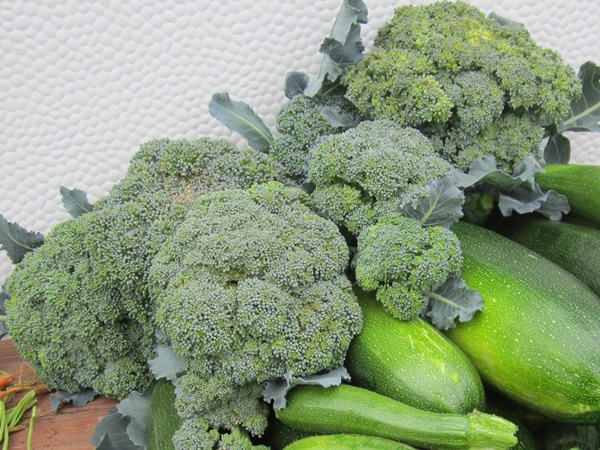
By this time the broccoli was ready to be harvested and provided us with some nice broccoli heads.

Broccoli

With some broccoli I missed out on the right harvest time, so these went to bloom. The broccoli flowers are nice yellow and attracted lots of butterflies. Of course mainly the cabbage white butterflies came. Not very good for the other crops standing beside the broccoli. But we love nature with all its aspects and are a strong believer in live and let live, so we collect all of the caterpillars from the crops we want to eat and put them on the blooming broccoli.

Blooming broccoli with caterpillars

A number of the red cabbages were getting to a nice size as well.

A nice size red cabbage head

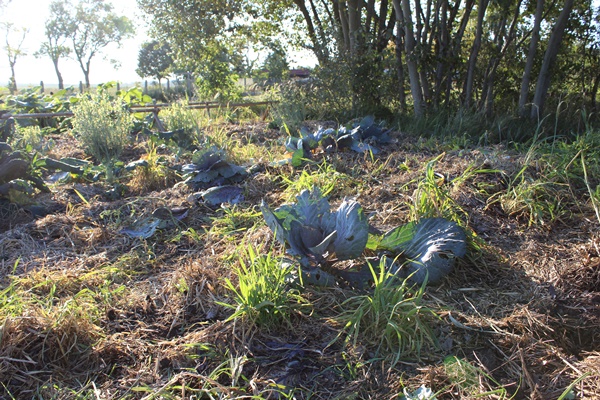
After the first night frost we took out all of the red cabbage that had a decent size. All of the smaller ones we left for the caterpillars to eat.

Before harvesting the red cabbage

We had a wheelbarrow full of red cabbages.

Red cabbage harvest
After harvesting the red cabbage
A sacrificed red cabbage with caterpillars

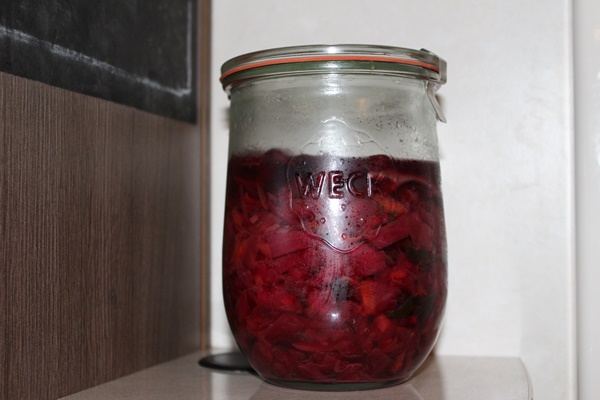
Some went into a kimchi I have made. This is something new for me and I hope it will turn out to our taste. The rest of the red cabbage will be turned into sauerkraut, which we love.

Kimchi

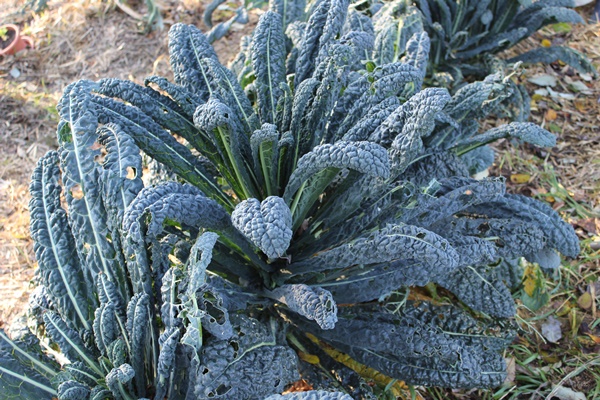
The kale has grown well after we took of the cover and we harvest as needed. Since we have a nice autumn with some sunny, even warm, days the kale still grows.

Nice harvest ripe kale

The straw mulched bed wasn’t even full after planting the mentioned crops, so there was place for zucchini plants as well. But that is for another time.

Red beets harvest and soup making

A simple soup made out of our own red beets

After a light night frost we started harvesting all of our red beets before the frost makes them useless. We love our red beets as a soup. Even our children eat this soup well, so I thought to shear the simple way I make this soup with you.

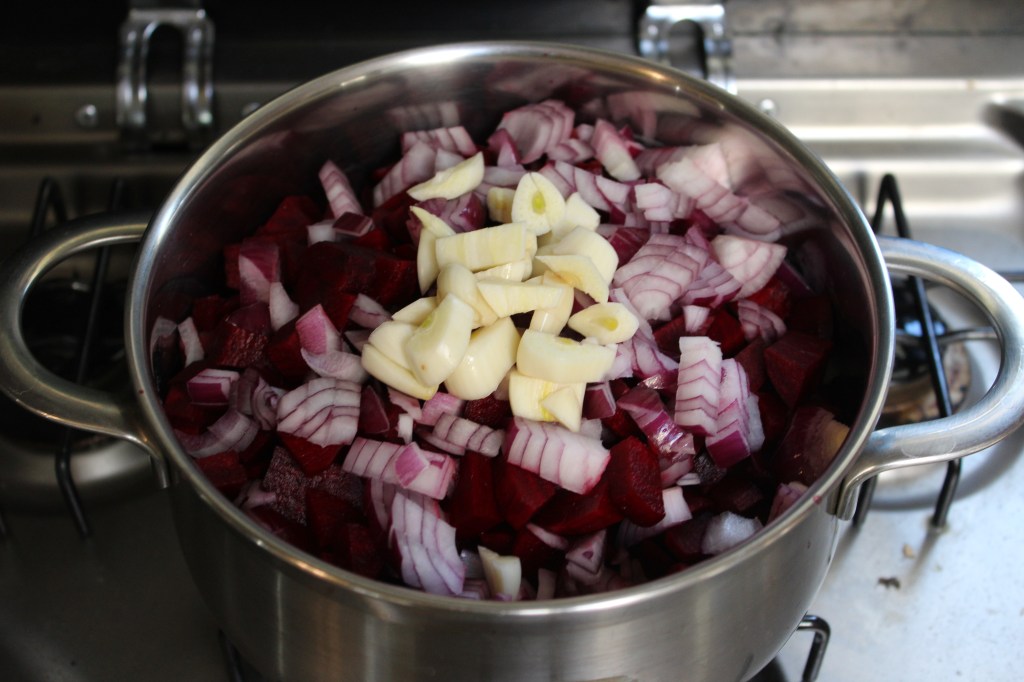
All you need are some red beets, an onion, a few garlic cloves, beef broth, a cup of cream and some dill.

Cut the red beets, onion and garlic cloves into cubes and put the vegetables into a cooking pan.

Ad the beef broth so that the vegetables are just submerged.

Bring everything to a boil and simmer for about 15-20 min. until the red beets are softened.

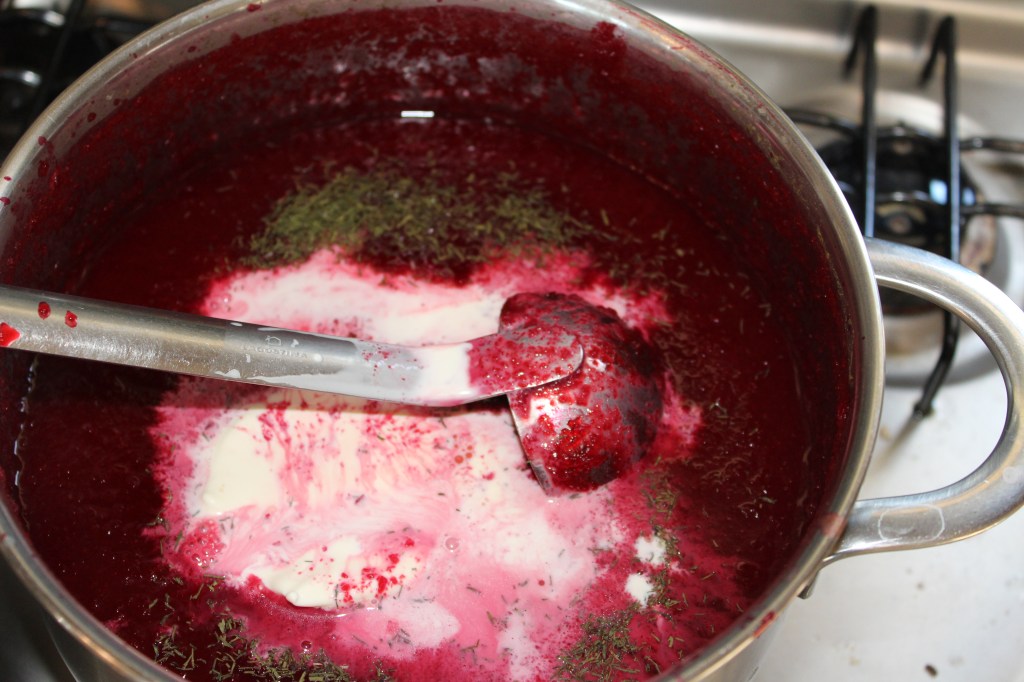
Now blend everything with a hand blender to the consistency you like and ad the cream and the dill to your taste and liking.

Enjoy

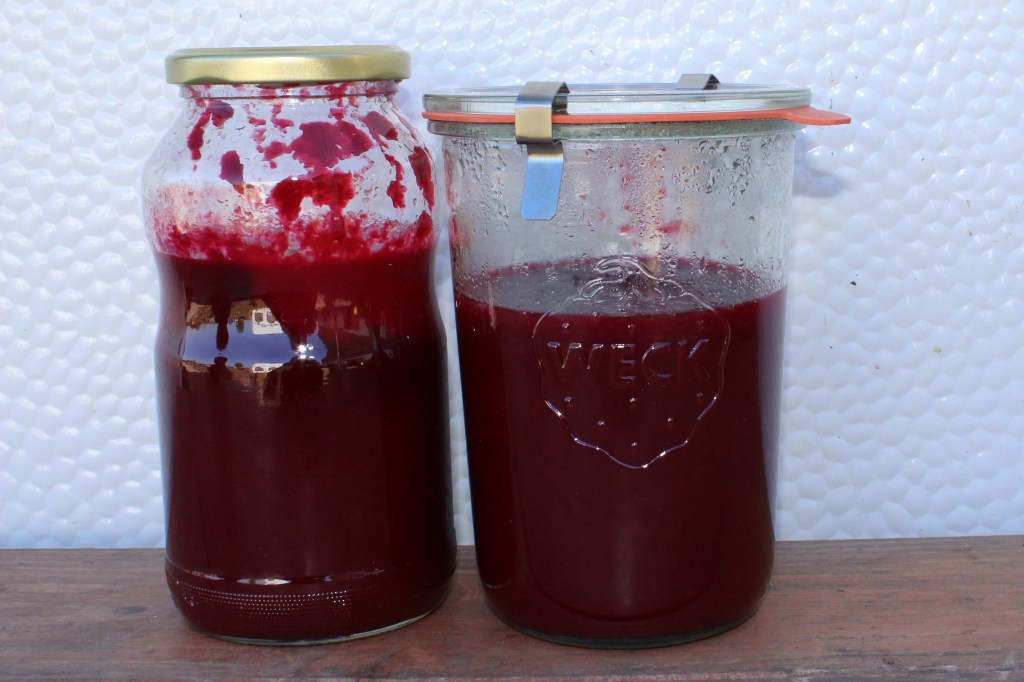
I made a bigger batch so after blending I put half in jars to freeze for a later meal